Leave Your Message

What Are Aramid Fiber Products Used For?

Aramid Fiber Products are often associated with extreme strength, yet their real value is more specific. They combine low weight, heat resistance, abrasion resistance, and high tensile performance. These properties support safer designs in demanding environments. However, strength alone does not guarantee a suitable product.

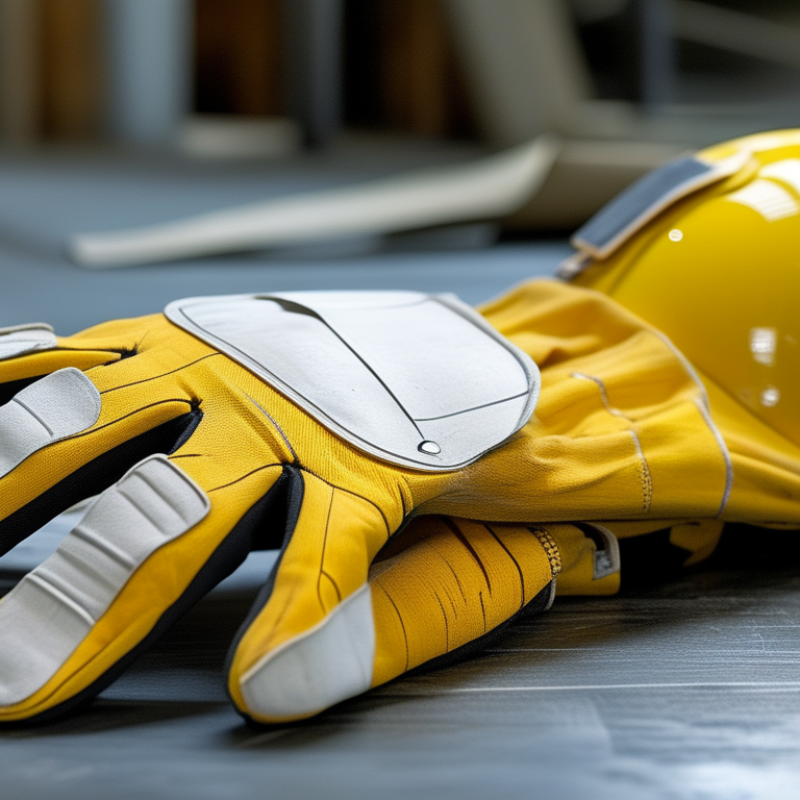
From protective gloves and helmets to industrial belts, cables, tires, and aerospace composites, aramid fibers serve different engineering needs. Their tightly bonded molecular chains can resist stretching and sudden impact. Some products also maintain performance near intense heat. The result is practical protection that may feel surprisingly light in daily use.

Stephanie Kwolek, the DuPont chemist who developed Kevlar, once said, “The best way to solve a problem is to take a piece of paper and draw pictures.” Her words reflect how engineers approach Aramid Fiber Products. They study load paths, heat exposure, moisture, friction, and human movement before choosing a material. A glove needs flexibility. A cable needs controlled tensile strength. A composite panel needs a reliable balance between stiffness and weight.

This article examines what Aramid Fiber Products are used for and why manufacturers select them. It also considers their limits. Aramid fibers can absorb moisture, lose performance under certain conditions, and require careful processing. That detail is easy to overlook. No fiber solves every design problem. A responsible decision depends on testing, certification, product quality, and the environment where the material will work.
What Are Aramid Fiber Products Used For?

What Are Aramid Fibers and How Are They Made?

Aramid fibers are high-performance synthetic fibers valued for their strength, low weight, and resistance to heat. They are made from aromatic polyamide polymers, which contain stiff, ring-shaped molecules. During production, manufacturers dissolve the polymer and force it through tiny spinnerets. The solution forms long filaments. These filaments are then washed, stretched, dried, and wound into yarn. Stretching aligns the molecular chains, creating much of the fiber’s strength. The process requires careful control of temperature, chemistry, and tension. Small variations can affect the final performance.

These fibers appear in protective clothing, industrial gloves, ropes, composite panels, and heat-resistant components. Their low density helps reduce equipment weight without sacrificing durability. In practical testing, fabric construction matters as much as the fiber itself. A loose weave may not provide the same protection as a tightly engineered laminate. Aramid also resists many forms of heat, but it can weaken under prolonged ultraviolet exposure. It is not a perfect material. That detail is easy to overlook.

Tips: Check the fiber type, weave, coating, and intended temperature range before choosing a product. Look for verified test data from qualified laboratories. Inspect finished items for fraying, discoloration, or stiffness changes. Follow the supplier’s cleaning instructions, because harsh chemicals can reduce service life. When protection is critical, replace damaged materials rather than relying on appearance alone.

Which Properties Make Aramid Fibers Useful?

What Are Aramid Fiber Products Used For?

Which Properties Make Aramid Fibers Useful?

Aramid fibers are valued for strength without excessive weight. The 2024 MarketsandMarkets industry report estimates the global aramid fiber market will grow from about USD 4.6 billion in 2024 to USD 6.7 billion by 2029. Demand comes from protective clothing, optical cables, tire reinforcement, aerospace parts, and industrial ropes. In practical use, a woven aramid panel can resist tearing while remaining thin enough for flexible equipment. That balance matters.

Their most useful properties are high tensile strength, low density, abrasion resistance, and strong dimensional stability. Many grades also resist flame and maintain performance at elevated temperatures. They do not melt like ordinary thermoplastics. However, heat resistance is not unlimited. Long exposure, moisture, ultraviolet radiation, or repeated bending can reduce performance. This is where product testing becomes essential. EN 388 evaluates mechanical risks such as abrasion, tear, and puncture, but it does not prove complete protection in every environment. A laboratory rating is not a field guarantee.

Tips: Match the fiber grade to the hazard. Check temperature, moisture, flexing, and chemical exposure before selecting a product. Ask for traceable test reports. Inspect cut surfaces and seams regularly. A small design mistake can weaken an otherwise strong fabric. Engineers sometimes focus on tensile strength and overlook comfort, which can reduce actual use. Aramid is impressive, but it is not magic.

What Types of Aramid Fiber Products Are Available?

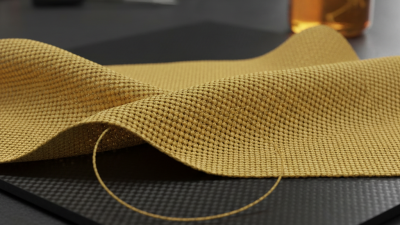
Aramid fiber products come in more forms than many buyers expect. The fiber may be sold as yarn, fabric, tape, braid, paper, or molded composite. Para-aramid products usually emphasize tensile strength. Meta-aramid products are often chosen for heat and flame resistance. These labels matter. Performance changes with weave, resin, thickness, and finishing treatment. Dense woven fabric feels stiff, while loose cloth bends around curved surfaces.

Yarn and sewing thread suit cable reinforcement, protective stitching, and heat-resistant assemblies. Braided sleeves cover hoses, wires, and narrow structural members. They expand slightly during installation, then grip the surface. Unidirectional tape places most fibers along one load path. Woven tape spreads support across two directions. Sheets and prepreg combine aramid with resin for lightweight panels, guards, and sporting structures. Short-fiber compounds can be molded into complex shapes. They are convenient, but often sacrifice some continuous-fiber strength.

In practical selection, I check temperature, abrasion, moisture, ultraviolet exposure, and compression loads. Aramid is strong, yet it is not ideal everywhere. Prolonged sunlight can weaken some constructions, and poor resin bonding can reduce impact performance. I have seen specifications focus on tensile strength while ignoring edge fraying or installation bends. That is a costly oversight. Product data should include fiber type, weave, areal weight, coating, and test conditions. Results without test conditions are hard to compare. The categories overlap. That is normal.

What Are Aramid Fiber Products Used For? - What Types of Aramid Fiber Products Are Available?

Aramid Fiber Product Type Typical Form Key Characteristics Common Applications Typical Industries Important Selection Factors
Aramid Filament Yarn Continuous multifilament yarn, available in different linear densities and twists
  • High tensile strength-to-weight ratio
  • Low elongation compared with many common textile fibers
  • Good resistance to heat and abrasion
Protective fabrics, reinforcement fabrics, ropes, cables, sewing threads, and industrial textiles Protective equipment, transportation, marine systems, and industrial manufacturing Required strength, yarn size, twist, flexibility, temperature exposure, and chemical environment
Aramid Staple Fiber Short fibers designed for spinning, blending, needling, or nonwoven processing
  • Useful for producing spun yarns and nonwoven structures
  • Good thermal stability
  • Can improve strength and heat resistance in composite textile structures
Heat-resistant fabrics, friction materials, insulation products, filtration media, and blended yarns Automotive, electrical, industrial filtration, and protective clothing Fiber length, fineness, blend ratio, processing method, and target mechanical performance
Aramid Fabric Woven, knitted, or braided textile made from aramid yarns
  • High strength with relatively low weight
  • Resistance to heat, abrasion, and cutting
  • Fabric construction can be tailored for flexibility or dimensional stability
Protective clothing, cut-resistant gloves, reinforcement layers, aircraft interiors, and composite preforms Aerospace, transportation, emergency services, construction, and personal protection Fabric weave, areal weight, thickness, coating, flexibility, cut resistance, and thermal exposure
Aramid Paper Porous sheet made from aramid fibers and fibrids, supplied in rolls or sheets
  • Electrical insulation capability
  • High thermal stability
  • Lightweight and suitable for layered insulation systems
Electrical insulation, transformer components, motor insulation, and honeycomb core construction Electrical equipment, power systems, aerospace, and transportation Thickness, dielectric performance, thermal class, density, mechanical strength, and resin compatibility
Aramid Ropes and Cords Braided or twisted load-bearing lines
  • High strength at relatively low mass
  • Low stretch under load compared with many synthetic ropes
  • Good fatigue and abrasion performance when properly designed
Control lines, lifting systems, marine ropes, safety lines, and tension members Marine, aerospace, rescue, industrial lifting, and sporting equipment Working load, safety factor, bend radius, abrasion, moisture, ultraviolet exposure, and termination method
Aramid Sewing Thread High-performance spun or filament thread
  • Retains useful strength at elevated temperatures
  • Suitable for seams exposed to heat, abrasion, or flame hazards
  • Supports durable stitching in technical textiles
Protective garments, heat-resistant covers, automotive components, and industrial filters Personal protection, automotive, industrial equipment, and filtration Thread construction, needle compatibility, seam design, temperature, abrasion, and finishing treatment
Aramid Reinforcement Tape Unidirectional, woven, or braided tape
  • Efficient reinforcement along selected load directions
  • Low weight compared with many metallic reinforcement options
  • Can be integrated into laminated composite structures
Cable reinforcement, hose reinforcement, composite repair, sporting goods, and structural strengthening Telecommunications, energy, transportation, construction, and sporting goods Fiber orientation, tape width, resin system, load direction, bonding method, and environmental durability
Aramid Composite Prepreg Aramid reinforcement pre-impregnated with a thermoset or thermoplastic resin
  • Controlled fiber and resin distribution
  • High specific strength and impact resistance
  • Suitable for producing lightweight laminated parts
Panels, protective structures, vehicle components, sporting goods, and impact-resistant parts Aerospace, automotive, marine, defense-related engineering, and sports equipment Resin chemistry, curing temperature, fiber orientation, laminate design, impact requirements, and storage conditions
Aramid Honeycomb Core Lightweight cellular core, commonly supplied as blocks or panels
  • High stiffness-to-weight performance when used in sandwich panels
  • Low density
  • Useful for lightweight structural and interior components
Aircraft interiors, vehicle panels, doors, partitions, radar structures, and lightweight enclosures Aerospace, rail transportation, marine, automotive, and industrial design Cell size, density, thickness, shear strength, facing material, fire performance, and bonding process
Aramid Friction Material Short-fiber or pulp reinforcement incorporated into friction compounds
  • Reinforcement at elevated operating temperatures
  • Good wear resistance in properly formulated compounds
  • Can support stable friction performance
Brake components, clutch facings, industrial braking systems, and friction seals Automotive, rail, industrial machinery, and heavy equipment Friction coefficient, wear rate, temperature range, resin system, fiber content, and formulation compatibility
Aramid Filter Media Woven, felted, or nonwoven filtration material
  • Useful in high-temperature filtration environments
  • Good dimensional stability
  • Can provide resistance to abrasion and mechanical stress
Industrial dust collection, hot-gas filtration, process filtration, and emissions-control systems Cement, metal processing, power generation, chemical processing, and manufacturing Operating temperature, gas chemistry, particle size, permeability, cleaning method, and expected service life
Protective Aramid Garments Coveralls, jackets, gloves, sleeves, hoods, and other sewn protective apparel
  • Protection against heat, flame, cuts, or abrasion depending on design
  • Lightweight compared with some alternative protective materials
  • Performance depends strongly on garment construction and testing
Fire-resistant clothing, arc-flash protection, cut-resistant apparel, and industrial workwear Firefighting, electrical maintenance, metalworking, utilities, and construction Applicable safety standard, hazard type, fabric weight, garment design, moisture management, fit, and maintenance requirements
Product performance depends on fiber type, construction, resin or coating system, manufacturing process, and service conditions. Application-specific testing should be completed before final material selection.

How Are Aramid Fiber Products Used Across Industries?

Aramid fiber products are used across industries because they combine low weight, high tensile strength, and heat resistance. Manufacturers convert the fiber into yarn, woven fabric, paper, or composite reinforcement. Each form solves a different problem. In factories, aramid gloves can reduce cut exposure during sheet-metal handling. Protective sleeves add another barrier near hot surfaces. They still need correct sizing and inspection. Small tears matter.

In transportation, aramid cords reinforce tires, hoses, and timing belts. Their low stretch helps components hold shape during repeated movement. Aircraft interiors may use lightweight aramid honeycomb panels to reduce structural weight. Marine and industrial operators also use aramid ropes for lifting and positioning equipment. Engineers must check abrasion, moisture, bending cycles, and connection points. Strength on paper is not enough.

Electrical manufacturers use aramid paper as insulation in motors, transformers, and high-temperature systems. In telecommunications, aramid yarn can support fiber-optic cables while limiting unwanted elongation. Heat-resistant filtration media can serve demanding industrial environments. However, aramid products are not universal. Ultraviolet exposure, sharp edges, and poor cleaning can reduce performance. Testing remains essential. I would treat every application as a design question, not a material shortcut. Independent testing and documented maintenance provide more reliable results than assumptions.

What Are Aramid Fiber Products Used For?

Aramid fibers are used where high strength, low weight, heat resistance, electrical insulation, and abrasion resistance are required. The chart counts the industrial sectors in this overview that commonly use each aramid product form. It is a transparent application count, not a market-share estimate.

Common examples include tire and belt reinforcement in automotive systems, composite structures and honeycomb cores in aerospace, ballistic and heat-protective fabrics in safety equipment, strength members in communication cables, ropes and composite reinforcement in marine applications, and aramid paper or fibers for electrical insulation and friction materials.

What Factors Determine the Right Aramid Fiber Product?

Aramid fiber products are used where low weight and high mechanical strength matter. They reinforce protective clothing, ropes, cables, hoses, vehicle parts, and composite panels. However, choosing the right product requires more than checking tensile strength. The operating environment often changes the answer.

The load type is a practical starting point. Continuous tension may require a high-strength yarn, while repeated bending favors flexible woven fabric. Impact protection usually needs controlled energy absorption. Fiber form matters too. Short fibers suit molded compounds, while continuous yarn supports reinforcement and tension loads. Heat resistance, chemical exposure, moisture, abrasion, and ultraviolet light should also be reviewed. A product that performs well in a dry laboratory may behave differently near oil, saltwater, or sharp edges.

Processing conditions can determine compatibility. Resin bonding, coating adhesion, curing temperature, and cutting methods all affect final performance. Product data should include test methods, fiber construction, thickness, and tolerances. Ask for samples and test them under realistic temperatures and loads. Small details matter, such as a tight bend radius or rough guide surface. In field evaluations, inspect fraying and surface wear after repeated cycles. My own selection reviews have sometimes focused too heavily on peak strength. That was a mistake. Service life, handling, and maintenance can matter just as much as the headline specification.