Top Benefits of Carbon Fiber Webbing for Global Buyers?
Carbon Fiber Webbing has become increasingly popular among global buyers. This innovative material offers a myriad of advantages across various industries. Its lightweight and high-strength properties make it ideal for numerous applications. From outdoor gear to automotive components, Carbon Fiber Webbing stands out.
The durability of this material cannot be overstated. It resists wear and tear exceptionally well, making it a reliable choice for demanding uses. Additionally, Carbon Fiber Webbing provides excellent flexibility. It can be molded into different shapes, offering versatility that many other materials lack.
However, buyers must consider the cost implications. While Carbon Fiber Webbing is premium, the benefits can justify the expense. Understanding its applications in specific fields will enable informed decisions. Ultimately, the choice of Carbon Fiber Webbing reflects a commitment to quality and performance.
Key Advantages of Carbon Fiber Webbing in Various Industries
Carbon fiber webbing is gaining traction across diverse industries due to its unique properties. According to a report by MarketsandMarkets, the global carbon fiber market is projected to reach $6.9 billion by 2026, reflecting a growing interest in lightweight materials. This surge is propelled by carbon fiber's exceptional strength-to-weight ratio, making it a prime choice for automotive and aerospace applications. The webbing's weight reduction can improve fuel efficiency, which is crucial in today’s carbon-conscious market.
In the sporting goods sector, carbon fiber webbing enhances performance by reducing weight while maintaining durability. A study from The Freedonia Group highlights that carbon fiber applications in sports equipment could grow by over 10% annually. For instance, high-end bicycles and outdoor gear benefit significantly from this material. However, the challenges of cost and manufacturing complexities still loom large. Many manufacturers struggle to optimize production techniques, hindering wider adoption.
The construction industry also sees the advantages of carbon fiber webbing. As noted in a report from Research and Markets, the demand for innovative building materials rises. Construction projects incorporating carbon fiber demonstrate improved longevity and resistance to environmental stress. Yet, concerns about the long-term environmental impact of fiber production remain. This evolution demands ongoing research and a shift toward more sustainable practices.
Durability and Strength: Why Carbon Fiber Outperforms Alternatives
Carbon fiber webbing has become a popular choice for various applications. Its durability and strength stand out against traditional materials. Carbon fiber is remarkably lightweight yet incredibly robust. This unique combination allows it to outperform alternatives like nylon or polyester. When subjected to stress, carbon fiber doesn’t bend or break easily.
One notable aspect is its resistance to environmental factors. Unlike some materials, carbon fiber does not degrade under UV light or extreme temperatures. This makes it an excellent choice for outdoor applications. Users can rely on carbon fiber webbing over time without frequent replacements. However, the production process can be complex and costly. Buyers should consider the long-term benefits when weighing options.
While carbon fiber excels in many areas, it is essential to be aware of its limitations. It may not be the best option for every scenario. For instance, if flexibility is a priority, other materials could be better suited. Exploring these nuances helps buyers make informed decisions tailored to their needs. Carbon fiber continues to shape the landscape of strong, durable materials for the future.
Top Benefits of Carbon Fiber Webbing for Global Buyers
Lightweight Properties: Enhancing Efficiency in Applications
Carbon fiber webbing is becoming increasingly popular in various industries. Its lightweight properties dramatically enhance efficiency in applications. This material is significantly lighter than traditional options. It enables easier handling and reduces the overall weight of products. This is particularly beneficial in sectors such as aerospace and automotive, where every ounce counts.
The durability of carbon fiber webbing shouldn’t be overlooked. Despite its lightness, it offers remarkable strength and resistance to wear. This combination makes it ideal for demanding environments. However, manufacturers must remain vigilant. Improper handling or installation can compromise its performance. Ensuring the right processes are in place is critical.
Consumers often seek innovative solutions. Carbon fiber can help achieve that. Yet, not every application may benefit from its unique properties. Awareness of both benefits and limitations is essential. A thorough understanding will lead to smarter choices in material selection.
Top Benefits of Carbon Fiber Webbing for Global Buyers
| Benefit |
Description |
Application Examples |
| Lightweight Properties |
Carbon fiber webbing is significantly lighter than traditional materials, leading to easier handling and improved efficiency. |
Aerospace components, outdoor equipment, automotive parts |
| High Strength-to-Weight Ratio |
Offers exceptional strength without adding significant weight, enhancing structural performance. |
Sports gear, safety harnesses, military applications |
| Corrosion Resistance |
Resistant to saltwater, chemicals, and environmental damage, ensuring longevity. |
Marine equipment, chemical processing industries |
| Flexibility in Design |
Can be fabricated into various shapes and sizes, allowing for innovative product designs. |
Custom straps, recreational products, fashion accessories |
| Thermal Stability |
Maintains strength and integrity at high temperatures, suitable for various thermal environments. |
Industrial applications, high-performance engines |
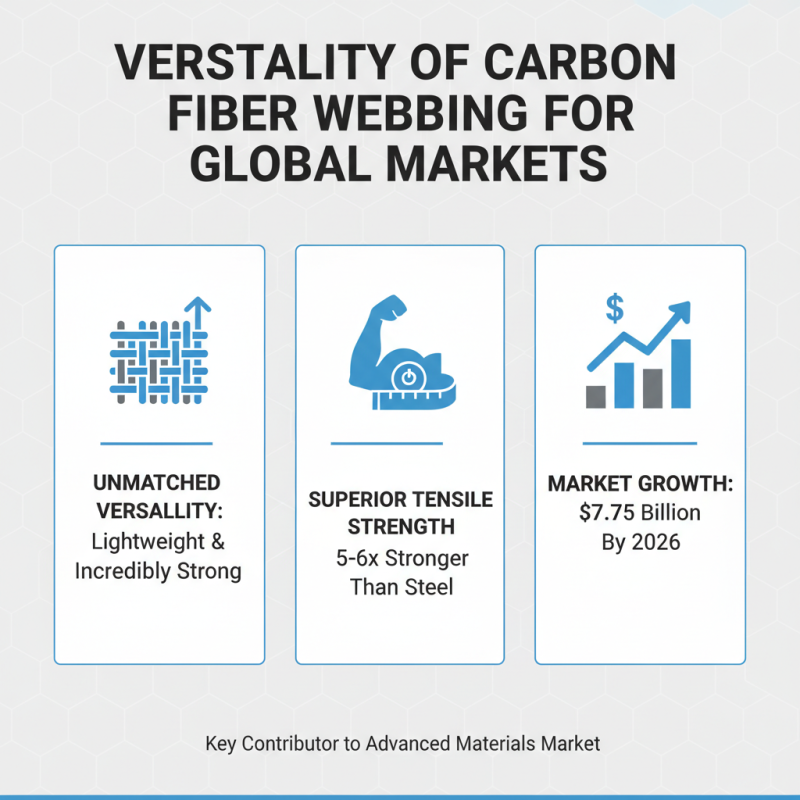
Versatility of Carbon Fiber Webbing for Global Markets
Carbon fiber webbing is rapidly gaining popularity in various global markets for its unmatched versatility. This advanced material is lightweight yet incredibly strong. Its tensile strength is approximately 5-6 times that of steel, making it ideal for a variety of applications. According to recent industry reports, the carbon fiber market is projected to reach $7.75 billion by 2026, with webbing being a significant contributor to this growth.
The versatility of carbon fiber webbing extends to sectors like aerospace, automotive, and sports equipment. In aerospace, engineers use it to reduce weight without compromising safety. In automotive applications, every kilogram saved boosts efficiency. Recent data suggests that vehicles incorporating carbon composites can achieve up to 15% better fuel efficiency. Sports equipment manufacturers are also leveraging its strength-to-weight ratio, resulting in high-performance gear that enhances athletes' performance.
However, challenges exist. The production process can be energy-intensive, leading to debates on sustainability. Also, not all carbon fiber is created equal; quality varies widely in the market. Buyers must ensure they choose reputable suppliers. While carbon fiber webbing offers extensive benefits, careful consideration is necessary to maximize its potential while addressing environmental concerns.
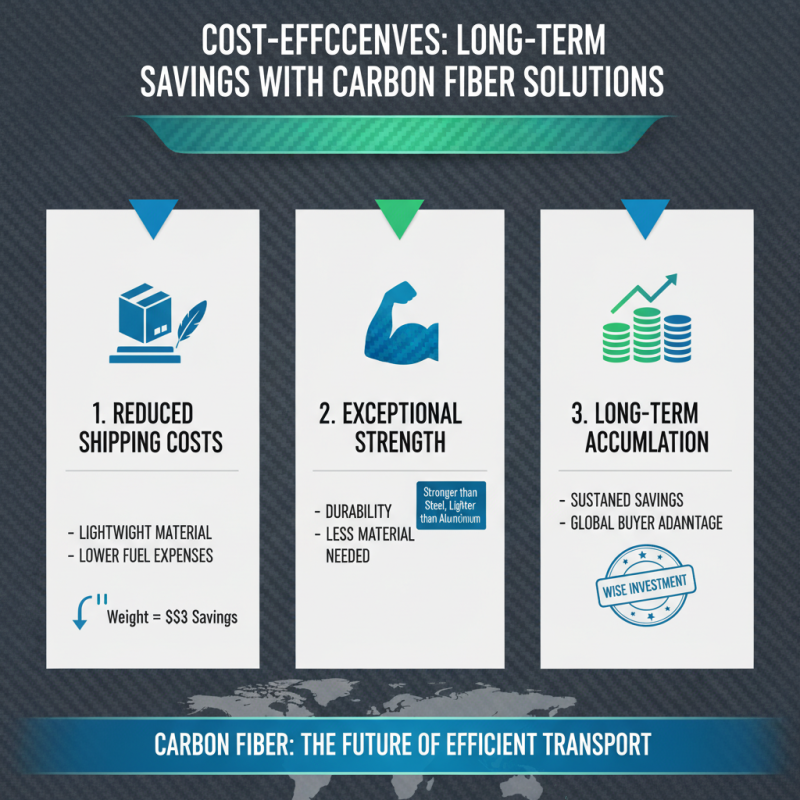
Cost-Effectiveness: Long-Term Savings with Carbon Fiber Solutions
When considering cost-effectiveness, carbon fiber webbing emerges as a strong contender. Its lightweight nature contributes significantly to reduced shipping costs. Unlike traditional materials, carbon fiber offers exceptional strength with minimal weight. This attribute leads to lower fuel expenses for transport. Over time, these savings accumulate, making carbon fiber an attractive option for global buyers.
Maintenance is another factor. Carbon fiber webbing requires less frequent replacement compared to others. This durability translates into long-term savings. Businesses can allocate resources elsewhere rather than dealing with constant repairs or replacements.
Some buyers might worry about the initial investment. While it may seem higher at first, the life cycle cost clearly shows benefits. Many underestimate these long-term savings. Reflective considerations about cost versus longevity are essential. Making informed decisions about materials ensures value over time. Understanding these factors drives smarter purchasing choices.