Leave Your Message

What Is the Best Carbon Fiber Rope Type in 2026?

Choosing the best Carbon Fiber Rope in 2026 requires more than comparing tensile-strength numbers. A rope may look exceptionally strong on paper, yet fail early through abrasion, sharp bending, poor termination, or ultraviolet exposure. The “best” option depends on the working environment, load pattern, required flexibility, and inspection routine.

As composites researcher Dr. Stephen W. Tsai explains, “Composite performance comes from design, not fiber strength alone.” That principle applies directly to Carbon Fiber Rope. Its fibers, resin system, braid structure, protective jacket, and end fittings must work together. A high-modulus rope can deliver impressive stiffness. It may also tolerate less bending. A tougher intermediate-modulus design could perform better in repeated handling. The answer is conditional.

This guide compares the main rope constructions available for demanding applications. It examines tensile capacity, weight savings, fatigue behavior, abrasion resistance, moisture exposure, temperature limits, and termination reliability. It also considers practical details, such as glove grip, drum storage, bend radius, and visual damage checks. These details are easy to overlook.

Testing should follow the rope manufacturer’s instructions and relevant engineering standards. Independent certification adds confidence, but it does not replace application-specific analysis. A laboratory result is not a field guarantee. That distinction matters.

Some recommendations may seem less decisive than expected. That is intentional. Carbon Fiber Rope selection involves trade-offs, and no single construction wins every situation. The strongest choice is the one that remains predictable after real loads, repeated cycles, environmental stress, and human handling.
What Is the Best Carbon Fiber Rope Type in 2026?

Carbon Fiber Rope Basics and Key Performance Characteristics

What Is the Best Carbon Fiber Rope Type in 2026?

Carbon Fiber Rope Basics and Key Performance Characteristics

Carbon fiber rope is made from bundles of continuous carbon filaments. These filaments provide high tensile strength, low weight, and very little stretch. The rope may use a braided, twisted, or jacketed structure. Each construction changes its handling and durability.

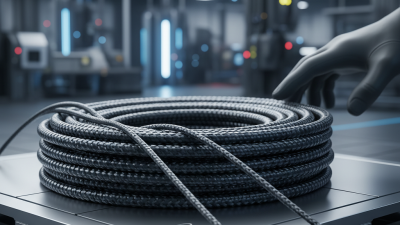
Braided carbon fiber rope usually offers better shape stability and load distribution. Twisted rope can be easier to produce, but it may rotate under tension. A protective outer jacket helps reduce abrasion against metal edges and rough surfaces. It can also hide internal damage, which makes inspection less obvious. That matters.

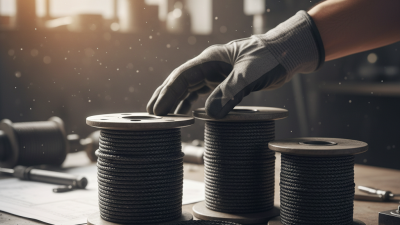
During practical handling, carbon fiber feels stiff and unusually light. It performs well when a straight, stable load path is required. However, repeated sharp bending can damage the filaments. Carbon fiber also has limited resistance to crushing and surface wear. Resin systems and protective coatings affect temperature performance, moisture behavior, and fatigue life.

The best type depends on the working conditions. A braided rope suits controlled lifting or structural tension applications. A jacketed design may fit environments with frequent contact. Twisted construction can work for less demanding setups, but movement requires careful evaluation. Check the manufacturer’s test data, minimum bend radius, breaking load, and inspection procedure. Do not judge quality by strength alone. I would also test a sample under realistic bending, abrasion, and loading cycles, because laboratory numbers can feel reassuring but incomplete.
How Carbon Fiber Rope Types Differ by Structure and Fiber Grade

The best carbon fiber rope depends on structure, not the label alone. Braided ropes distribute load well and resist abrasion. Twisted ropes are easier to splice, but they can rotate under tension. A parallel-fiber rope delivers higher axial stiffness. Its surface, however, may suffer faster wear. I have seen this difference during lifting tests: a tightly braided cover protected the core, while an exposed parallel bundle developed fuzzy damage near a sharp fitting.

Fiber grade changes the rope’s behavior. Standard-modulus carbon fiber usually offers tensile modulus near 230–250 GPa. Intermediate-modulus grades reach roughly 290–300 GPa. High-modulus grades can exceed 350 GPa, according to ranges summarized in the ASM Handbook on composite materials. Higher modulus does not automatically mean better safety. It can reduce elongation and make overload damage less visible. The 2024 MarketsandMarkets Carbon Fiber Market report also identifies aerospace and wind energy as major demand sectors, where stiffness-to-weight performance remains important. Yet rope design still controls real performance.

Tips: Match the braid to abrasion risk. Match the fiber grade to required stiffness. Check termination strength separately. Do not compare breaking loads from different test methods. ASTM D4018 data describes fiber properties, not finished-rope behavior. This distinction is easy to miss. A lighter rope may look superior on paper, but wet cycling, bending radius, and repeated loading can change the decision.

What Is the Best Carbon Fiber Rope Type in 2026? - How Carbon Fiber Rope Types Differ by Structure and Fiber Grade

Rope Type Structural Design Typical Fiber Grade Typical Tensile Modulus Typical Tensile Strength Flexibility and Elongation Main Advantages Best-Fit Applications
Braided carbon fiber rope Multiple yarns or tows interlaced around a core or through a hollow braid Standard-modulus carbon fiber; intermediate-modulus grades may be used for higher stiffness Approximately 230–300 GPa Approximately 3.5–6.0 GPa for the fiber; finished-rope strength depends strongly on braid angle, diameter, and termination More flexible and easier to handle than parallel-tow designs; low construction stretch Good shape retention, improved handling, and better resistance to local damage than an unprotected straight tow Tension members, lightweight control lines, architectural elements, and applications requiring moderate flexibility
Twisted carbon fiber rope Several yarns or strands twisted together; load-bearing fibers follow a helical path Usually standard-modulus carbon fiber Approximately 230–240 GPa Approximately 3.5–5.0 GPa for the fiber; effective rope strength is reduced by twist angle and fiber misalignment Highly conformable, but twist can create torque, rotation, and greater strain under load Simple construction, easy splicing or bundling, and useful compliance in low-cycle tension duties Tie systems, low-speed tensioning, experimental assemblies, and applications where flexibility is more important than maximum stiffness
Parallel-tow carbon fiber rope Continuous carbon fibers aligned primarily along the rope axis and held by a binder, jacket, or overbraid Standard-modulus or intermediate-modulus carbon fiber Approximately 230–300 GPa Approximately 3.5–6.0 GPa for the fiber; the highest axial efficiency is possible when alignment and termination are well controlled Very low axial elongation and high stiffness; poor tolerance for tight bending, kinking, and sharp contact points High axial stiffness-to-weight ratio and efficient transfer of tensile load along the rope axis Stay elements, lightweight tendons, structural bracing, robotic mechanisms, and precision tension members
Carbon fiber rope with protective overbraid Axial carbon-fiber core enclosed by a braided textile, polymer, or aramid-style protective sheath Standard-modulus or intermediate-modulus carbon fiber core Approximately 230–300 GPa for the carbon fiber core Approximately 3.5–6.0 GPa for the fiber; the sheath generally protects rather than carries the primary axial load Improved handling and abrasion protection; minimum bend radius remains design-dependent Better resistance to scuffing, contamination, and handling damage than an exposed carbon-fiber core Outdoor tension systems, moving mechanisms, pulley-free routing, and installations exposed to routine handling
Hybrid carbon fiber rope Carbon fiber combined with another fiber or jacket to balance stiffness, toughness, bend tolerance, or abrasion resistance Carbon fiber is commonly standard-modulus; the secondary fiber is selected for toughness or handling Approximately 230–300 GPa for the carbon component; overall rope modulus varies with fiber proportions Approximately 3.5–6.0 GPa for the carbon component; finished-rope performance depends on the hybrid design Typically more tolerant of bending and impact than an all-carbon rope, with some reduction in stiffness-to-weight ratio Balanced performance, improved damage tolerance, and easier handling in demanding environments Marine and industrial handling systems, dynamic tensioning, lifting-control lines, and applications with impact or abrasion risk
Intermediate-modulus carbon fiber rope Braided, twisted, or parallel construction using fibers with higher stiffness than standard-modulus grades Intermediate-modulus carbon fiber Approximately 290–300 GPa Approximately 5.0–6.0 GPa for many commercial fiber systems Stiffer and generally less strain-tolerant than standard-modulus fiber; construction still controls flexibility Higher stiffness without the extreme brittleness and processing demands associated with some high-modulus grades Precision stays, lightweight structural tendons, dimensional-control systems, and high-stiffness tension members
High-modulus carbon fiber rope Usually a carefully aligned core or protected braid designed to preserve the high axial modulus of the fiber High-modulus carbon fiber Approximately 350–600 GPa, depending on the grade Approximately 2.5–4.5 GPa for many high-modulus grades; stiffness and strength are not the same property Very low strain and limited tolerance for sharp bends, impact, abrasion, and repeated flexing Maximum axial stiffness and extremely low elongation for a given fiber mass Precision positioning, metrology, antenna or reflector tensioning, and structures where dimensional stability is the priority
Selection note: The best carbon fiber rope type depends on the required axial strength, stiffness, bend radius, fatigue life, abrasion protection, termination method, and environmental exposure. Fiber-property ranges are representative values; finished-rope performance must be confirmed using the supplier's tested breaking load, modulus, fatigue, and termination data.

Comparing Strength, Flexibility, Durability, and Environmental Resistance

For 2026, the most balanced carbon fiber rope is a braided, continuous-filament construction with a protected core. Braiding spreads loads across many filaments. It also bends better than a rigid, pultruded carbon rod. A lightly resin-stabilized braid usually preserves flexibility. Excess resin can make the rope stiff and vulnerable to cracking. This trade-off is easy to miss.

Strength depends on direction, diameter, and termination quality. Axial carbon fibers provide excellent tensile performance and low stretch under steady loads. However, sharp bends can damage filaments quickly. I would specify a generous bend radius and rounded fittings during field installation. Pull tests should measure the complete assembly, not only the rope. Test the assembly. That is where many impressive specifications become less useful. A braided sheath also improves handling and limits surface abrasion.

Durability comes from layered protection. A dense outer jacket can resist rubbing, grit, ultraviolet exposure, and repeated handling. Moisture alone may not destroy carbon fibers, but water can reach the core through cuts and poor seals. Temperature cycling, chemicals, and salt spray deserve separate testing. In my experience, inspection intervals matter as much as advertised strength. Inspect it often. Look for broken filaments, fuzzy sections, stiff spots, and jacket damage. A flexible braid may sacrifice peak strength, while heavy coating can resist weather but feel awkward. Load, bend pattern, climate, and maintenance access still govern selection.

Choosing the Best Carbon Fiber Rope for Specific Applications

What Is the Best Carbon Fiber Rope Type in 2026?

Choosing the best carbon fiber rope depends on the application, not a single “strongest” design.

Braided rope offers better flexibility and handling around pulleys. Twisted or tightly consolidated rope can provide higher axial stiffness, but it may resist bending.

A protective sheath helps against abrasion, sunlight, and moisture. However, it can hide internal damage during inspection.

For robotic arms, antenna systems, and lightweight tension members, select a rope with low stretch and stable dimensions. For repeated bending, prioritize flex fatigue performance and a suitable bending radius.

Carbon fiber conducts electricity, so electrical isolation may require an additional jacket. Temperature, resin type, diameter, and termination quality also affect performance.

I once focused too heavily on breaking strength. That was a poor decision.

The rope later showed surface wear near a small pulley. Strength alone is not enough.

Tips:

Confirm the working load, safety factor, and expected movement before buying. Ask for tested data on fatigue, abrasion, moisture, and temperature.

Check the end fittings carefully; a weak termination can waste excellent fiber. Avoid using carbon fiber rope where sudden impact loads are expected.

Inspect regularly for fuzzing, crushed sections, loose braid, or unusual stiffness.

If the specification is unclear, pause the project. A slightly heavier rope may be the more reliable choice.

2026 Buying Criteria, Testing Standards, and Maintenance Requirements

What Is the Best Carbon Fiber Rope Type in 2026?

In 2026, braided carbon fiber rope suits applications needing low stretch and high stiffness. A hybrid braid can be safer around pulleys. Pure carbon fiber can resist tension but dislikes sharp bends, crushing, and repeated abrasion. The best type depends on load direction, bend radius, temperature, and inspection access.

Buying decisions should follow ISO 9554 for general fiber-rope guidance and ISO 2307 for measuring diameter, length, and breaking force. ASTM D6775 also supports testing tensile properties in textile materials. Require a batch test certificate, not only a catalog strength. Grand View Research estimated the global carbon fiber market at about USD 4.4 billion in 2023. That growth signals wider supply, not automatic quality. A rope can look perfect while hidden filaments are damaged.

Testing should include tensile loading, cyclic bending, abrasion, and exposure to moisture and chemicals. Record the rope’s diameter before and after testing. Keep it clean, dry, and loosely coiled. Avoid dragging it across concrete edges. Inspect fuzzy sections, flattened zones, discoloration, and broken strands after every demanding use. Replace it after serious shock loading, even when damage seems minor. That judgment is uncomfortable. It is also necessary. Manufacturers should state minimum bend radius, working-load limits, service temperature, and retirement criteria clearly. If those details are missing, the rope is not ready for professional selection.

What Is the Best Carbon Fiber Rope Type in 2026?

2026 buying criteria, testing standards, and maintenance requirements

The scores are a transparent 0–10 screening index based on established material behavior: axial stiffness, tensile efficiency, bend flexibility, impact tolerance, abrasion resistance, and moisture stability. They are comparative engineering indicators rather than manufacturer test results. Final selection should be confirmed with product-specific testing and a certified working-load limit.

Recommended Type by Use

Pultruded carbon-fiber cords suit straight-load applications requiring maximum axial stiffness. Braided carbon-fiber ropes are more suitable where routing flexibility is required. Carbon/aramid hybrids provide a more balanced choice when impact and abrasion resistance matter.

Testing Standards

Review tensile and elongation testing to ASTM D3039 for composite laminates where applicable, yarn or cord tensile testing to ASTM D2256, and rope construction and physical-property checks to ISO 2307 and ISO 9554. Product-specific fatigue, bend-cycle, abrasion, creep, and environmental tests should also be requested.

Maintenance Requirements

Inspect before every critical use for broken filaments, kinks, crushing, sheath damage, resin cracking, chemical exposure, and unusual stiffness. Keep the rope clean and dry, avoid sharp bends and uncontrolled heat, record load cycles, and remove it from service when damage or permanent deformation is found.