Best Carbon Fiber Tube Options for Global Buyers?
Carbon Fiber Tubes are gaining traction in various industries due to their strength and lightweight properties. According to a report from Market Research Future, the global carbon fiber market is expected to reach $5.23 billion by 2027, demonstrating a robust annual growth rate of 10.5%. This growth is driven by the increasing demand from sectors like aerospace, automotive, and sporting goods.
Industry expert Dr. Jane Smith, a leading researcher in composite materials, states, "Carbon Fiber Tubes provide unmatched durability while minimizing weight, making them essential in high-performance applications." This highlights the critical role these tubes play in enhancing product efficiency. Many buyers are still unaware of the diverse options available, however. Not all carbon fiber tubes offer the same quality or performance.
Furthermore, challenges remain in sourcing reliable suppliers. Some manufacturers may deliver subpar products, undermining their applications. Thus, buyers must evaluate their options carefully. The right Carbon Fiber Tube can make a significant difference. Investing time in understanding specifications and supplier credibility is vital. Making informed choices will ultimately lead to better outcomes in any project relying on these advanced materials.
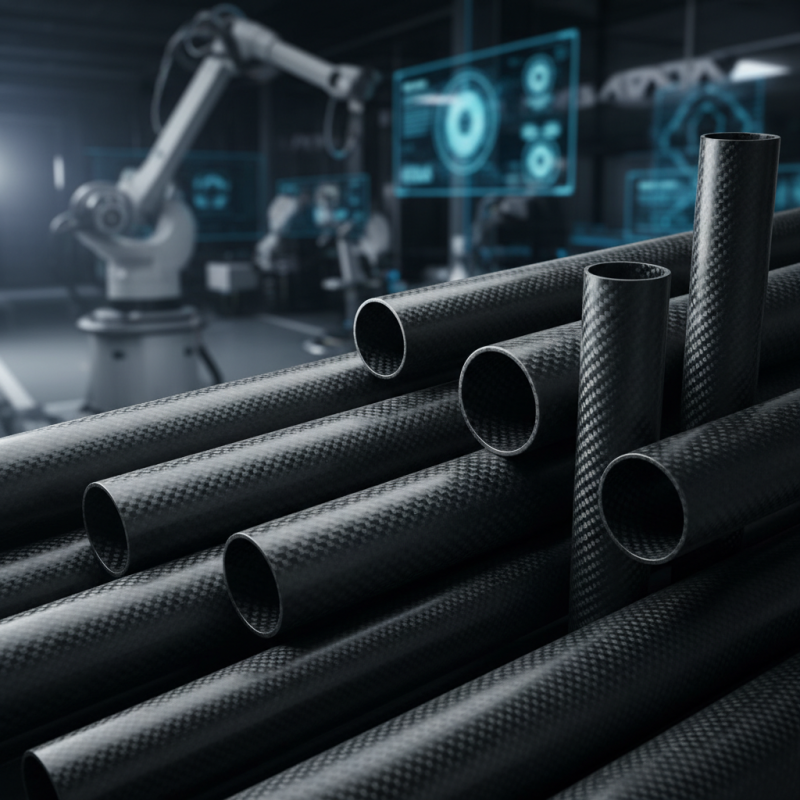
Overview of Carbon Fiber Tubes and Their Applications
Carbon fiber tubes have gained tremendous popularity due to their exceptional strength-to-weight ratio. According to a report by MarketsandMarkets, the global carbon fiber market is projected to reach $6.2 billion by 2026. Industries ranging from aerospace to automotive utilize these tubes for improved performance and durability. The lightweight nature of carbon fiber reduces energy consumption in vehicles and aircraft, making it a preferred material for manufacturers.
Applications of carbon fiber tubes extend beyond transportation. In the sports industry, they enhance equipment like bicycles, fishing rods, and golf clubs. A study from Composites World noted that carbon fiber composites can cut up to 30% of the weight compared to traditional materials. This reduction significantly boosts efficiency and performance in competitive settings. However, challenges remain in recycling and production costs, which can limit widespread adoption.
The use of carbon fiber is not flawless. Manufacturing processes can produce defects that compromise strength. Awareness of these pitfalls is essential for end-users. As demand grows, the industry must address sustainability issues and strive for innovations in recycling methods. Balancing performance with environmental responsibility will define the future of carbon fiber applications across sectors.
Factors to Consider When Choosing Carbon Fiber Tubes
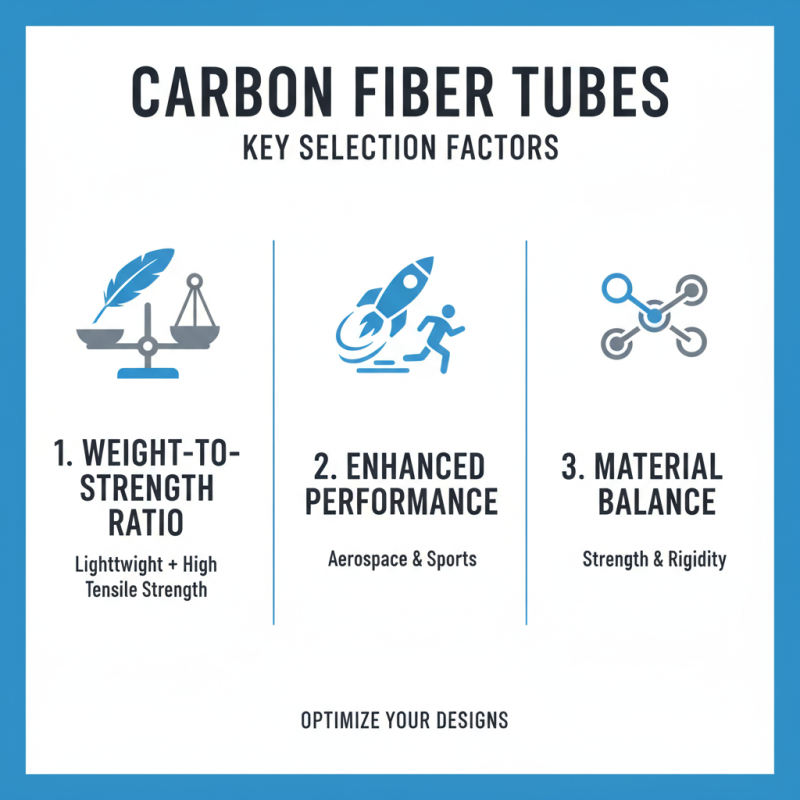
When choosing carbon fiber tubes, several factors come into play. The weight-to-strength ratio is crucial. Lighter tubes can enhance performance, especially in applications like aerospace or sports. Look for tubes that boast high tensile strength while remaining lightweight. This balance is what makes carbon fiber a sought-after material.
Durability is another key consideration. Carbon fiber can withstand various environmental conditions but check for heat and moisture resistance. Depending on your project, these factors can impact the longevity of the tubes. It is essential to evaluate how the tubes perform under specific conditions.
**Tips**: Always request samples to assess quality before making a bulk purchase. Carefully examine the finish and imperfections. These characteristics can indicate the production process quality. Also, consider the diameter and wall thickness, as they will affect flexibility and strength. Your application will dictate the necessary specifications.
Top Global Manufacturers of Carbon Fiber Tubes
When exploring the best options for carbon fiber tubes, several top global manufacturers stand out. These companies excel in producing high-quality tubes suitable for various applications, from aerospace to sports equipment. Engaging with them ensures access to durable, lightweight products with a solid reputation.
Tips for selecting the right carbon fiber tube include considering the specific application. Different applications require varying stiffness and weight. Understand your project's demands for optimal performance. Don’t forget to check for certifications and industry standards. This ensures that the tubes meet safety and quality benchmarks.
A potential pitfall is overestimating the capabilities of carbon fiber. While it offers impressive strength-to-weight ratios, it can be expensive. Reflect on the budget versus the required performance. Many users realize that sometimes, a simpler solution works just as well. Therefore, carefully assess your needs before making a choice.
Comparison of Price and Performance Among Leading Brands
When evaluating carbon fiber tubes, several factors impact pricing and performance. Studies show that high-quality carbon fiber can significantly enhance strength while reducing weight. A recent industry report indicates that premium-grade carbon fiber tubes measure 1.5 times stronger than aluminum. This strength-to-weight ratio is essential for applications in aerospace and automotive sectors.
However, sourcing these tubes can be tricky. Performance varies widely even among leading brands. Some manufacturers may offer lower prices but compromise on strength or stiffness. For instance, tests show a variation of up to 20% in tensile strength among products in the same price range. Buyers must weigh these factors carefully.
It's also essential to consider manufacturing techniques. Some tubes undergo advanced curing processes, enhancing durability. This can increase the initial cost but may prove cost-effective over time. A 2023 survey found that 73% of users preferred durability over initial low costs. Yet, not all brands ensure this balance. Buyers should analyze performance data closely before making a decision.