7 Best Pultruded Carbon Fiber Bar Suppliers?
Demand for lighter, corrosion-resistant reinforcement is reshaping industrial material selection. Pultruded Carbon Fiber Bar products now appear in bridges, marine structures, utility systems, and demanding machine frames.
Industry data supports this shift. MarketsandMarkets’ Carbon Fiber Market report forecasts continued global growth through 2028, driven by transportation, wind energy, construction, and infrastructure upgrades. The CompositesWorld and Gardner Intelligence State of the Industry reports also show that composite manufacturers remain focused on capacity, resin costs, automation, and supply reliability. These factors directly affect bar pricing and delivery times.
Performance still matters more than marketing language. ASTM D7205 provides a recognized method for testing tensile properties in fiber-reinforced polymer bars. However, it does not create one universal product grade. Buyers should compare tensile strength, elastic modulus, fiber volume, resin system, dimensional tolerance, surface finish, and batch traceability. A clear technical datasheet is essential.
The seven suppliers reviewed here are not ranked by reputation alone. Their selection considers manufacturing experience, quality systems, production consistency, customization capability, and documented test evidence. Some suppliers may offer excellent strength but limited technical support. Others may provide fast delivery but weaker certification records.
That difference matters.
A reliable supplier should explain how its Pultruded Carbon Fiber Bar performs after cutting, drilling, bonding, temperature cycling, and long-term exposure. Supplier claims should be checked against independent reports whenever possible. This review is practical, but not perfect; regional availability and unpublished production changes can affect the final choice. Always request current samples, certificates, and application-specific engineering guidance before placing a large order.
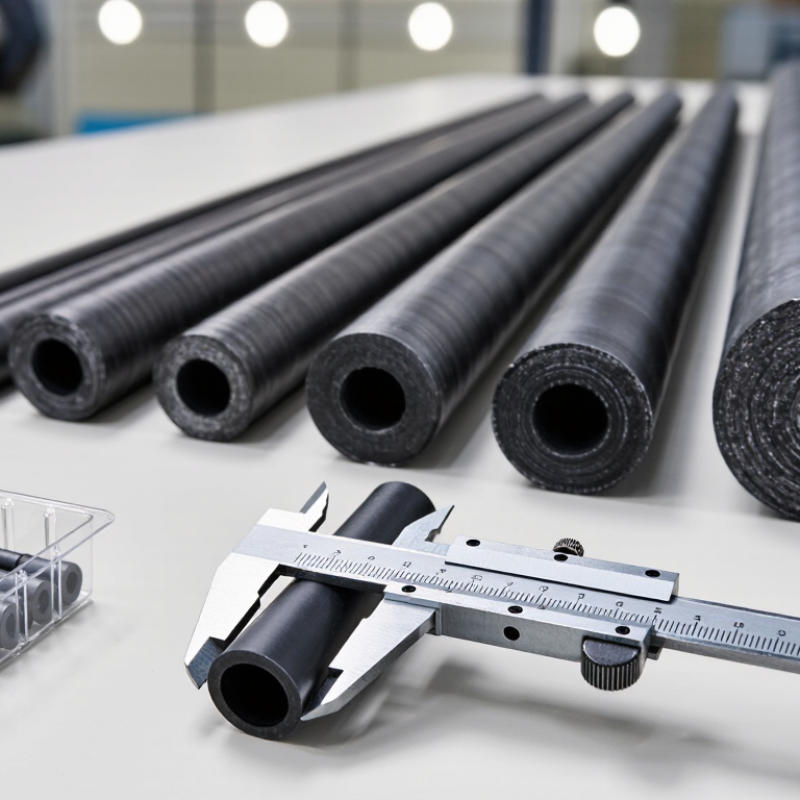
Pultruded Carbon Fiber Bars: 1.5–2.0 g/cm³ Density and 100–200 GPa Modulus
Pultruded carbon fiber bars are often screened within a density of 1.5–2.0 g/cm³ and an axial modulus of 100–200 GPa. Treat these as selection bands, not guaranteed values. The Composite Materials Handbook, CMH-17, Volume 2, emphasizes that composite properties depend on material system and test conditions. A bar’s fiber content, resin, and cure quality can shift its measured performance. Not a guarantee.
Modulus matters most when a bar must resist bending or limit deflection, such as in a lightweight beam or fixture. Density affects the finished part’s weight, but a low-density bar is not automatically the best choice. It is tempting to rank suppliers by modulus alone; that shortcut can mislead. Ask for test reports that state the bar direction, specimen dimensions, and test method. ASTM D3916 covers tensile testing of pultruded rods, while consistent density measurements help compare batches. Ask for curves. A single headline number may conceal variation along the bar, and that deserves a closer look before specifying it.
Seven Leading Suppliers Compared by ASTM D3039 Tensile Strength Above 1,000 MPa
Pultruded carbon-fiber bars can exceed 1,000 MPa in tensile strength, but a headline figure is only a starting point. ASTM D3039 measures tensile properties of polymer-matrix composite specimens. Ask each supplier for the test report, specimen orientation, resin system, and conditioning details. A result measured along the fibers cannot predict strength across them. Small differences in specimen preparation can also affect results.
When comparing seven suppliers, check whether reported values come from finished bars or specially prepared coupons. Confirm the test direction matches your intended load, and look for the number of samples and variation between results. A single peak value tells little about consistency. Request dimensional tolerances, fiber content, and batch traceability, too. These details help connect laboratory data with actual parts. The comparison is useful, but never perfect.
Tips: Request the full ASTM D3039 report. Compare like with like, and ask how the bar performs after machining. A short sample test can reveal issues a datasheet misses.
How Fiber Volume, Resin Systems, and ±0° Alignment Affect Bar Performance
7 Best Pultruded Carbon Fiber Bar Suppliers?
For pultruded carbon fiber bars, supplier comparisons should go beyond price and diameter. Ask for the fiber volume fraction and test data for the exact profile. More fiber can increase stiffness along the bar, but only when resin fully wets the fibers. Poor wet-out can leave voids and weaken the part. That matters.
Resin choice shapes performance, too. A bar used near heat, moisture, or cleaning chemicals needs a resin system suited to those conditions. Request documented limits rather than relying on broad claims. Also check how closely fibers follow the bar’s length. Pultrusion usually aligns most reinforcement at 0°, while slight angular drift can reduce axial performance. Small deviations count.
When evaluating suppliers, compare tolerances, batch records, and sample bars—not just catalog figures. A simple check is to measure several samples and inspect cut ends for uneven fiber distribution or visible voids. I would not assume that a higher fiber fraction guarantees a better bar; it may make manufacturing less forgiving. That trade-off deserves a closer look. Ask whether reported strength comes from longitudinal testing and whether the test method is stated. Supplier data can be useful, but vague numbers are hard to apply.
Supplier Selection by Diameter Tolerance, ISO 527 Testing, and Custom Lengths
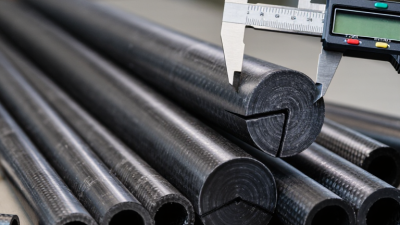
A pultruded carbon fiber bar can look precise and still vary enough to cause assembly problems. Ask suppliers for diameter tolerances by size, not a general claim of “tight control.” Request inspection records showing measurements at several points along each production lot. A handheld micrometer is useful for spot checks, but sampling alone may miss local variation. Small detail. Check the measuring method, too.
For tensile performance, request test reports using ISO 527, with specimen dimensions, test conditions, and results identified. The standard describes tensile testing of plastics; it does not, by itself, guarantee that every bar meets your design needs. Compare tensile strength and modulus only when the test setup and material direction are clear. Grand View Research reported that the global carbon fiber market was valued at USD 5.48 billion in 2023 and projected 11.0% annual growth from 2024 to 2030. That market forecast signals expanding use, not consistent quality across suppliers.
Custom lengths deserve the same scrutiny as material properties. Confirm cut-length tolerance, end condition, packaging, and whether bars arrive straight and protected from edge damage. Ask for a sample cut to your actual drawing before placing a large order. I would not rely on a certificate alone; paperwork can be tidy while a cut end is rough. References: ISO 527, Plastics—Determination of tensile properties; Grand View Research, Carbon Fiber Market Size, Share & Trends Analysis Report.