How to Choose the Best Stab Resistant Fabric for Your Needs?
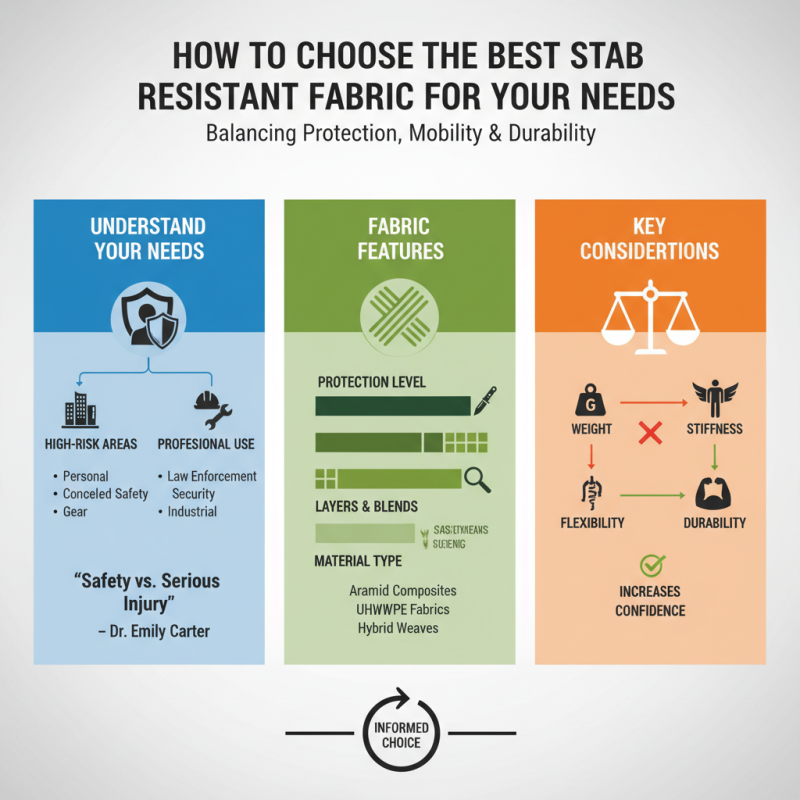
Choosing the right stab resistant fabric can be a daunting task. With various options available, it’s crucial to understand the features that make a fabric truly effective. According to Dr. Emily Carter, a leading expert in protective materials, “Selecting the right stab resistant fabric can mean the difference between safety and serious injury.”
Understanding your needs is vital. Different environments demand different materials. Whether it's for personal safety in high-risk areas or for protective clothing in various professions, the right fabric can increase your confidence. Stab resistant fabric comes in various layers and blends, each offering unique levels of protection.
However, not all fabrics are created equal. Consider factors like weight, flexibility, and durability. If you choose a fabric that is too stiff, it may hinder mobility. Likewise, a lightweight option might lack the necessary protection. Balancing these elements is key to making an informed choice in this crucial industry.
Understanding Stab Resistant Fabrics: Definitions and Standards
Stab resistant fabrics are designed to provide protection against stabbing or cutting attacks. These fabrics are used in various applications, including personal protective gear and law enforcement uniforms. Understanding the definitions and standards surrounding these materials can help consumers make informed decisions.
Stab resistance is measured through specific testing methods. Standards such as ASTM F1342 and ISO 13997 outline how fabrics are evaluated for their resistance. Fabrics must withstand certain forces without being penetrated. Thickness, weave structure, and material composition all play critical roles. For example, higher denier count often indicates stronger fabric. However, not all high-denier fabrics are stab resistant.
Many consumers struggle to understand which fabric is suitable for their needs. It’s crucial to look beyond mere specifications. Testing results can tell more about a fabric than its marketing claims. Real-world performance often differs from lab results. In some scenarios, a fabric’s flexibility might affect its protective capabilities. Evaluating your specific circumstances will inform your choice of stab resistant fabric.
Key Materials Used in Stab Resistant Fabric Manufacturing
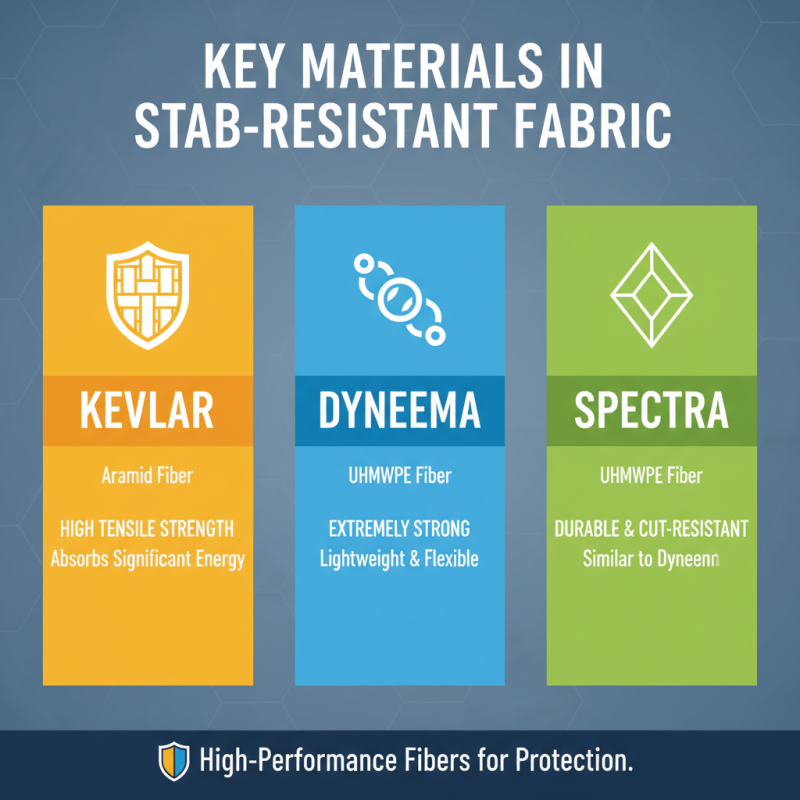
When considering stab resistant fabrics, understanding the key materials involved is crucial. Typically, these fabrics are manufactured using high-performance fibers like Kevlar, Dyneema, and Spectra. Kevlar is a well-known aramid fiber praised for its high tensile strength. Data from industry reports indicate that Kevlar can absorb significant amounts of energy, making it an excellent choice for stab-resistant applications.
Dyneema, another popular choice, is known for its lightweight and flexible properties. It offers superior protection against punctures without sacrificing comfort. According to a 2022 study by the Textile Institute, Dyneema-based fabrics can perform up to 30% better in stab resistance tests compared to traditional materials. Meanwhile, Spectra provides an exceptional balance of weight and strength, making it suitable for versatile applications in various environments.
Each material has its strengths and weaknesses. Kevlar may not perform as well in wet conditions, while Dyneema can be more prone to abrasion. It's essential to balance these factors based on specific needs. As the market evolves, new combinations of these materials continue to emerge, leading to enhanced performance. Selecting the right fabric, therefore, involves a careful analysis of these materials and their properties.
Evaluating Stab Resistance: Industry Test Methods and Ratings
When evaluating stab resistance, understanding industry test methods and ratings is essential. Different standards exist for testing materials. These tests assess how well fabrics can withstand punctures from sharp objects. Common methods include using specified blades to gauge penetration resistance. Fabrics undergo rigorous evaluations in controlled environments. Ratings help consumers understand the protective qualities.
Choosing a fabric involves analyzing test outcomes. Sometimes, results are not as expected. A fabric may fail against one blade but perform well against another. This variability can cause confusion. Ensure you read the detailed reports accompanying ratings. They often reveal strengths and weaknesses hidden in numerical scores.
Durability matters too. A fabric that resists stabbing could lose effectiveness over time. Consider regular assessments for long-term use. Maintenance can affect a fabric's integrity. Always reflect on how often you'll wear or use the material. The right choice requires understanding, not just jumping at high ratings. Stay informed; it’s your best defense against risks.
How to Choose the Best Stab Resistant Fabric for Your Needs? - Evaluating Stab Resistance: Industry Test Methods and Ratings
| Fabric Type |
Stab Resistance Rating |
Weight (g/m²) |
Thickness (mm) |
Typical Applications |
| Aramid Fiber |
Level 1 |
200 |
0.7 |
Body Armor, Gloves |
| UHMWPE (Ultra High Molecular Weight Polyethylene) |
Level 2 |
300 |
0.9 |
Military Gear, Protective Clothing |
| Steel Core |
Level 3 |
500 |
1.2 |
Heavy Duty Vests, Tactical Equipment |
| Ballistic Nylon |
Level 1 |
250 |
0.6 |
Bags, Security Equipment |
| Composite Materials |
Level 2 |
400 |
1.0 |
Industrial Safety Gear |
Applications of Stab Resistant Fabrics in Various Industries
Stab resistant fabrics play a vital role across various industries, enhancing safety and protection. In healthcare settings, professionals often wear stab resistant uniforms. Such materials help safeguard against unexpected attacks. Hospital staff may be at risk while handling different substances. Protecting them with the right fabric is essential.
In the security sector, stab resistant materials are crucial for personal protective equipment. Security personnel frequently encounter dangerous situations. Fabrics that offer high durability can save lives. These materials are lightweight yet strong, allowing for mobility. Comfort can sometimes be overlooked, impacting the user's ability to perform effectively.
**Tip:** When selecting a stab resistant fabric, consider the intended use. Different applications require specific characteristics. Testing the fabric under real-life scenarios can also help in determining its efficacy.
In the construction industry, stab resistant gear is useful as well. Workers can face sharp objects daily. Fabrics that meet safety standards not only provide protection but also contribute to overall productivity. Users tend to forget maintenance. Regular checks and cleanings can prolong the life of their protective gear. Keeping safety a priority ensures a more secure work environment.
Applications of Stab Resistant Fabrics in Various Industries
Factors to Consider When Choosing Stab Resistant Fabrics for Protection
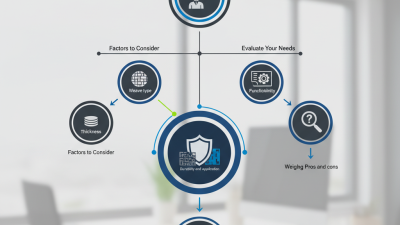
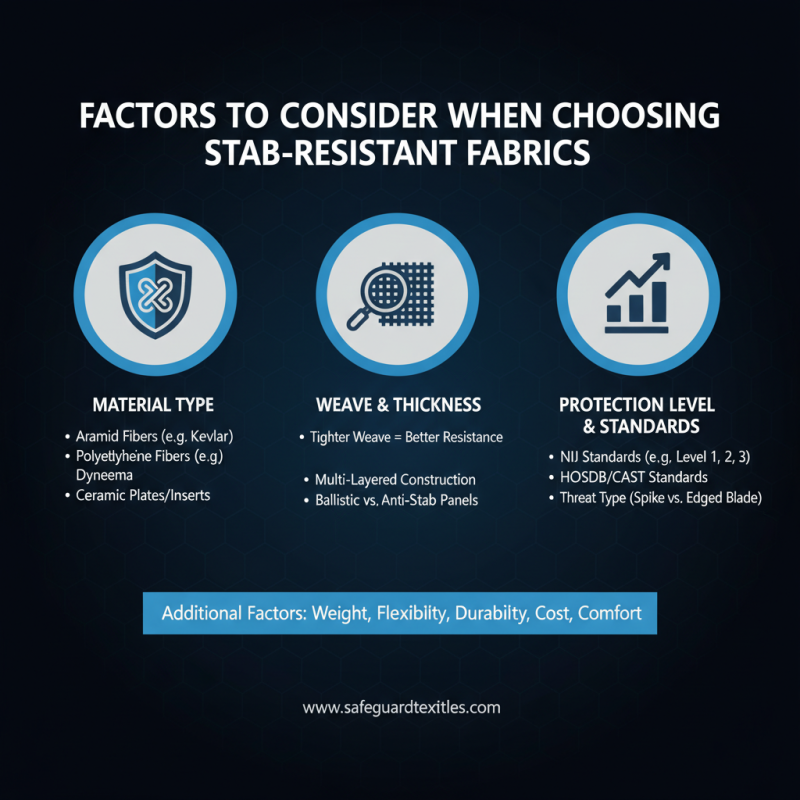
When choosing stab-resistant fabrics, multiple factors demand careful consideration. The material type plays a critical role. High-performance fibers, such as aramid and polyethylene, offer different levels of protection. Assessing the weave and thickness is just as important. A tighter weave generally provides better resistance.
Weight and flexibility matter too. Heavier fabrics may offer enhanced protection but can restrict movement. Look for a balance between protection and comfort. Additionally, moisture resistance can affect longevity. A fabric that handles moisture well is often more durable and effective.
Testing the fabric in real scenarios can reveal its true performance. Seek feedback from professionals who utilize these materials daily. If possible, perform personal tests with different samples. Not every fabric may meet personal expectations. Reflect on personal needs and adjust choices accordingly.