Why Choose Carbon Fiber Sheet Cutting for Your Projects?
The choice of materials in project design can significantly impact performance and efficiency. Among these, Carbon Fiber Sheet Cutting has gained attention for its unique benefits. John Doe, a leading expert in composite materials, states, "Carbon fiber offers unparalleled strength-to-weight ratios, making it ideal for advanced applications." This insight highlights the advantages of Carbon Fiber Sheet Cutting for various industries.
In recent years, the demand for high-performance materials has surged. Industries such as aerospace, automotive, and sports equipment rely heavily on carbon fiber for its lightweight and durable nature. The precision achieved through Carbon Fiber Sheet Cutting ensures that every component meets strict quality standards. The cutting process itself can be complex, presenting challenges that require skilled expertise.
However, transitioning to carbon fiber isn't without its considerations. The cost can be higher than other materials, and the cutting process demands specialized tools. Many organizations face the dilemma of balancing performance with budget constraints. It's essential to weigh these factors carefully when opting for Carbon Fiber Sheet Cutting in any project. The potential for innovation is vast, but so are the challenges that demand careful thought.
Advantages of Carbon Fiber Sheets in Various Industries
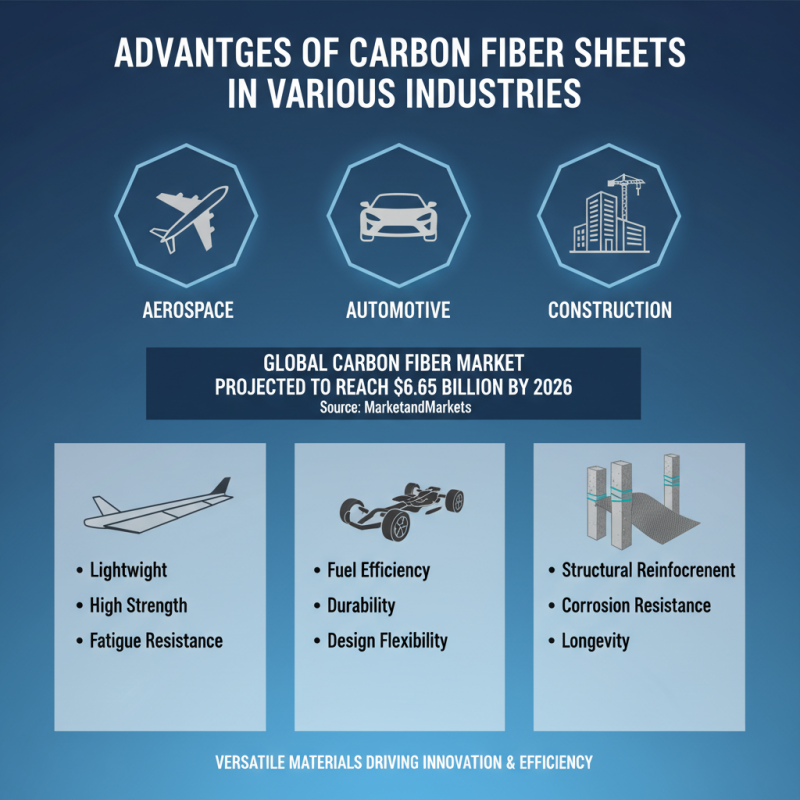
Carbon fiber sheets are versatile materials widely used across various industries. According to a report by MarketsandMarkets, the global carbon fiber market is projected to reach $6.65 billion by 2026. This highlights the growing trend of carbon fiber adoption in sectors such as aerospace, automotive, and construction.
In aerospace, weight reduction is crucial. Carbon fiber offers a strength-to-weight ratio that is five times greater than steel, making it ideal for aircraft components. The Aerospace Industries Association indicates that carbon fiber composites can reduce fuel consumption by up to 20%, significantly enhancing efficiency. The automotive sector benefits similarly. The use of carbon fiber can reduce vehicle weight by 30%, thus improving fuel economy and performance.
Even in construction, carbon fiber sheets are gaining traction. They are used for reinforcement, offering durability and resistance to corrosion. However, challenges remain. The high cost of carbon fiber processing can deter some projects. Furthermore, recycling carbon fiber remains a complex issue. Despite these drawbacks, the advantages of carbon fiber sheets continue to make them a preferred choice in innovative designs and applications.
Key Factors in Selecting Carbon Fiber for Sheet Cutting
When selecting carbon fiber sheets for cutting, several important factors come into play. First, consider the specific application of your project. Carbon fiber excels in strength and lightweight properties, making it ideal for aerospace, automotive, and sporting goods. Understanding these uses can enhance the effectiveness of your build.
The thickness of the sheet is crucial. Thicker sheets offer more durability but can be harder to cut accurately. You may find yourself facing challenges in achieving precise dimensions for intricate designs. Thin sheets, on the other hand, are easier to work with but may not provide the needed strength in certain applications. Balancing these aspects requires careful thought.
Another key consideration is the surface finishing of the carbon fiber. A smooth finish will result in a cleaner cut, impacting both aesthetics and performance. Pay attention to the method of cutting, too. Tools like water jets or laser cutters might yield better precision but require more investment. Not every method suits every project. Each decision requires reflection and understanding of your specific needs.
Why Choose Carbon Fiber Sheet Cutting for Your Projects? - Key Factors in Selecting Carbon Fiber for Sheet Cutting
| Feature |
Description |
Advantages |
Applications |
| Lightweight |
Carbon fiber sheets are much lighter than metals. |
Reduces overall weight of projects, improves efficiency. |
Aerospace, automotive, sports equipment. |
| High Strength |
Offers exceptional tensile strength. |
Durable and long-lasting materials. |
Construction, industrial applications, robotics. |
| Corrosion Resistance |
Highly resistant to chemical and environmental damage. |
Lower maintenance costs over time. |
Marine, chemical processing, outdoor applications. |
| Versatility |
Can be cut and shaped for various forms and uses. |
Ideal for diverse project requirements and designs. |
Custom applications, prototypes, artistic creations. |
| Thermal Stability |
Maintains integrity under varying temperature conditions. |
Suitable for high-performance applications. |
Aerospace, high-performance automotive parts. |
Techniques and Tools Used in Carbon Fiber Sheet Cutting
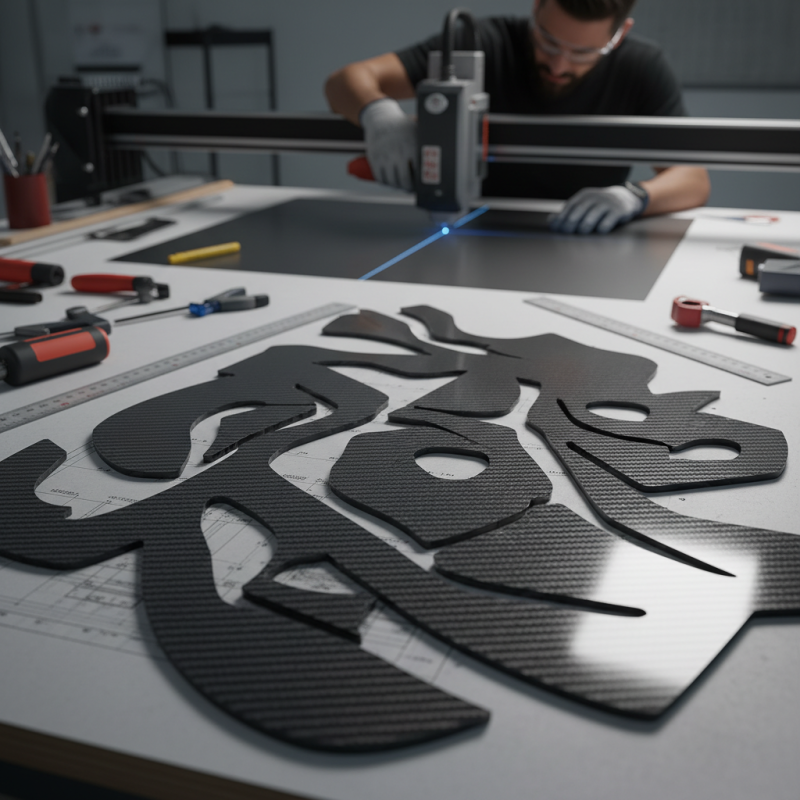
When it comes to cutting carbon fiber sheets, several techniques stand out. The most common method is using a CNC (Computer Numerical Control) router. CNC routers provide precision, allowing for intricate designs and accurate cuts. They can handle complex shapes efficiently. However, they require a significant initial investment and proper programming skills. Learning to use a CNC router can be challenging for newcomers.
Hand tools are also effective for cutting carbon fiber. A fine-toothed saw can yield decent results, but it demands a steady hand. Some hobbyists prefer a rotary tool fitted with a cutting wheel. This tool is portable and versatile. Nonetheless, it’s crucial to wear protective gear. Carbon fiber dust can be harmful if inhaled.
Water jet cutting offers another technique for more advanced operations. This method uses high-pressure water mixed with abrasives. It produces clean edges and minimizes dust production. Yet, the machinery is often expensive and requires skilled operators. As with any technique, the choice depends on the project's complexity and available resources. Each method has its strengths and weaknesses, making understanding them essential for successful outcomes.
Applications of Carbon Fiber Sheets in Engineering and Design
Carbon fiber sheets are transforming the engineering and design landscape. These materials are lightweight yet exceptionally strong, with a tensile strength of up to 600,000 psi. This strength-to-weight ratio makes them ideal for applications where every ounce counts, such as in aerospace and automotive industries. Their stiffness is another advantage, allowing for precise designs without the risk of warping or bending.
In engineering, carbon fiber sheets play a crucial role in structural components. They are extensively used in making frames, panels, and even in wind turbine blades. According to industry reports, the market for carbon fiber composites in aerospace is expected to reach $43 billion by 2027. This growth highlights the increasing reliance on carbon fiber in high-performance environments. However, the cost of these materials remains a concern, as they can be significantly more expensive than metals or plastics.
In design, the aesthetic appeal of carbon fiber cannot be overlooked. Its unique texture and finish are often utilized in luxury goods and consumer electronics. Nevertheless, the production process is complex. Not all manufacturers can achieve the same level of quality. Variations in resin and weaving techniques can lead to inconsistencies, impacting performance. Thus, selecting the right supplier is crucial for ensuring reliability and quality in projects.
Applications of Carbon Fiber Sheets in Engineering and Design
Cost Considerations and Environmental Impact of Using Carbon Fiber
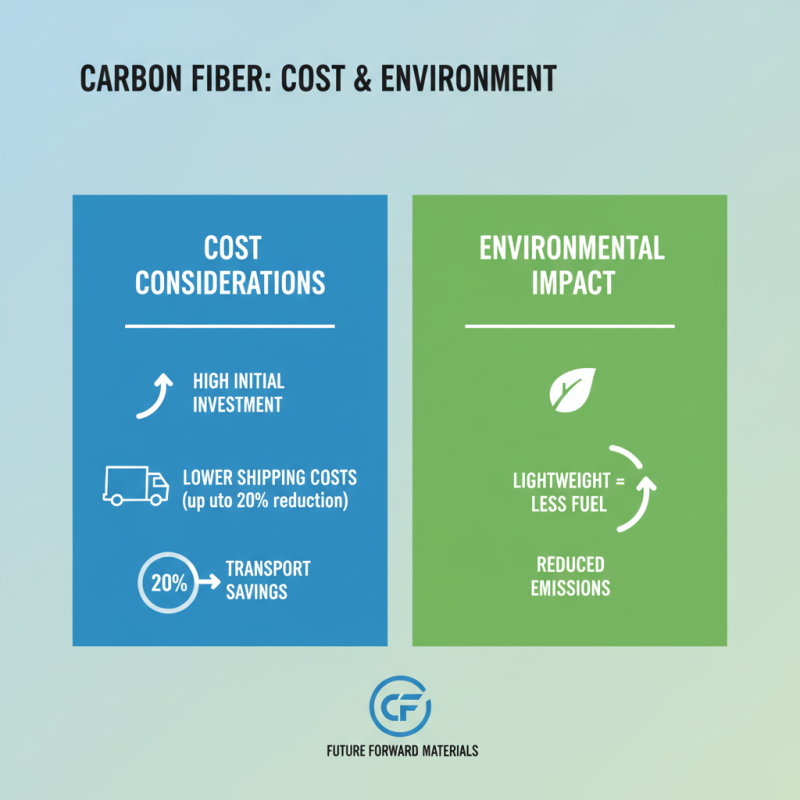
When considering carbon fiber sheet cutting, cost factors play a significant role. The initial investment can be higher compared to traditional materials like aluminum or steel. However, carbon fiber's lightweight nature contributes to lower shipping costs. A 2021 report from the Composite Materials Handbook indicates that lightweight materials can reduce transport costs by up to 20%. This is crucial for projects with strict budget constraints.
On the environmental front, carbon fiber presents mixed implications. Manufacturing processes involve high energy consumption, raising concerns about its carbon footprint. Nonetheless, carbon fiber's durability leads to longer lifecycles, which can offset initial environmental costs. According to the American Composite Manufacturing Association, the potential for recycling carbon fiber is increasing, though it remains a developing area.
The reliance on fossil fuels in the production process calls for reflection. As industries aim for sustainability, finding eco-friendly practices is essential. Considering alternatives, like bio-based composites, might also be worthwhile. Projects utilizing carbon fiber should weigh both cost and environmental impact carefully, striving for balance in their material choices.