How to Choose the Right Carbon Fiber Square Rod for Your Project?
Choosing the right Carbon Fiber Square Rod can be challenging. As an expert in the field, Dr. Emily Carter once said, "Selecting the right materials is crucial for success." Her words emphasize the importance of making informed choices.
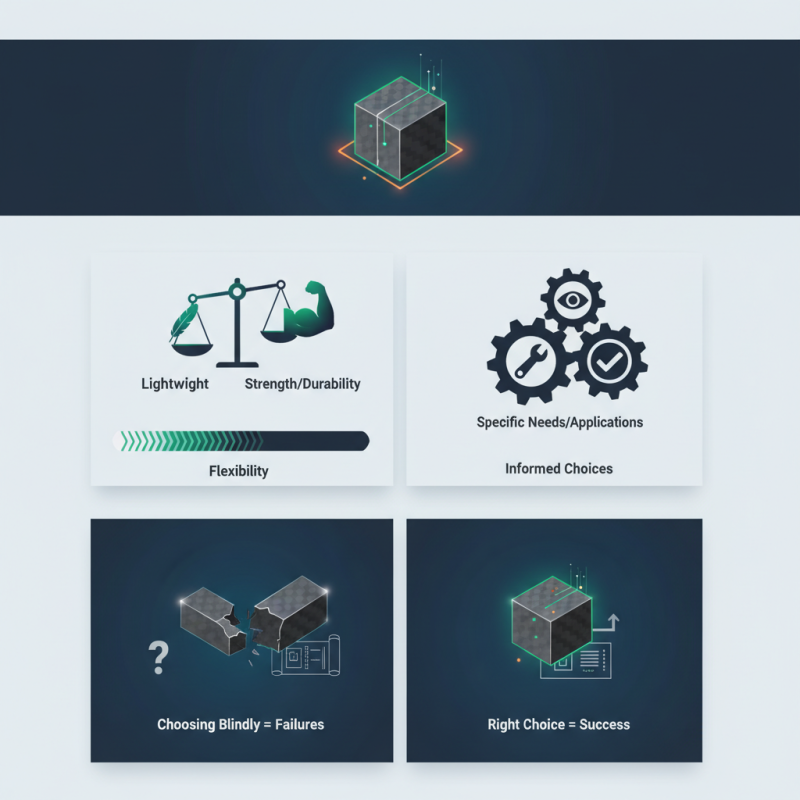
When embarking on a project, consider your specific needs. Different applications require different properties. Some projects demand lightweight materials, while others need strength and durability. Carbon Fiber Square Rods come in various grades, each suited for distinct uses.
It's essential to evaluate the available options critically. Examine weight, flexibility, and strength. Reflect on how each aspect impacts your project. Choosing blindly can lead to failures. Remember, the right Carbon Fiber Square Rod can make all the difference in your outcomes.
Understanding the Basics of Carbon Fiber Square Rods
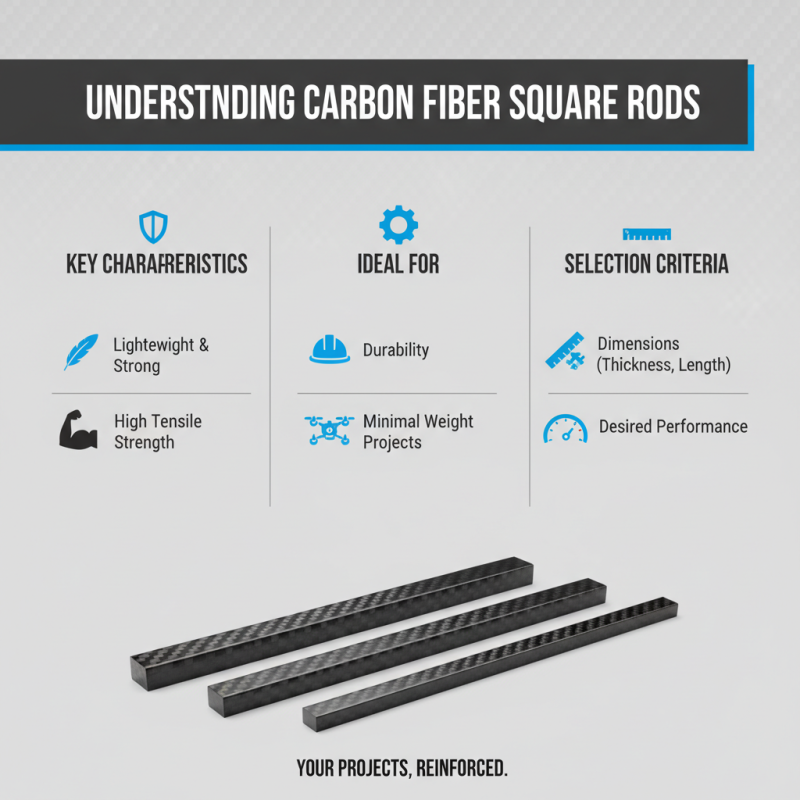
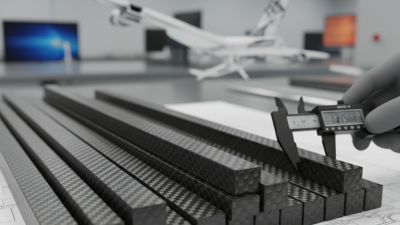
When selecting a carbon fiber square rod, it's crucial to understand the fundamentals. Carbon fiber is a lightweight yet strong material. It’s known for its high tensile strength, which means it can withstand significant stress. These rods are ideal for projects that require both durability and minimal weight. Understanding the specific dimensions, such as thickness and length, is essential for achieving the desired performance.
Different applications may demand various specifications. For instance, hobbyists might prefer smaller rods for model aircraft, while industrial applications may require larger dimensions. Pay close attention to the rod's stiffness and flexibility. Some projects may need a rigid structure, while others benefit from some give. This versatility can be a double-edged sword; choosing an overly flexible rod might compromise your design.
Beyond performance, consider ease of handling. Carbon fiber rods can be tricky to cut and shape. Proper tools and safety precautions are vital. Mistakes in cutting can lead to wasted materials and increased costs. Reflecting on these factors will guide you to make an informed choice. Each project is unique, and what works for one may not work for another.
Evaluating the Mechanical Properties for Your Specific Application
When choosing a carbon fiber square rod, evaluating mechanical properties is crucial for your application. Mechanical properties include tensile strength, stiffness, and fatigue resistance. These factors determine how well the rod performs under stress. For instance, a higher tensile strength means it can withstand more force without breaking. But does that always meet your needs?
Consider the stiffness required for your project. A stiffer rod may cause less bending. However, too much stiffness could lead to brittleness. You may find that flexibility plays a critical role in certain applications. Balancing stiffness and strength is not always easy and requires careful thought.
Additionally, you should think about the environment the rod will be used in. Will it face extreme temperatures or humidity? These factors can affect the mechanical properties of the material. Testing different samples may reveal surprising results. Sometimes, what looks good on paper doesn’t perform as expected in real life. Reflection on your specific requirements is essential.
Choosing the Right Dimensions: Length, Width, and Thickness
When selecting the right dimensions for a carbon fiber square rod, understanding length, width, and thickness is crucial. Length determines how far the rod will extend in your project. A longer rod offers more versatility, but can also be cumbersome. Shorter lengths may limit design options, yet provide easier handling.
Width and thickness directly affect strength and flexibility. A wider rod can distribute loads more effectively. However, it may add unnecessary weight to your project. Thicker rods provide enhanced rigidity, which may be beneficial in high-stress applications. Conversely, thinner rods can save material costs and reduce overall weight.
Tips: Always consider the specific use of the rod. Test various sizes in a mock-up before finalizing your choice. A slight change in thickness might alter performance significantly. Reflect on your project's end goals. Are you prioritizing weight or strength? It's an important decision, and each project will require a unique balance.
Assessing Cost vs. Performance: Budget Considerations
When considering carbon fiber square rods, cost versus performance is a key factor. The prices can vary significantly based on factors like quality, thickness, and intended use. Reports indicate that while high-end options may cost over $30 per meter, budget choices can start under $10. This disparity often leads to confusion for buyers trying to balance quality and affordability.
Performance is crucial when selecting materials for specific projects. High-performance rods typically offer superior tensile strength and lower weight, beneficial in applications like aerospace or automotive. Studies show that rods with a tensile strength of 600 MPa or higher are favored for professional use. However, consumers should reflect on their actual needs. Are you building a model or a structural element? A costly investment might not be necessary.
It’s also essential to consider long-term costs. While cheaper rods may save money upfront, they might lead to higher replacement frequencies due to inferior performance. A project requiring higher durability might ultimately warrant spending more initially. Reflecting on your specific requirements will guide you in making a choice that balances cost and performance effectively.
How to Choose the Right Carbon Fiber Square Rod for Your Project? - Assessing Cost vs. Performance: Budget Considerations
| Rod Size (inches) |
Length (ft) |
Weight (lbs) |
Cost ($) |
Performance Rating (1-10) |
| 0.5 |
3 |
0.5 |
15 |
8 |
| 1 |
4 |
1.0 |
25 |
9 |
| 1.5 |
5 |
1.5 |
40 |
10 |
| 2 |
6 |
2.0 |
60 |
10 |
| 2.5 |
8 |
2.5 |
80 |
9 |
Evaluating Supplier Reputation and Product Quality Standards
When selecting a carbon fiber square rod, supplier reputation and product quality are crucial. Check online reviews and ratings. Look for suppliers with positive feedback from previous customers. Established suppliers often have a track record in delivering quality products. Be wary of newer suppliers without proven histories.
Quality standards are another important factor. Ensure that the materials meet industry specifications. Ask for certificates or test reports. Some rods may not perform as expected. Pay attention to potential inconsistencies. Not every supplier maintains strict quality control. It’s important to inspect samples before making a bulk purchase.
The process may require some trial and error. Sometimes, the product received may not match the description. This can be frustrating. Consider contacting suppliers about any concerns you have. Open communication can clarify issues. A good supplier will be responsive and ready to assist with your needs.