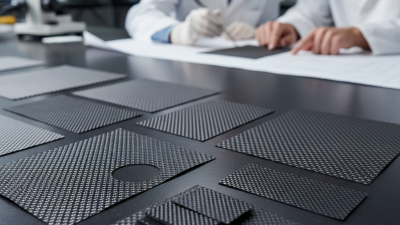
Top 10 Tips for Choosing the Best Carbon Fiber Sheet?
Selecting the right carbon fiber sheet is crucial for various applications, from aerospace to automotive. According to Dr. Sarah Thompson, a leading expert in composite materials, “The quality of a carbon fiber sheet can significantly impact project success.” Understanding what to look for can save time and resources.
Carbon fiber sheets are known for their strength and lightweight properties. However, not all sheets are created equal. Factors like thickness, weave pattern, and resin type can greatly influence performance. Choosing poorly could lead to unforeseen problems in your project. This makes the selection process critical.
It’s easy to overlook details when selecting a carbon fiber sheet. Many buyers focus solely on price without considering the material's durability and flexibility. In the competitive marketplace, understanding these nuances is essential. Opting for a high-quality sheet can make all the difference in achieving the desired outcome.

Key Properties of Carbon Fiber Sheets Essential for Selection
When selecting a carbon fiber sheet, understanding its key properties is essential. Carbon fiber is renowned for its high strength-to-weight ratio. It offers excellent rigidity which can enhance the structural integrity of a design. Moreover, the material is resistant to corrosion and chemical damage. These features make it ideal for various applications, from aerospace to automotive.
Another important property is the thermal stability of carbon fiber sheets. They can withstand high temperatures without significant changes in performance. This ensures durability in extreme environments. Additionally, carbon fiber sheets can be customized in terms of thickness and weave patterns. This flexibility allows for tailored solutions depending on project needs. However, the cost can be a factor to consider. Some may find the price to be a barrier, impacting decision-making.
Furthermore, the manufacturing process influences quality. Variations in production methods can lead to differences in performance. In some cases, it may be difficult to determine the best option without sufficient data. It's crucial to work with reputable suppliers who can provide detailed specifications. This transparency helps ensure that the selection of carbon fiber sheets meets the desired standards and application requirements.
Understanding Different Types of Carbon Fiber Weave Patterns
When selecting a carbon fiber sheet, understanding the different weave patterns is crucial. The most common weaves include plain, twill, and unidirectional. Each pattern offers unique characteristics, impacting strength, flexibility, and appearance. For instance, the plain weave provides a balanced strength-to-weight ratio. Meanwhile, the twill weave offers greater flexibility, making it ideal for complex shapes.
One industry report indicates that twill woven carbon fiber can increase tensile strength by up to 30% compared to plain woven alternatives. This detail shows why choosing the right weave is essential for specific applications, especially in aerospace and automotive industries.
Tips for selection: Always consider the intended application. If weight is crucial, opt for unidirectional sheets. These sheets deliver maximized stiffness along the fiber direction, often favored in high-performance settings. Also, assess the aesthetic appeal. Different weaves can provide distinct visual impressions, which may be vital for consumer products. Make informed choices that align with both structural needs and aesthetic preferences.
Evaluating Thickness and Weight Specifications for Your Needs
When evaluating carbon fiber sheets,
thickness and weight specifications are crucial. Different applications require various thickness levels.
Common thickness ranges for carbon fiber sheets are from 0.5 mm to 5 mm.
A 1 mm sheet may suffice for lightweight projects, while thicker options are necessary for structural integrity.
Weight is also significant. Carbon fiber typically weighs between
1.5 to 2.0 grams per cubic centimeter.
The weight-to-strength ratio of carbon fiber is better than many metals. This makes it an ideal choice for
aerospace and automotive industries, where reducing weight without sacrificing strength is paramount.
Reports indicate that a 50% weight reduction can enhance fuel efficiency by up to 10% in aircraft.
However, consider that thicker sheets may not always be better. They can add unnecessary weight and cost.
Reassessing project requirements can lead to more efficient selections.
Always consult with engineers or materials specialists to ensure the right balance of thickness and weight for your specific needs.
Comparing Cost-Effectiveness and Performance in Carbon Fiber Sheets
When selecting carbon fiber sheets, cost-effectiveness and performance are critical factors. The price of carbon fiber can vary widely. High-quality sheets may seem expensive but can save you money in the long run through their durability. Some cheaper options might not provide the same performance level, leading to higher replacement costs over time.
Performance is another essential aspect. Higher tensile strength and lightweight properties make carbon fiber an excellent choice for various applications. However, not all sheets will perform equally. Consider the specific needs of your project. While some sheets offer high stiffness, they might lack flexibility, which can be limiting in certain designs.
It's also vital to perform thorough comparisons. Analyze the specifications carefully. Look for sheets with the right balance of weight, strength, and price. Don't rush your decision. Taking the time to evaluate your options can result in a more satisfying selection. Your final choice should reflect a thoughtful consideration of both cost and the long-term performance you expect.
Top 10 Tips for Choosing the Best Carbon Fiber Sheet
| Tip |
Parameter |
Example Value |
Cost-Effectiveness |
| 1. Assess Weight Requirements |
Weight (g/m²) |
200 |
High |
| 2. Consider Thickness |
Thickness (mm) |
0.5 |
Medium |
| 3. Evaluate Tensile Strength |
Tensile Strength (MPa) |
600 |
High |
| 4. Check Flexural Modulus |
Flexural Modulus (GPa) |
70 |
High |
| 5. Inspect Surface Finish |
Surface Finish |
Glossy |
Medium |
| 6. Review Impact Resistance |
Impact Resistance (J/m²) |
15 |
Medium |
| 7. Evaluate Cost per Sheet |
Cost ($) |
50 |
High |
| 8. Examine Manufacturing Process |
Manufacturing |
Autoclave |
High |
| 9. Investigate Customization Options |
Customization |
Available |
Medium |
| 10. Read Customer Reviews |
Customer Feedback |
Positive |
High |
Sourcing Quality Suppliers: Industry Standards and Certifications to Consider
When sourcing carbon fiber sheets, understanding industry standards and certifications is crucial. ASTM International is one of the key organizations providing guidelines for carbon fiber products. Adhering to ASTM standards ensures that materials meet specific performance metrics. For instance, tests conducted under ASTM D3039 assess the tensile properties of carbon fiber, which are essential for applications like aerospace and automotive industries.
Another important certification is ISO 9001. This quality management standard verifies the supplier's commitment to providing consistent quality. A report by the Carbon Fiber Composites Market indicates that companies with ISO 9001 certification often show a 20% increase in customer satisfaction. It highlights the reliability of certified suppliers in delivering high-quality products.
However, not all suppliers carry these certifications, which raises concerns. Without proper validation, you may encounter inconsistencies in material performance. It's advisable to request documentation and conduct audits when necessary. This step may seem tedious, but the importance of ensuring quality cannot be overstated. Trusting a supplier without validating their claims can lead to project failures.