- Home
- Products
- About Us
- News
- Blog
- Video
- Contact
Leave Your Message
China’s aramid textile sector has grown from basic industrial supply into a specialized manufacturing field. Today, Chinese producers serve aerospace, electrical insulation, firefighting, filtration, automotive, and protective equipment markets. However, identifying the “top 10” requires more than checking export volume or website claims.
A practical review should examine aramid fiber sourcing, fabric construction, production capacity, and quality control. Important details include para-aramid or meta-aramid content, yarn count, weave design, fabric weight, tensile strength, thermal resistance, and dimensional stability. Certifications also matter. ISO systems, test reports, traceable batches, and consistent inspection records can separate a dependable supplier from a capable-looking trader.
Dr. Stephanie Kwolek, the DuPont chemist who developed Kevlar, once said, “I knew I had made something special.” Her observation reflects the value of material innovation, but fabric performance still depends on manufacturing discipline. A strong fiber can perform poorly when weaving tension, coating uniformity, or finishing control is neglected.
This guide introduces ten notable Chinese Aramid Fabric manufacturers through a balanced comparison. It considers technical experience, application knowledge, customization ability, delivery reliability, and evidence of international service. “Top” is not a permanent label. A factory suitable for brake components may not fit high-temperature filtration or electrical insulation. That distinction is easy to miss.
Some manufacturers may publish limited performance data. That limitation deserves attention, not polite assumptions. Buyers should request recent test results, sample rolls, production photographs, and clear tolerance ranges before making a decision. These checks cannot remove every risk, but they make supplier selection more transparent, practical, and defensible.
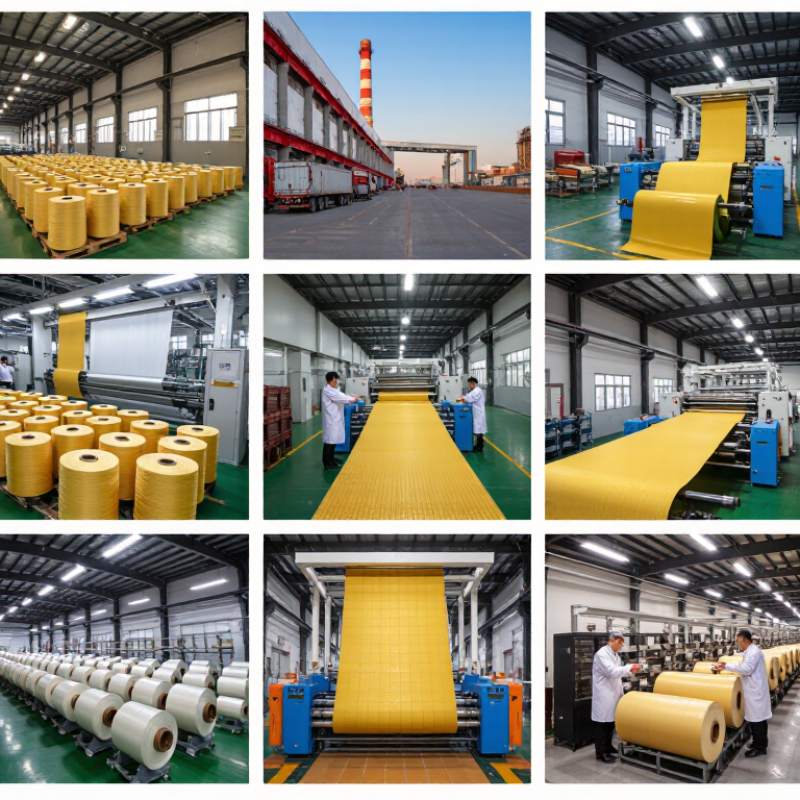
China Top 10 Aramid Fabric Manufacturers: How They Are Evaluated
Ranking China’s top aramid fabric manufacturers requires more than comparing annual output. An experienced buyer examines fiber grade, weave consistency, tensile strength, and thermal performance. Small details matter. Fabric rolls should show stable width, even coating, clean edges, and clear batch identification. Samples are tested before large orders. Independent laboratory reports add credibility, especially when results include test methods, dates, and tolerances. Vague certificates are not enough.
A reliable evaluation also follows the factory floor. Auditors should review raw-material storage, humidity control, loom maintenance, inspection records, and worker training. Production discipline often explains why two similar fabrics perform differently. Manufacturers deserve higher scores when they provide traceable samples, realistic lead times, and responsive technical support. Fast replies help. However, a confident sales presentation should never replace physical testing. In practice, I would request samples from several production batches.
Cost remains important, but the lowest quotation may conceal higher waste, unstable quality, or costly rework. Evaluation should compare usable performance per meter, not price alone. Reviewers can also examine export experience, packaging, complaint handling, and consistency across repeated batches. Still, no scorecard is perfect. Application needs vary. A fabric suited to protective garments may not fit filtration, insulation, or reinforcement work. Transparent evidence, careful sampling, and honest limits create a more dependable top-ten list.
| No. | Evaluation Dimension | What Is Evaluated | Relevant Test Method or Reference | Weight | Preferred Benchmark |
|---|---|---|---|---|---|
| 1 | Aramid Fiber Type and Fabric Construction | Meta-aramid or para-aramid composition, yarn count, weave structure, coating, and construction consistency. | Technical data sheet review, yarn-count testing, fabric construction analysis, and microscopic inspection. | 12% | Clearly specified fiber type, weave, thickness, and finishing system. |
| 2 | Tensile Strength and Elongation | Breaking force and elongation in both warp and weft directions, including batch-to-batch uniformity. | ASTM D5035 or ISO 13934-1, according to the agreed fabric specification. | 15% | Results meet the declared specification with low warp/weft variation. |
| 3 | Thermal Resistance | Performance after exposure to elevated temperature, including shrinkage, embrittlement, strength loss, and visual degradation. | Agreed heat-aging protocol, dimensional-change testing, and application-specific thermal exposure testing. | 14% | Low dimensional change and retained mechanical performance at the specified service temperature. |
| 4 | Flame Resistance and Limiting Oxygen Index | Flammability, afterflame, afterglow, char formation, and oxygen concentration required to sustain combustion. | ASTM D2863 for limiting oxygen index; vertical flame testing such as ASTM D6413 where applicable. | 13% | Self-extinguishing behavior and compliance with the end-use flame standard. |
| 5 | Abrasion, Tear, and Flex-Fatigue Resistance | Resistance to rubbing, tearing, repeated bending, sewing, handling, and installation damage. | ASTM D3884 for abrasion, ASTM D1424 or ISO 13937 for tear strength, and application-specific flex testing. | 10% | Stable performance after repeated abrasion, flexing, and handling cycles. |
| 6 | Chemical and Environmental Resistance | Resistance to moisture, oils, solvents, acids, alkalis, ultraviolet exposure, and other chemicals relevant to the application. | Application-specific chemical immersion, UV-aging, humidity, and post-aging strength tests. | 9% | No unacceptable coating failure, degradation, or loss of required strength. |
| 7 | Dimensional Stability and Surface Quality | Width, thickness, areal weight, shrinkage, skew, edge quality, coating uniformity, and visible defects. | ISO 5084 for thickness, ISO 3801 for mass per unit area, and agreed dimensional inspection procedures. | 8% | Consistent roll width, weight, thickness, color, and coating with controlled defect rates. |
| 8 | Quality Management and Traceability | Documented quality system, incoming-material control, in-process inspection, final testing, lot traceability, and corrective actions. | Quality manual review, certificate verification, inspection records, and sample traceability audit. | 7% | Documented quality controls with retained test records for every production lot. |
| 9 | Compliance and Product Certification | Ability to provide valid test reports, declarations, restricted-substance documentation, and application-specific certifications. | Independent laboratory reports, ISO 9001 documentation, REACH or RoHS declarations where relevant, and required end-use standards. | 6% | Current, verifiable documents matching the exact fabric construction supplied. |
| 10 | Production Capacity, Lead Time, and Service | Available weaving and finishing capacity, minimum order quantity, sample speed, delivery reliability, packaging, and technical support. | Capacity review, production-plan verification, delivery-history analysis, sample approval, and customer-service assessment. | 6% | Reliable scale-up, transparent lead times, consistent export packaging, and responsive technical support. |
| Total Evaluation Weight | 100% | Weighted technical and commercial assessment | |||
Note: The ranking of an aramid fabric manufacturer should be based on verified samples, current laboratory reports, production audits, and the buyer’s specific end-use requirements. Performance benchmarks may vary according to fiber type, fabric construction, coating, and finishing process.