Selecting China’s top 10 Rectangular Carbon Tube suppliers requires more than comparing factory websites. Buyers should examine steel grade, wall-thickness tolerance, welding quality, coating options, traceability, and export experience. A square or rectangular tube may look uniform on a sample rack, yet small corner-radius differences can affect fit-up, load transfer, and fabrication time.
The World Steel Association reported approximately 1.89 billion tonnes of crude steel production worldwide in 2023. China accounted for about 1.02 billion tonnes, confirming its deep manufacturing capacity. However, steel output is not the same as tube quality. The International Energy Agency also identifies steelmaking as a major industrial emissions source, making recycled content, energy use, and production transparency increasingly important during supplier evaluation. These reports provide useful context, but they do not rank Rectangular Carbon Tube manufacturers directly.
Edwin Basson, Director General of the World Steel Association, has stated, “Steel is essential to modern life.” That observation remains practical for construction frames, machinery guards, trailers, and modular structures. Still, this guide should not treat scale as proof of reliability. A better supplier should provide mill certificates, dimensional inspection records, welding procedures, and clear responses to sample failures. Product photos are not enough. Some supplier rankings also depend on incomplete public data, and that weakness deserves attention. The following selection therefore considers manufacturing capability, quality evidence, customization, certifications, delivery performance, and buyer feedback, while recognizing that regional prices and lead times can change.
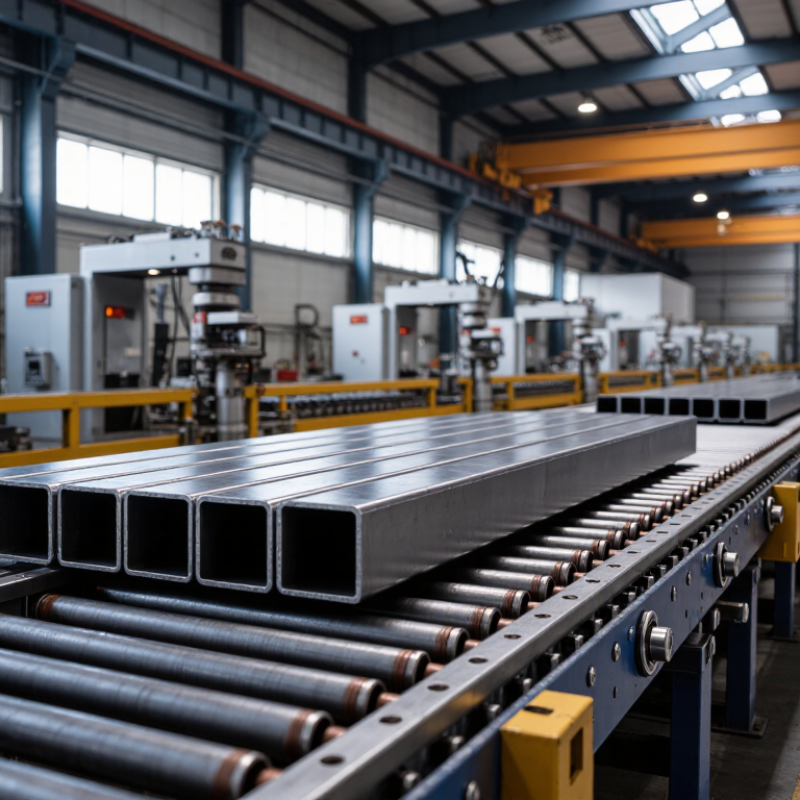
Rectangular carbon tubes are hollow sections made from carbon steel, not carbon fiber. Their flat faces and sharp corners create useful strength with less material than solid bars. 100 × 50 × 3 millimeters may serve in frames, supports, machine guards, and agricultural equipment. The internal opening also reduces weight and allows cables, fasteners, or smaller tubes to pass through.
Manufacturers usually form steel strip into a rectangular shape, then weld the seam. Some products receive hot-rolled or cold-formed processing, depending on the required tolerance and strength. Wall thickness, corner radius, yield strength, and surface condition all affect performance. A practical buyer should check the relevant standard, heat number, inspection records, and mill certificate. Do not trust appearance alone. A clean surface can still hide poor dimensional control. That is where supplier evaluation becomes important.
Tips: Measure several points with calipers, especially near the corners. Confirm outside dimensions, wall thickness, length tolerance, and steel grade before ordering. Ask whether the tube is suitable for welding, galvanizing, or outdoor exposure. Small errors matter. Also, compare test documents with the actual batch delivered. No selection is perfect; a thicker wall improves stiffness but increases weight, cost, and sometimes welding difficulty.
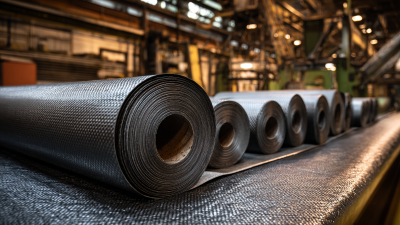
Choosing among China’s top rectangular carbon tube suppliers requires more than comparing prices. A dependable supplier should provide clear steel grades, wall thickness ranges, dimensional tolerances, and production capacity. Ask for recent inspection reports, mill certificates, and sample measurements before placing a large order.
Check how the supplier controls welding, forming, cutting, and surface treatment. Uneven corners, rough weld seams, or inconsistent wall thickness can create problems during fabrication. A practical review should include sample testing, factory photographs, and a video or in-person production audit. Confirm whether each batch carries traceable heat numbers and packing records.
Communication is equally important. The supplier should answer technical questions directly, explain realistic lead times, and report quality issues without hiding them. Strong suppliers usually discuss applicable standards, testing methods, packaging details, and export documentation with precision. A low quotation may reflect thinner material, weaker inspection, or incomplete service.
Small details matter.
Request a trial batch first. Compare its weight, dimensions, weld appearance, and corrosion protection with the agreed specifications. Delivery history also deserves attention, since repeated delays can disrupt construction schedules. No evaluation is perfect; even experienced buyers may overlook changes in raw material sources or subcontracted processes. A written quality agreement, supported by independent inspection when necessary, reduces uncertainty without replacing careful judgment.
China’s Top 10 Rectangular Carbon Tube Suppliers are often compared by manufacturing capacity, quality control, and export experience. A credible supplier should provide mill test certificates, dimensional reports, and traceable heat numbers. These records help buyers verify carbon content, yield strength, tensile strength, and wall thickness.
The leading suppliers usually operate automated forming lines and modern welding equipment. Their rectangular tubes may serve construction frames, machinery supports, trailers, and general fabrication. Buyers should check common grades, such as carbon structural steel, along with available sizes and wall thicknesses. A reliable factory can explain its tolerance standards clearly. It should also describe surface treatment, cutting accuracy, packing methods, and loading procedures.
Do not rely on rankings alone. A supplier with large output may still perform poorly on small custom orders. I would request recent inspection reports, production photographs, and sample measurements before signing a contract. Independent testing can reveal problems that polished catalogues hide. Delivery records matter too, especially for repeated overseas shipments. Some suppliers communicate quickly but provide vague technical answers. That is a warning sign. Site audits remain useful, although they can be difficult for smaller buyers. My assessment may also change after checking a factory’s current equipment, staffing, and certification status. Practical performance matters more than impressive claims.
Comparing China’s rectangular carbon tube suppliers requires more than checking price lists. Review wall thickness, outside dimensions, corner radius, steel grade, and length tolerance. A reliable quotation should match your drawing, application, and required standard, such as ASTM, EN, or GB specifications. Ask for recent mill certificates and sample inspection reports. Small details matter.
Quality becomes clearer through testing. Check tensile strength, yield strength, chemical composition, weld integrity, and surface condition. For welded tubes, examine seam consistency and corner deformation after forming. Request dimensional records from several production batches, not only one attractive sample. A clean sample can still hide weak process control.
Manufacturing capability deserves equal attention. Confirm whether the supplier controls roll forming, high-frequency welding, sizing, cutting, and surface treatment internally. Ask about equipment age, production capacity, mold availability, and traceability from coil to finished tube. Factory videos help, but an independent inspection offers stronger evidence. I have found that fast replies do not always indicate technical depth. Sometimes, a supplier sends polished documents but avoids specific tolerance questions. That is a warning. Still, even careful buyers can overvalue certifications and overlook packing quality, moisture protection, or loading methods. The comparison should include defect handling, replacement procedures, lead-time records, and communication during production. Keep the evaluation practical.
| Anonymous Supplier Profile | Primary Production Route | Typical Outside Size Range | Typical Wall Thickness | Common Carbon Steel Grades | Applicable Product Standards | Available Surface Conditions | Quality Control and Testing | Maximum Standard Length | Customization Capability | Manufacturing Capability Score |
|---|---|---|---|---|---|---|---|---|---|---|
| Supplier Profile 01 | High-frequency welded tube production | 20 × 20 mm to 300 × 300 mm | 1.2–16.0 mm | ASTM A500 Grade B/C; EN 10219 S235–S355 | ASTM A500; EN 10219; GB/T 6725 | Black, pickled, galvanized, or powder-coated | Dimensional inspection, weld-seam inspection, tensile testing, flattening test, chemical analysis | 12 m | Cut-to-length, drilled holes, slots, beveled ends, special packaging | 4.7 / 5 |
| Supplier Profile 02 | Cold-formed welded structural tube production | 25 × 25 mm to 250 × 250 mm | 1.5–12.0 mm | ASTM A500 Grade B; EN 10219 S235JR–S355J2H | ASTM A500; EN 10219; ISO 9001 quality system | Mill finish, hot-dip galvanized, zinc-rich primer | Ultrasonic or eddy-current weld checks, coating thickness measurement, yield and tensile testing | 12 m | Small and medium batch orders, custom lengths, end forming | 4.6 / 5 |
| Supplier Profile 03 | Large-section electric-resistance welded tube production | 100 × 100 mm to 500 × 500 mm | 4.0–25.0 mm | ASTM A500 Grade C; EN 10219 S355J2H; Q355B | ASTM A500; EN 10219; GB/T 6725 | Black steel, shot-blasted, primed, hot-dip galvanized | Full-size dimensional checks, weld inspection, impact testing when specified, third-party inspection support | 14 m | Heavy structural sections, project-specific tolerances, fabricated assemblies | 4.8 / 5 |
| Supplier Profile 04 | Precision cold-drawn and welded tube production | 15 × 15 mm to 200 × 200 mm | 1.0–10.0 mm | ASTM A500 Grade B; EN 10305-compatible carbon steel grades | ASTM A500; EN 10219; EN 10305 where applicable | Bright mill finish, pickled, oiled, or painted | Outside-diameter and wall-thickness control, surface inspection, hardness testing, tensile testing | 8 m | Tight dimensional tolerances, furniture and machinery components, precision cutting | 4.5 / 5 |
| Supplier Profile 05 | Spiral-welded and fabricated rectangular section production | 150 × 150 mm to 600 × 600 mm | 6.0–30.0 mm | Q235B, Q355B, ASTM A500 Grade C | GB/T 6725; ASTM A500; EN 10219 by agreement | Black, epoxy-primed, painted, or galvanized after fabrication | Weld visual inspection, ultrasonic testing, dimensional checks, impact testing for specified grades | 12 m | Oversized sections, fabricated frames, non-standard lengths, project packaging | 4.4 / 5 |
| Supplier Profile 06 | High-volume automated welded tube production | 20 × 20 mm to 200 × 200 mm | 1.2–8.0 mm | ASTM A500 Grade B; Q235B; S235JR | ASTM A500; EN 10219; GB/T 6725 | Black, pre-galvanized, hot-dip galvanized, powder-coated | Automatic gauge control, weld monitoring, batch traceability, tensile and flattening tests | 12 m | High-volume repeat orders, automated bundling, barcode traceability | 4.6 / 5 |
| Supplier Profile 07 | Structural tube production with integrated galvanizing | 25 × 25 mm to 300 × 300 mm | 1.5–16.0 mm | ASTM A500 Grade B/C; S235JR–S355J2H | ASTM A500; EN 10219; ISO 1461 for hot-dip galvanized coatings | Mill finish or hot-dip galvanized | Coating mass and thickness testing, weld inspection, tensile testing, visual and dimensional inspection | 12 m | Galvanizing after fabrication, bundled export packing, cut-to-length service | 4.7 / 5 |
| Supplier Profile 08 | Custom fabricated and welded box-section production | 40 × 40 mm to 400 × 400 mm | 2.0–20.0 mm | Q235B, Q355B, ASTM A500 Grade C | GB/T 6725; ASTM A500; EN 10219 by contract | Black, blasted, epoxy-primed, painted, or galvanized | Weld procedure control, non-destructive testing by request, dimensional reporting, material certificates | 14 m | Welded assemblies, mitre cutting, holes, brackets, and project-specific fabrication | 4.3 / 5 |
| Supplier Profile 09 | Thin-wall welded tube production for general fabrication | 15 × 15 mm to 150 × 150 mm | 0.8–6.0 mm | Q195, Q235B, S235JR, ASTM A500 Grade B | GB/T 6725; ASTM A500; EN 10219 for selected sizes | Black, pre-galvanized, electro-galvanized, or powder-coated | Visual weld inspection, dimensional checks, coating inspection, tensile and bend testing | 7.5 m | Lightweight structures, display systems, furniture components, short-length cutting | 4.2 / 5 |
| Supplier Profile 10 | Heavy-duty welded tube and steel fabrication production | 200 × 200 mm to 800 × 800 mm | 8.0–40.0 mm | ASTM A500 Grade C; S355J2H; Q355D | ASTM A500; EN 10219; GB/T 6725 | Black, shot-blasted, painted, or hot-dip galvanized after fabrication | Ultrasonic testing, weld qualification records, impact testing, dimensional survey, third-party inspection | 16 m | Large welded structures, engineered frames, special tolerances, export project support | 4.8 / 5 |
Choosing among China’s top rectangular carbon tube suppliers requires more than comparing prices. Start with your project drawings, wall thickness, outside dimensions, steel grade, length, and required tolerances. A suitable supplier should explain how each specification affects strength, welding, weight, and cost. Ask whether production uses cold forming, hot finishing, or another process. Small differences can matter.
Request recent test reports, material certificates, dimensional inspection records, and sample pieces from the same production line. Check whether the supplier can maintain corner radius, straightness, surface condition, and wall thickness across large batches. For structural applications, clarify tensile strength, yield strength, chemical composition, and applicable standards. Traceable heat numbers are important. Do not accept vague paperwork.
Communication reveals practical reliability. Ask for a detailed quotation, production schedule, packaging method, and loading photographs. Confirm how the supplier handles rejected pieces, moisture protection, and changes after approval. I once focused too heavily on a low price and underestimated inspection costs. That mistake changed my supplier evaluation process. A small trial order may expose inconsistent dimensions or slow responses before they affect a full project. Factory audits, third-party inspections, and clear payment milestones can reduce uncertainty, although they do not remove it. Check carefully.
Material strength is a key factor when comparing rectangular carbon steel tube suppliers. The chart shows the minimum yield strength and minimum tensile strength specified for common EN 10219-1 hollow section grades with wall thickness up to 16 mm.
Buyers should also verify dimensional tolerances, welding quality, surface condition, mill certificates, production capacity, inspection procedures, and delivery capability before selecting a supplier.