Why Choose Carbon Fiber Mesh Fabric?
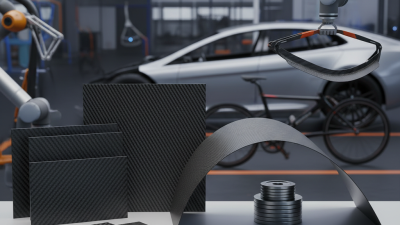
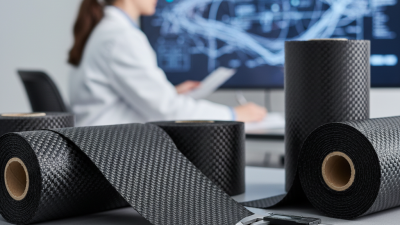
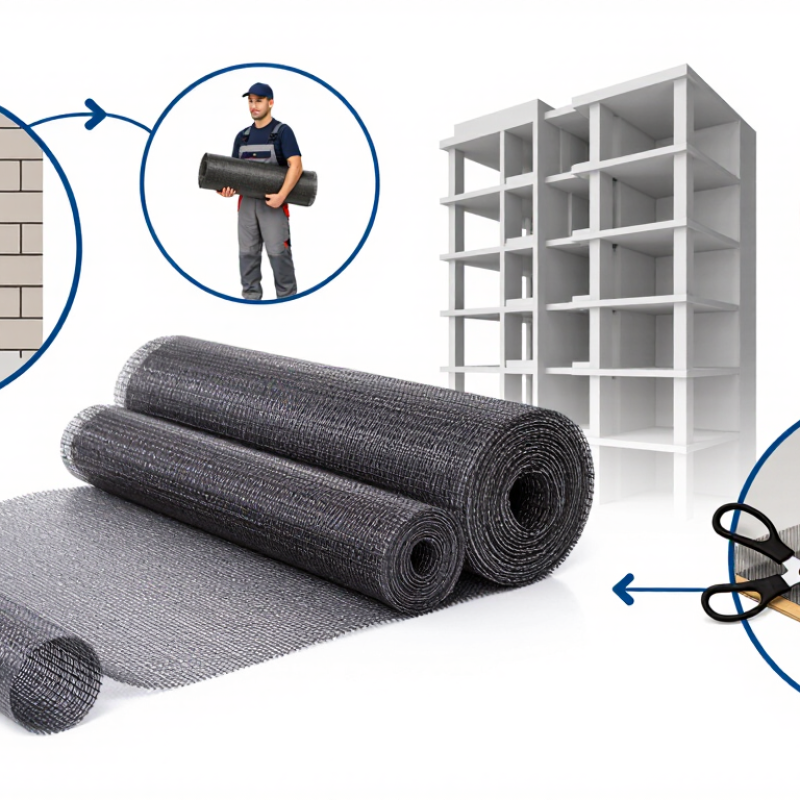
Why Choose Carbon Fiber Mesh Fabric? The answer begins with performance where ordinary reinforcement becomes heavy, bulky, or difficult to install. Carbon Fiber Mesh Fabric combines high tensile strength with low weight, making it suitable for concrete strengthening, masonry repair, facade reinforcement, and selected composite structures. On a jobsite, this difference is visible: a roll can be carried by one worker, trimmed around a corner, and bonded with a thin resin layer. Less disruption matters when buildings remain occupied.
Industry evidence supports this interest. MarketsandMarkets’ Carbon Fiber Market report projects the global market to grow from approximately USD 4.1 billion in 2023 to USD 6.6 billion by 2028, reflecting demand for lightweight, durable materials. Grand View Research also identifies construction, automotive, wind energy, and aerospace as important carbon-fiber application sectors. These figures indicate commercial momentum, not automatic suitability. A material’s value still depends on fiber orientation, resin compatibility, surface preparation, and installation quality.
Standards matter. ACI 440.2R provides guidance for externally bonded fiber-reinforced polymer systems, while technical publications from the International Federation for Structural Concrete address composite strengthening principles. Engineers should verify design assumptions through testing and project-specific calculations. Carbon Fiber Mesh Fabric is not a universal answer. Poor bonding can undermine excellent fibers. Moisture, temperature, fire exposure, and workmanship deserve honest review. The strongest choice is the one supported by measured data, qualified installation, and a clear understanding of service conditions.
Carbon Fiber Mesh Fabric: Definition and Basic Structure
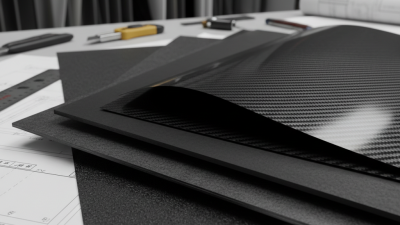
Carbon fiber mesh fabric is a flexible grid made from continuous carbon fiber yarns. It is not cloth. Its structure usually contains longitudinal and transverse strands, creating regular openings across the sheet. These gaps reduce weight while allowing resin, mortar, or another bonding material to pass through the mesh.
Each yarn contains many fine carbon filaments bundled together. Their alignment gives the fabric strong tensile performance along selected directions.
Some meshes use equal spacing, while others place more fibers in one direction. Open size, yarn density, and fiber orientation affect handling and reinforcement efficiency.
The fabric may arrive dry, coated, or lightly fixed with a binder, depending on its intended use.
From practical handling, the mesh feels light but can fray at cut edges. Gloves and careful measuring help prevent misplaced strands. A common mistake is judging quality by appearance alone. The weave may look uniform, yet resin compatibility and surface preparation often control the final result. That assumption fails. Carbon fiber also performs differently when loaded across the open gaps rather than along the yarns. Designers should check tensile data, coating behavior, and installation conditions before selection. Details matter. A simple structure still needs thoughtful engineering.
Key Properties That Make Carbon Fiber Mesh Fabric Effective
Why Choose Carbon Fiber Mesh Fabric?
Key Properties That Make Carbon Fiber Mesh Fabric Effective
Carbon fiber mesh fabric combines high tensile strength with low weight. A narrow roll can reinforce a broad surface without adding much structural load. This matters during concrete repair, especially on aging walls, slabs, and columns. Weight matters. The open grid also allows resin or cementitious adhesive to pass through the mesh. That creates mechanical interlocking across the repaired area.
Corrosion resistance is another important property. Unlike steel reinforcement, carbon fibers do not rust when moisture reaches the repair zone. This can reduce cracking caused by expanding corrosion products. The material also remains dimensionally stable under normal service conditions. Its flexibility helps installers follow corners, curved surfaces, and uneven concrete. However, flexibility is not unlimited. Sharp folds can damage the fabric and weaken installation quality.
On-site performance depends heavily on preparation. Dust, loose concrete, and surface moisture can prevent proper bonding. Experienced technicians usually inspect the substrate, repair defects, and confirm resin compatibility before placement. They also control overlap lengths and remove trapped air with a roller. Details matter. Carbon fiber mesh fabric is not a universal solution, either. Poor curing, incorrect tension, or unsuitable adhesive can reduce its effectiveness. A careful inspection after installation may reveal small voids that were missed during application. That finding is inconvenient, but it supports a more reliable repair process.
How Carbon Fiber Mesh Fabric Performs in Reinforcement Applications
Why Choose Carbon Fiber Mesh Fabric?
How Carbon Fiber Mesh Fabric Performs in Reinforcement Applications
Carbon fiber mesh fabric strengthens structures by distributing tensile stress across a wider surface. It works especially well with concrete, masonry, and cement-based repair systems. The fabric is lightweight, flexible, and resistant to corrosion. Unlike steel reinforcement, it does not rust when moisture reaches the repair zone.
Performance depends heavily on installation quality. The substrate must be clean, sound, and free from dust or loose particles. Technicians usually apply a compatible resin or cementitious matrix, press the mesh into place, and remove trapped air. Overlaps need careful measurement. Small gaps can reduce load transfer. In field repairs, I have seen excellent materials perform poorly because corners were not rounded or surfaces were prepared too quickly.
Bond matters most.
The mesh carries tension, but the surrounding matrix transfers stress into the structure. Engineers should check fiber direction, anchorage length, crack width, temperature exposure, and expected loads. Fire protection and ultraviolet resistance may also require additional layers. Carbon fiber mesh is not a cure-all. It cannot compensate for deep structural movement, unstable foundations, or a weak substrate.
Testing should guide the repair design. Pull-off tests, visual inspections, and installation records provide useful evidence. I still find that project teams sometimes trust product strength more than site conditions. That is a mistake worth questioning. A careful assessment often matters more than choosing the strongest available fabric.
Common Industries and Uses for Carbon Fiber Mesh Fabric
Carbon fiber mesh fabric is moving beyond laboratory demonstrations. In construction, crews embed it in cementitious overlays to strengthen cracked beams, slabs, masonry walls, and bridge decks. The material combines high tensile strength with low weight. That helps when additional dead load must remain low. Federal Highway Administration guidance identifies corrosion resistance as a major benefit of fiber-reinforced polymer repairs. This matters near salt spray, deicing chemicals, and humid concrete.
The construction sector remains a major user, especially for seismic retrofits and aging infrastructure. A 2024 MarketsandMarkets report estimates strong growth in the broader carbon fiber market through 2029. Its forecast reflects demand from transportation, wind energy, and civil engineering. The Global Wind Energy Council reported 117 gigawatts of new wind capacity in 2023. Carbon fiber fabrics support selected blade repairs and lightweight composite components. Marine contractors also use mesh in localized hull reinforcement, where moisture exposure makes steel reinforcement less attractive.
Transportation engineers apply carbon fiber mesh to panels, tunnels, and lightweight structural parts. Aerospace applications require stricter testing, traceability, and resin compatibility. It is not a universal fix. Poor surface preparation can cause peeling, even with premium fabric. Field inspections often reveal another weakness: installers may follow the product sheet but ignore moisture and temperature conditions. I have seen small application details decide whether reinforcement performs for years or fails early. Mesh selection should match the load path, substrate, curing environment, and inspection plan.
Why Choose Carbon Fiber Mesh Fabric?
Carbon fiber mesh fabric is valued for its high strength-to-weight ratio, corrosion resistance, and ability to reinforce complex surfaces. The chart shows the number of representative applications commonly associated with carbon fiber mesh or carbon fiber textile reinforcement in each industry. It is an application-count comparison, not a market-share estimate.
Factors to Consider When Choosing Carbon Fiber Mesh Fabric
Why Choose Carbon Fiber Mesh Fabric?
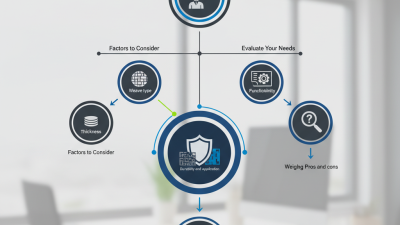
Factors to Consider When Choosing Carbon Fiber Mesh Fabric
Choosing carbon fiber mesh fabric requires more than comparing tensile strength. ASTM D4018 evaluates carbon fiber through tensile strength, elastic modulus, and elongation. Commercial reinforcement fabrics commonly show tensile strengths above 3,500 MPa. Some high-performance grades exceed 5,000 MPa. Higher strength is not automatically better.
Start with the structural purpose. A high-modulus mesh limits cracking and deformation. A high-strength mesh suits areas requiring greater load resistance. Grid spacing also matters. Smaller openings improve stress distribution, but they may consume more resin. The ACI 440.2R-17 guide stresses proper fiber orientation, anchorage, and bond behavior.
Field inspections often find installation quality matters as much as the published fiber value. Dusty concrete can weaken the bond. Poor overlap can create a visible failure line.
Check the areal weight, coating, resin compatibility, and alkaline resistance. Mesh should sit evenly, without folded corners or trapped air. Fire performance deserves attention. Carbon fiber does not burn easily, but its polymer matrix can lose performance under heat. Test reports should identify fiber content, batch traceability, curing conditions, and test methods. Vague certificates deserve questions. I have seen specifications focus heavily on strength while ignoring installation temperature. That is a costly gap. Also, laboratory results may not reflect a wet, uneven jobsite. Look for independent testing, clear dimensional tolerances, and documented quality control before selecting the fabric.