Leave Your Message

2026 Best Carbon Fibre Mesh for Global Buyers?

The 2026 search for the best Carbon Fibre Mesh is not simply a price comparison. Global buyers need proven strength, stable apertures, resin compatibility, and dependable documentation. A mesh roll may look uniform under warehouse lighting, yet weak coating adhesion can appear after installation.

Industry demand is expanding. Grand View Research valued the global carbon fiber market at approximately USD 3.7 billion in 2023 and forecasts strong growth through 2030. MarketsandMarkets also projects double-digit growth for carbon fiber applications during the decade. These reports cover carbon fiber broadly, not mesh alone. That distinction matters.

For civil repair and strengthening, product selection should include areal weight, tensile performance, strand architecture, alkali resistance, coating type, roll width, and batch traceability. Buyers should request test reports, technical data sheets, and installation guidance. EN or ASTM references can support comparison, but they do not replace project-specific engineering.

Professor Vistasp M. Karbhari, a recognized FRP infrastructure specialist, stated: “Durability is not a material property; it is a system property.” His point remains practical. Carbon Fibre Mesh must work with the substrate, adhesive, climate, and installation method. Not alone.

This guide compares leading options for 2026 global buyers, including structural repair mesh, concrete reinforcement mesh, and specialized architectural products. It also examines supplier experience, production consistency, export capability, and quality control. Some market forecasts appear optimistic. Buyers should reflect carefully before treating projected growth as guaranteed performance. The best product is not always the strongest one. It is the one that remains verifiable, compatible, and usable on site.

2026 Best Carbon Fibre Mesh for Global Buyers?

Carbon Fibre Mesh Basics: 1.75–1.95 g/cm³ Density and 3,500–7,000 MPa Strength

2026 Best Carbon Fibre Mesh for Global Buyers?

Carbon fibre mesh combines low weight with high tensile performance. Its typical density ranges from 1.75 to 1.95 g/cm³. This makes it far lighter than steel reinforcement. Tensile strength may reach 3,500–7,000 MPa, depending on the fibre grade and test direction. These figures look impressive. They still need careful interpretation.

A buyer should check whether strength refers to individual yarn, tape, or finished mesh. Mesh spacing also affects reinforcement efficiency. For example, a 5 mm grid behaves differently from a 25 mm grid under load. Examine filament count, weave stability, surface treatment, and coating compatibility. A clean, even surface helps resin or cement-based materials bond more consistently. Ask for test methods, batch data, and dimensional tolerances before comparing quotations.

Handling details matter on site. Sharp folds can damage filaments, even when the roll appears intact. Store mesh dry, flat, and away from direct sunlight. Some suppliers publish maximum strength values, but practical performance can be lower after cutting, bending, or installation. That is not necessarily a failure; it shows why design values require a safety margin. One overlooked issue is directionality. Unidirectional mesh can offer exceptional strength along one axis, yet provide limited support across it. Global buyers should match density, strength, grid size, and certification records to the actual application rather than choosing the largest number.

Mesh Types and Applications: CFRP Grids, Textiles, and Reinforced Concrete Systems

2026 Best Carbon Fibre Mesh for Global Buyers?

Mesh Types and Applications: CFRP Grids, Textiles, and Reinforced Concrete Systems

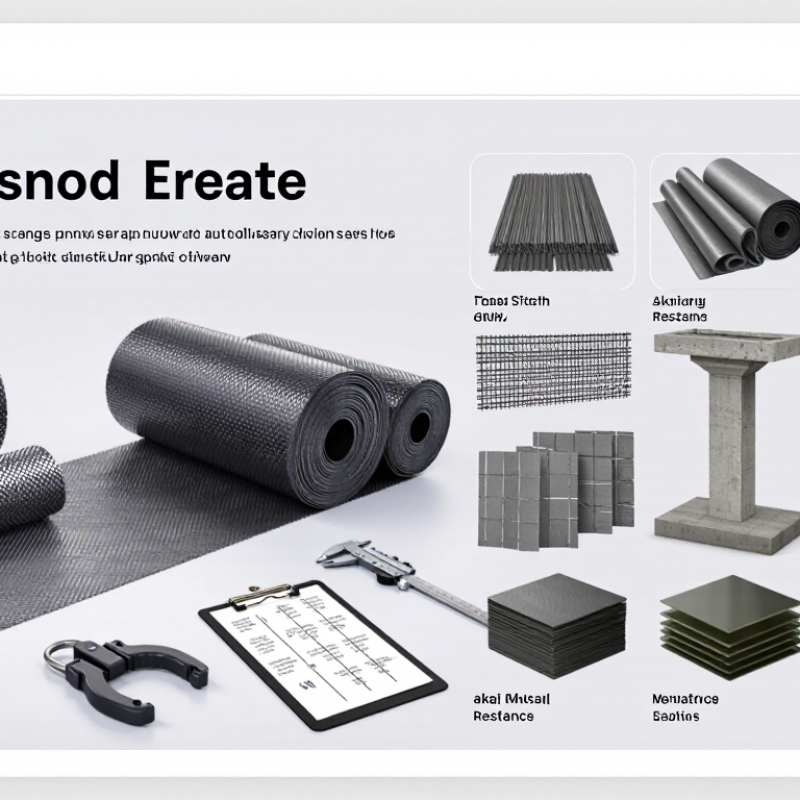
Carbon fibre mesh is not one universal product. CFRP grids use rigid, regularly spaced ribs for crack control, thin overlays, and concrete rehabilitation. They are practical when installers need predictable spacing and fast placement. Carbon fibre textiles use woven or unidirectional strands. They suit beams, slabs, columns, and masonry walls requiring directional strengthening. ACI 440.2R guidance stresses proper fibre orientation, bonding, anchorage, and environmental protection.

The numbers remain attractive. MarketsandMarkets’ 2024 Carbon Fiber Market report valued the sector at approximately USD 4.7 billion in 2024. It projects growth to about USD 7.4 billion by 2029. This growth reflects infrastructure repair, transport projects, and lightweight construction demand. Yet market growth does not remove selection risks. A high tensile strength figure alone is not enough. Buyers should check tensile modulus, resin compatibility, mesh opening, areal weight, alkali resistance, and certified test methods.

Reinforced concrete systems need more than a mesh sheet. Surface preparation, concrete moisture, bond strength, lap length, and curing conditions often decide performance. The International Concrete Repair Institute highlights surface-profile control as a key repair step. In field work, dusty concrete can defeat an excellent composite. I have seen specifications focus heavily on fibre strength while ignoring installation temperature. That is a costly blind spot. Fire exposure, ultraviolet protection, impact loads, and inspection access also deserve written requirements. Mesh selection should follow the structural calculation, not a catalogue photograph.

2026 Best Carbon Fibre Mesh for Global Buyers? – Mesh Types and Applications: CFRP Grids, Textiles, and Reinforced Concrete Systems
Mesh Type Typical Form Common Carbon Fibre Grade Typical Tensile Strength of Fibre Typical Tensile Modulus Typical Product Range Primary Applications Key Advantages Important Design Considerations
CFRP Grid Two-directional pultruded or braided carbon-fibre bars arranged in a regular grid High-strength or intermediate-modulus carbon fibre Approximately 3,500–5,000 MPa Approximately 230–300 GPa Grid openings commonly about 10–50 mm; bar diameters often about 1.5–5 mm; dry mass commonly about 100–500 g/m² Concrete overlays, masonry reinforcement, precast panels, slabs, walls, tunnel linings, and repair mortars High strength-to-weight ratio, corrosion resistance, easy handling, and effective crack-distribution reinforcement Grid spacing, anchorage, lap length, bond to the matrix, cover depth, fire protection, and compatibility with the repair mortar must be verified
Carbon Fibre Textile Unidirectional, bidirectional, or multidirectional woven, knitted, or stitched fabric High-strength carbon fibre; direction-specific systems are common Approximately 3,500–5,500 MPa Approximately 230–300 GPa Areal weights commonly about 80–600 g/m²; roll widths often about 300–1,000 mm; one- or two-directional layouts available Seismic strengthening, beam and column confinement, shear strengthening, slab flexural strengthening, and masonry upgrades Flexible installation, low added thickness, high directional strength, and suitability for irregular surfaces Fibre orientation, resin or mineral-matrix compatibility, surface preparation, impregnation quality, debonding resistance, and environmental exposure are critical
CFRP Grid with Mineral Matrix Carbon grid embedded in a cementitious or inorganic repair mortar High-strength carbon fibre combined with an alkali-resistant matrix system Fibre values commonly about 3,500–5,000 MPa; system capacity is lower and design-specific Fibre modulus commonly about 230–300 GPa Strengthening layers commonly about 5–25 mm thick; grid openings commonly about 10–40 mm Concrete and masonry strengthening, façade rehabilitation, seismic upgrading, and fire-sensitive repair projects Vapour permeability, compatibility with cement-based substrates, low corrosion risk, and relatively high temperature tolerance compared with organic resin systems Mortar thickness, curing conditions, substrate moisture, bond strength, crack width, and fire-performance requirements must be assessed
CFRP Grid with Epoxy Matrix Carbon grid or fabric saturated and bonded with an epoxy or polymer resin High-strength carbon fibre Approximately 3,500–5,500 MPa for the fibre; system performance depends on resin and layout Approximately 230–300 GPa for the fibre Composite strengthening layers commonly about 1–5 mm thick; fabric areal weights commonly about 200–600 g/m² Beam flexural strengthening, column confinement, slab strengthening, bridge rehabilitation, and localized structural repairs High bond efficiency, thin installation profile, fast curing options, and strong performance in tension Surface dryness, resin temperature limits, ultraviolet protection, fire protection, moisture sensitivity, and installation quality require control
Bidirectional Carbon Mesh Orthogonal carbon yarns or bars providing reinforcement in two principal directions High-strength carbon fibre Approximately 3,500–5,000 MPa Approximately 230–300 GPa Commonly supplied with balanced or near-balanced mass in the warp and weft directions; openings often about 10–50 mm Two-way slabs, wall panels, precast elements, overlays, shotcrete strengthening, and crack-control layers Reinforcement in two directions, reduced steel-corrosion risk, low weight, and convenient cutting on site Directional strength may not be perfectly equal; overlaps, edge anchorage, matrix thickness, and load-transfer paths must be designed
Unidirectional Carbon Mesh Predominantly parallel carbon fibres with limited transverse stitching or holding yarns High-strength or intermediate-modulus carbon fibre Approximately 3,500–5,500 MPa in the main fibre direction Approximately 230–300 GPa in the main fibre direction Main-direction areal weights commonly about 100–600 g/m²; transverse holding yarns generally contribute less structural capacity Beam soffits, slab strips, one-way flexural strengthening, wall boundary zones, and targeted tensile reinforcement Efficient use of fibre in the principal load direction, low material weight, and adaptable installation length Fibre alignment, transverse stability, anchorage, end development, load direction, and resistance to premature peeling are essential
CFRP Reinforced Concrete System Concrete or repair mortar combined with CFRP mesh, grid, or textile as internal or near-surface reinforcement Carbon fibre selected according to structural design and exposure conditions Fibre values commonly about 3,500–5,500 MPa; reinforced-system capacity depends on concrete, matrix, and detailing Fibre modulus commonly about 230–300 GPa Reinforced layers may range from about 5 mm for thin overlays to more than 25 mm for structural repair systems Corrosion-resistant slabs, bridge decks, industrial floors, marine structures, parking structures, and concrete rehabilitation Reduced corrosion exposure, lower dead load than many steel solutions, long service potential, and suitability for thin strengthening layers The system must be checked for crack control, anchorage, fatigue, fire, temperature effects, concrete cover, durability, and applicable local design codes
Carbon Mesh for Masonry Reinforcement Flexible textile or rigid grid installed in render, grout, mortar, or thin composite layers High-strength carbon fibre Approximately 3,500–5,000 MPa Approximately 230–300 GPa Common mesh openings about 10–40 mm; lightweight products often range from about 80–300 g/m² Masonry wall strengthening, crack control, out-of-plane stability, seismic retrofitting, and façade repair Low added thickness, corrosion resistance, compatibility with mineral mortars, and reduced disruption to existing walls Wall condition, mortar compatibility, lap and anchorage details, moisture movement, substrate cohesion, and connection to floors or diaphragms must be considered
Carbon Mesh for Surface Crack Control Lightweight bidirectional textile or fine grid embedded near the surface of mortar or concrete High-strength carbon fibre Approximately 3,500–5,000 MPa Approximately 230–300 GPa Fine mesh openings commonly about 5–25 mm; areal weight often about 50–250 g/m² Plaster reinforcement, repair overlays, façade finishes, non-structural crack control, and thin concrete toppings Lightweight, easy to cut, useful for distributing shrinkage-related stresses, and resistant to rust staining It should not be substituted for primary structural reinforcement without engineering verification; substrate movement and matrix shrinkage remain important
High-Modulus CFRP Mesh Grid or textile manufactured with higher-modulus carbon fibre for stiffness-sensitive strengthening Intermediate- to high-modulus carbon fibre Approximately 2,500–4,000 MPa, depending on fibre grade Approximately 300–650 GPa, depending on fibre grade Product geometry varies widely; areal weight commonly about 100–600 g/m² for textiles and about 150–700 g/m² for grids Deflection control, prestressed strengthening, long-span beams, bridge components, and stiffness-critical repairs High elastic stiffness, low creep compared with many polymeric reinforcement alternatives, and efficient deflection reduction Higher modulus does not automatically mean higher ultimate strength; anchorage, prestressing equipment, brittleness, and code-specific limits must be evaluated
Note: The figures are typical market and engineering ranges rather than guaranteed specifications. Actual values depend on fibre grade, yarn count, grid geometry, matrix type, manufacturing process, test method, and project design requirements. Final selection should be based on verified technical data and the applicable structural standards in the project location.

Performance Standards: ASTM C1550, EN 1504, and ISO 10406-2 Compliance

2026 Best Carbon Fibre Mesh for Global Buyers?

Performance Standards: ASTM C1550, EN 1504, and ISO 10406-2 Compliance

Selecting carbon fibre mesh in 2026 requires more than comparing tensile strength. Buyers should examine fibre alignment, mesh opening, areal weight, resin compatibility, and batch traceability. Installation conditions matter too. Dusty concrete, weak substrates, and poor curing can reduce the designed bond.

ASTM C1550 evaluates the residual flexural performance of fibre-reinforced concrete panels. It does not directly certify every carbon mesh product. However, the test can help assess how a mesh-reinforced mortar system retains capacity after cracking. Test reports should identify the panel size, loading method, mixture, curing period, and residual strength results.

EN 1504 addresses concrete repair and protection systems. Relevant documentation should define the repair principle, substrate preparation, adhesion, crack control, and durability performance. ISO 10406-2 supports testing approaches for carbon-fibre strengthening systems used with concrete. Buyers should confirm the exact edition and product scope. A certificate with vague wording deserves questions.

Look beyond certificates.

On-site checks remain valuable. Inspect rolls for broken strands, uneven spacing, contamination, and moisture damage. Confirm the recommended overlap and anchorage details with the design engineer. A high-modulus mesh may still perform poorly when the resin wets the fibres unevenly. That is an easy detail to underestimate. Even experienced teams can treat compliance as a paperwork exercise, which leaves the real interface unexamined.

Global Buyer Criteria: Tensile Modulus, Aperture Size, Coating, and Durability

For global buyers in 2026, carbon fibre mesh selection should begin with the load path, not a product label. On site, I check the reinforcement direction, substrate condition, and expected crack movement. Tensile modulus indicates stiffness, while tensile strength describes failure resistance. They are not interchangeable. A high-modulus mesh can limit crack opening, yet it may be less forgiving during handling or impact. Ask for tested values, specimen direction, and conditioning methods. Without those details, comparisons become guesswork.

Aperture size changes how well mortar or repair resin surrounds the fibres. The opening should allow the matrix to pass through and lock around each strand. Very small openings can trap air. Very large openings may provide weak local restraint. I prefer checking wet-out with a cut sample, because dry visual inspection can mislead. Coating deserves equal attention. A compatible polymer coating can improve abrasion resistance, strand stability, and handling. However, coating chemistry may affect bonding, flexibility, and performance in alkaline or humid environments. Request adhesion data after aging, not only fresh laboratory results.

Durability testing should reflect the destination. Freeze-thaw cycles, salt exposure, ultraviolet radiation, and repeated wetting can change real performance. A mesh that survives a tensile test may still fail at folds, overlaps, or unsupported edges. Inspect roll consistency, splice frequency, labeling, packaging, and traceability. Keep records of batch numbers and installation conditions. No test panel perfectly predicts a building site. I still find this difficult. The practical question is simple: what evidence would prove this mesh unsuitable?

2026 Market Selection: Compare Suppliers by Testing, Traceability, and Delivered Cost

2026 Best Carbon Fibre Mesh for Global Buyers?

2026 Market Selection: Compare Suppliers by Testing, Traceability, and Delivered Cost

Selecting carbon fibre mesh in 2026 requires more than comparing price per roll. A reliable supplier should provide recent test reports for tensile strength, mesh weight, aperture size, and coating consistency. Ask whether testing covers each production lot or only a sample. That difference matters. Request test dates, laboratory methods, and clear acceptance limits before placing an order.

Traceability should reach the factory floor. Each roll should connect to a lot number, fibre batch, coating record, and inspection sheet. Photos of labels and packaging can support document checks. I also recommend ordering a small trial lot before a full shipment. It may reveal uneven tension, damaged edges, or inconsistent roll lengths. These defects are easy to miss in a polished sample.

Delivered cost needs a wider calculation. Include product price, export packing, freight, insurance, customs charges, inspection fees, and potential replacement costs. A cheaper quote can become expensive after delays or rejected material. Compare delivery terms carefully, especially when ports, currencies, and transit times change. My own selection process would not treat a perfect test report as final proof. Reports can be incomplete, outdated, or poorly matched to the actual lot. Supplier communication, corrective action records, and repeat consistency deserve equal attention. That is where many comparisons become less comfortable, but more realistic.