Leave Your Message

What Are the 2026 Top Types of Carbon Fiber Laminate Sheets?

The 2026 market for Carbon Fiber Laminate Sheet products is becoming more specialized. Buyers now compare fiber direction, resin chemistry, thickness, surface finish, and testing data. A glossy black panel may look impressive, yet appearance alone proves little.

This guide examines the leading laminate types for aerospace parts, electric vehicles, robotics, marine structures, and demanding industrial equipment. It considers unidirectional sheets, woven laminates, quasi-isotropic panels, prepreg systems, and thermoplastic alternatives. Each type offers a different balance between stiffness, impact resistance, weight, processing time, and cost. Small details matter. A 0.5-millimeter thickness change can affect fit, vibration, and failure behavior.

Dr. Stephen W. Tsai, a respected composite-materials authority, stated, “There is no such thing as a bad material, only bad design.” That principle remains useful in 2026. The strongest Carbon Fiber Laminate Sheet is not automatically the best choice. Engineers must match the laminate architecture with the actual load path, operating temperature, moisture exposure, and manufacturing method. Cure quality matters too. Tiny voids can weaken confidence.

This ranking is not absolute. Applications differ. Data sheets can also hide important testing limits. I may favor a premium prepreg for precision parts, while a fabric laminate suits a repair shop better. That uncertainty deserves attention. The following overview compares performance, practicality, and value, helping readers choose with evidence rather than surface appearance. It also highlights where manufacturers should provide clearer specifications, traceability, and independent test results. Expect useful distinctions, but not a universal winner.

What Are the 2026 Top Types of Carbon Fiber Laminate Sheets?

Carbon Fiber Laminate Sheets: Definition and Basic Structure

Carbon fiber laminate sheets are flat composite panels made from carbon-fiber reinforcement and a polymer matrix, usually epoxy. The fibers carry most of the tensile load. The resin holds them in position, transfers stress, and protects them from moisture and abrasion. Carbon fiber alone is not a finished structural sheet.

A basic laminate contains several thin plies. Each ply may use unidirectional fibers or woven fabric. Engineers stack these plies at angles such as 0°, 45°, and 90°. This arrangement controls stiffness, strength, and resistance to twisting. A 0° layer supports lengthwise loads, while a 90° layer improves transverse stability. Many commercial sheets use fiber volume fractions near 55–65%, according to composite manufacturing references. Thickness depends on ply count, commonly ranging from about 0.5 to several millimeters.

MarketsandMarkets’ 2024 Carbon Fiber Market analysis valued the global market at roughly USD 4.7 billion in 2023 and projected continued growth through 2028. That growth does not make every laminate sheet suitable for structural use. A practical inspection should check fiber alignment, resin-rich edges, surface waviness, and trapped air near drilled holes. Small defects matter. Standards such as ASTM D3039 support tensile testing, but test results can vary with stacking sequence and preparation quality. Datasheets also deserve caution; they may report ideal coupons rather than real production panels.

How Carbon Fiber Laminate Sheets Are Classified in 2026

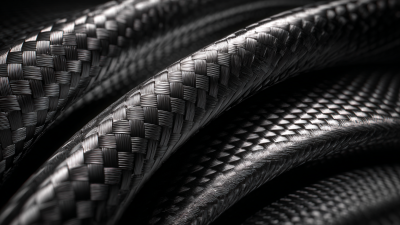
Carbon fiber laminate sheets are classified by more than their black, woven appearance. In 2026, buyers usually examine fiber orientation, resin type, thickness, surface finish, and manufacturing quality. Each feature affects stiffness, weight, durability, and handling.

Fiber orientation is a practical starting point. Unidirectional sheets place most fibers along one axis. They suit beams, brackets, and parts carrying directional loads. Woven sheets cross fibers at regular angles. They provide balanced strength and easier handling. Quasi-isotropic laminates combine several orientations. They behave more consistently under complex loading. Hybrid laminates may combine carbon fibers with glass or aramid fibers. This choice can improve impact resistance, but comparisons become less straightforward.

Resin systems create another category. Epoxy laminates generally offer strong bonding and stable mechanical performance. Thermoplastic laminates can provide faster processing and better remolding potential. Some sheets are rigid, while others use thinner plies for controlled flexibility. Thickness may range from extremely thin skins to heavy structural panels. Surface finish also matters. A smooth coated face supports visible applications, while a textured surface can improve bonding after proper preparation.

Manufacturing method is important, too. Press-cured sheets often provide consistent thickness. Hand-laminated sheets may vary slightly between batches. That variation deserves attention. Real-world inspection should include edge quality, flatness, fiber alignment, and documented test data. Classification alone cannot reveal every weakness.

Unidirectional Carbon Fiber Laminate Sheets

What Are the 2026 Top Types of Carbon Fiber Laminate Sheets?

Unidirectional carbon fiber laminate sheets remain a leading choice for lightweight structural design in 2026. Their fibers run mainly in one direction, creating strong load paths with predictable stiffness. This makes them useful for beams, reinforcement strips, robotic arms, and sporting structures. A technician can see the difference during trimming: the sheet resists bending along the fiber direction but feels more vulnerable across it. That detail matters.

The Grand View Research Carbon Fiber Market Report estimates the global market reached about USD 3.7 billion in 2023, with continued growth projected through 2030. MarketsandMarkets reports a different forecast, estimating the market could rise from approximately USD 4.7 billion in 2023 to USD 7.1 billion by 2028. These figures vary because analysts define product categories differently. Still, both reports indicate expanding demand for high-performance composite materials.

For unidirectional laminates, engineers must match fiber orientation with real service loads. A 0° layer supports lengthwise tension, while 90° and ±45° layers improve transverse strength and shear resistance. Using only unidirectional plies can create a misleadingly stiff part. It may fail suddenly at an overlooked edge or joint.

My practical view is cautious: material data should be checked against laminate thickness, resin system, curing conditions, and test standards. The “top” sheet is not always the strongest one. It is the one that fits the load, process, and inspection method.

Woven and Multiaxial Carbon Fiber Laminate Sheets

What Are the 2026 Top Types of Carbon Fiber Laminate Sheets?

Woven and multiaxial carbon fiber laminate sheets remain leading choices for demanding lightweight structures. Woven sheets interlace fibers over and under each other, usually at 0° and 90°. This pattern improves handling, surface appearance, and resistance to minor impact damage. It also drapes neatly around moderate curves. However, fiber crimp can reduce stiffness slightly along the primary load path.

Multiaxial sheets place straight fibers in selected directions, such as 0°, ±45°, and 90°. Stitching holds these layers together without traditional weaving. This design can deliver efficient tensile and torsional performance with less crimp. Engineers often choose it for panels, beams, and parts carrying predictable directional loads. Resin flow, stitching quality, and accurate alignment still matter. A beautiful sheet can perform poorly when orientation is wrong.

Tips: Confirm the technical data sheet, fiber angles, thickness tolerance, and resin system. Inspect edges for loose fibers and uneven curing. Make a small test panel first. It may reveal handling problems before production begins. For woven sheets, check the weave balance and drape around corners. For multiaxial sheets, mark the 0° direction clearly before cutting. There is no universal winner. In my view, selection should follow the load case, not appearance. Even experienced fabricators occasionally underestimate local stress or laminate distortion.

What Are the 2026 Top Types of Carbon Fiber Laminate Sheets? – Woven and Multiaxial Carbon Fiber Laminate Sheets

Evaluation Dimension Woven Carbon Fiber Laminate Sheets Multiaxial Carbon Fiber Laminate Sheets Practical Selection Guidance
Primary Fiber Architecture Interlaced yarns arranged as warp and weft directions. Continuous fiber layers aligned at selected angles, commonly 0°, ±45°, and 90°, with minimal crimp. Choose woven sheets for balanced handling and multiaxial sheets for tailored directional load paths.
Common Weave or Layup Types Plain weave, twill weave, and satin weave. Biaxial, triaxial, and quadriaxial constructions. Plain weave offers stability; twill improves drape; biaxial and triaxial formats support engineered stiffness.
Typical Areal Weight Approximately 90–600 g/m² for common laminate-sheet reinforcement fabrics. Approximately 300–1,200 g/m² per multiaxial reinforcement layer or stitched assembly. Lower areal weights suit thin skins; higher areal weights reduce the number of handling and consolidation steps.
Typical Cured Ply Thickness About 0.10–0.35 mm, depending on fiber areal weight, resin content, and consolidation pressure. About 0.20–0.80 mm for a single stitched multiaxial assembly, depending on areal weight and layup. Final thickness must be confirmed through laminate calculations and the selected curing process.
Fiber Crimp Moderate; yarns undulate over and under one another. Low; fibers remain relatively straight because layers are stitched or lightly bonded. Lower crimp generally improves axial stiffness and strength efficiency in the fiber direction.
Directional Mechanical Behavior Naturally balanced in the two principal fabric directions when equal warp and weft construction is used. Can be optimized for 0° tensile loads, ±45° shear loads, and 90° transverse loads. Use laminate analysis to match fiber angles with actual tension, compression, bending, and shear loads.
Drape and Formability Good to very good; twill and satin weaves generally conform more easily than plain weave. Good on broad or moderately contoured surfaces; heavy stitched assemblies may resist tight radii. For complex curves, select a lower areal weight or split the reinforcement into multiple lighter layers.
Surface Appearance Distinctive visible weave pattern; suitable for cosmetic outer surfaces when properly finished. Usually shows straighter fiber bands and stitching marks; often covered by a cosmetic outer ply. Select woven fabric for appearance-critical panels and multiaxial reinforcement for structural sublayers.
Resin Compatibility Commonly used with epoxy, vinyl ester, and polyester resin systems, subject to the fabric finish. Commonly used with epoxy, vinyl ester, and polyester resin systems, subject to binder and stitching compatibility. Verify resin compatibility, cure temperature, moisture condition, and required fiber volume fraction before production.
Typical Fiber Volume Fraction Approximately 45–60% in well-consolidated hand-laminated or vacuum-infused structures. Approximately 50–65% in well-consolidated vacuum-infused or press-cured structures. Actual values depend on resin content, compaction pressure, void content, and manufacturing method.
Manufacturing Efficiency Straightforward to cut, position, and repair; may require more plies for complex load cases. Can reduce layup time by combining multiple fiber directions in one engineered layer. Multiaxial sheets are advantageous for repeatable production and larger structural panels.
Typical Applications Automotive trim and panels, sporting goods, protective covers, fairings, and visible cosmetic laminates. Wind-turbine components, marine structures, pressure panels, aerospace substructures, and load-bearing beams. Application suitability depends on certification, impact requirements, fatigue life, and structural design.
Main Advantages Balanced properties, attractive surface pattern, good handling, and broad availability in light to medium areal weights. High fiber straightness, efficient load transfer, customizable orientation, and fewer individual layup operations. The best option depends on whether appearance, drape, directional stiffness, or production speed is the priority.
Main Limitations Fiber crimp can reduce some directional mechanical efficiency; tight curves may cause wrinkling or bridging. Less suitable for highly visible cosmetic surfaces; thick assemblies can be harder to conform and cut. Prototype the forming process and inspect for wrinkles, dry spots, voids, and fiber wash before scaling production.
Recommended Use in a Hybrid Layup Use as an outer or intermediate layer where balanced reinforcement and surface quality are important. Use as the primary structural reinforcement where load direction and stiffness-to-weight performance are critical. Combining both types can provide a cosmetic surface, improved drape, and efficient directional strength.

Note: The values shown are typical industry ranges for carbon-fiber-reinforced polymer laminates. Actual performance varies with fiber grade, resin system, fiber orientation, cure cycle, void content, and test method.

Hybrid and Thermoplastic Carbon Fiber Laminate Sheets

In 2026, hybrid and thermoplastic carbon fiber laminate sheets are gaining attention beside conventional epoxy laminates. Hybrid sheets combine carbon fiber with glass or aramid fibers. This can reduce cost, improve impact resistance, or control sudden failure. Carbon fiber still provides high stiffness, while the secondary fiber absorbs more damage.

Thermoplastic laminates use matrices such as PEEK, PEKK, PPS, or polyamide. They can be reheated, reshaped, and welded. That matters in aircraft interiors, electric vehicles, and repeatable industrial parts. According to Grand View Research, the global carbon fiber market was valued at about USD 4.7 billion in 2023, with growth projected above 8% annually through 2030. MarketsandMarkets also reports strong expansion in thermoplastic composites, driven by lightweight transportation applications.

The practical difference appears on the workshop floor. Thermoplastic sheets heat faster than expected, yet cooling pressure must remain stable. Hybrid sheets may look uniform, but their failure behavior can change sharply near holes, edges, or bonded joints. Data sheets rarely show every variable. Fiber orientation, void content, and surface preparation still decide performance. This is where published strength values become less reliable. A laminate rated for high tensile loads may perform poorly after repeated impact. Careful coupon testing remains essential, even when the material looks advanced.