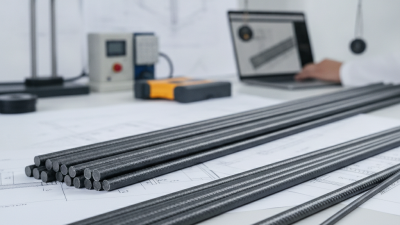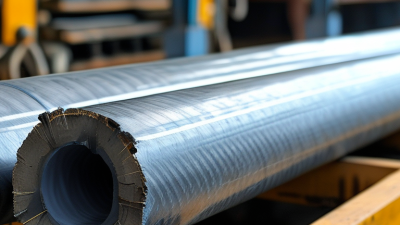
The Pultrusion Carbon Fiber Bar has emerged as a game-changer in various industries. Buyers often seek materials that are lightweight yet incredibly strong. This innovative bar combines advanced technology with high performance, offering numerous advantages.
Engineered through the pultrusion process, this carbon fiber bar provides exceptional durability and resistance to environmental factors. It is ideal for construction, automotive, and aerospace applications. The unique properties of Pultrusion Carbon Fiber Bar make it reliable for both structural integrity and flexibility.
However, the high initial cost might deter some buyers. It's crucial to evaluate long-term benefits against upfront expenses. Understanding these dynamics is vital to make informed decisions. Embracing Pultrusion Carbon Fiber Bar could lead to significant improvements in product longevity and performance.
The pultrusion process is a vital method for creating carbon fiber bars. It combines raw materials into a strong, continuous product. This method uses a resin-impregnation technique, allowing the fibers to bond tightly, enhancing strength and durability. The result is a lightweight bar with exceptional mechanical properties.
The pultrusion process involves several stages. First, raw fibers are placed into a heated die. The resin is then introduced, coating each fiber. Next, heat and pressure cure the resin, resulting in a rigid shape that retains quality and consistency. The final product has high tensile strength and low weight, making it ideal for various applications.
Tip: When selecting carbon fiber bars, consider the initial costs. While they may be higher than traditional materials, savings arise in the long run due to durability.
Tip: Look for suppliers that offer samples. Testing different types helps in finding the right fit for specific projects.
Reflecting on the pultrusion process can reveal areas for improvement. Streamlining production techniques can enhance efficiency. Additionally, exploring new resin formulas could lead to better performance. This continual evolution is essential for maximizing the benefits of carbon fiber technology.
Carbon fiber bars are gaining popularity for various applications due to their unique properties. These materials are lightweight yet incredibly strong. They can outperform traditional materials such as steel in many instances. This makes them ideal for industries like aerospace, automotive, and construction. The strength-to-weight ratio is particularly beneficial in applications where every ounce counts.
Durability is another key advantage. Carbon fiber bars resist corrosion and fatigue, which translates to a longer lifespan. In environments exposed to harsh elements, these bars excel. They maintain structural integrity over time, enhancing the reliability of any project. However, the initial cost can be a concern. Buyers must weigh this against the long-term savings on maintenance and replacement.
Moreover, the versatility of carbon fiber bars can be somewhat limiting. They can be customized for specific needs, but the manufacturing process can be complex. Buyers should consider the required specifications carefully. Consultation with experts could provide valuable insights. Emphasizing this can lead to improved decisions in material selection.
When comparing carbon fiber bars with traditional materials, several key aspects emerge. Carbon fiber bars exhibit superior strength-to-weight ratios. This means they can support heavy loads while remaining lightweight. Traditional materials often fall short in this area. Aluminum and steel can be heavy, limiting their applications in various industries.
Another important point is corrosion resistance. Carbon fiber does not rust or corrode like metals. This characteristic enhances durability and reduces maintenance costs. Industries that operate in harsh environments benefit greatly from this feature. However, it's essential to consider the initial investment. Carbon fiber can be pricier upfront compared to traditional materials. Buyers must balance this with long-term savings on maintenance and replacements.
In terms of flexibility, carbon fiber bars can be manufactured in various shapes and sizes. This versatility enables their use in diverse applications, from aerospace to sports equipment. Yet, the manufacturing process is complex and requires expertise. This can lead to quality variations among suppliers. Buyers should research and ensure they source reliable products for their needs.
This chart compares the mechanical properties and cost-effectiveness of carbon fiber bars against traditional materials like aluminum and steel. As depicted, carbon fiber bars offer superior strength and flexibility while remaining lightweight, making them a compelling choice for buyers.
The cost-effectiveness and longevity of
pultrusion carbon fiber bars make them a compelling choice for a variety of applications.
These materials can last over 50 years in harsh environments, significantly reducing replacement costs.
Reports indicate that carbon fiber composites can be up to five times stronger than steel while being much lighter.
This strength-to-weight ratio leads to lower shipping and handling costs, making them economically favorable.
Tips: When considering primary materials, prioritize
durability and
maintenance.
In industries like aerospace and automotive, the initial investment in pultrusion carbon fiber is offset by its minimal maintenance costs.
A study shows that companies can save up to 50% on lifecycle costs by opting for these composites.
These savings are crucial in budget-sensitive projects.
Yet, potential buyers should analyze the specific mechanical properties required for their applications.
Tips: Perform a thorough cost analysis before your purchase.
One should also note that despite their advantages,
pultruded carbon fiber bars may not suit every engineering challenge.
Certain applications demand tailored solutions. Understanding your specific needs and comparing multiple options is critical.
Keep in mind the visionary potential of this material, but remain cautious of over-promising its capabilities.
The production of carbon fiber has raised sustainability concerns, particularly in its environmental impact. Traditional methods often involve significant energy consumption and toxic byproducts. A study by the National Renewable Energy Laboratory indicates that up to 90% of carbon fiber production energy can come from fossil fuels. This raises questions about the long-term viability of such processes in an eco-conscious market.
The pultrusion method offers a solution. It uses a continuous process, reducing both waste and energy consumption. Research suggests that pultrusion can be more than 30% more efficient than other methods. The resultant carbon fiber bars are lightweight yet strong, making them ideal for various applications. This efficiency can potentially lessen environmental degradation, although challenges in recycling remain.
Tips: When considering pultrusion carbon fiber bars, evaluate the manufacturer’s energy sources. Look for companies that prioritize renewable energy. This choice can play a role in reducing your carbon footprint. Furthermore, consider the lifecycle of the product. Is it recyclable? Understanding this can influence sustainable choices.