Choosing the right Pultruded Carbon Fiber Rod supplier can shape a project’s strength, weight, cost, and delivery schedule. These rods support demanding applications, including robotics, sporting equipment, aerospace components, structural reinforcement, and industrial tooling. Yet supplier quality varies more than product photographs suggest.
This 2026 guide reviews ten leading suppliers through practical purchasing criteria. We examine carbon fiber grade, resin systems, diameter tolerance, surface finish, straightness, tensile performance, and available customization. Manufacturing experience matters. So does consistent quality control.
Technical documentation also deserves careful attention. Reliable suppliers should provide material data, inspection records, sample options, and clear production timelines. Their communication should remain precise when specifications change. A polished website alone proves little.
The list considers factory capability, international service, minimum order quantities, packaging, and responsiveness. It also recognizes that the “best” supplier depends on your application, budget, and required volume. A small prototype buyer may value flexibility, while an industrial purchaser may prioritize repeatability and certification.
Some rankings remain debatable. Market conditions change. Prices fluctuate. Lead times can move unexpectedly. Therefore, this guide is a starting point, not a substitute for testing. Request samples before committing to large orders. Compare measured performance against your design requirements, especially when safety, fatigue resistance, or dimensional stability matters.
Look beyond the catalog. Ask better questions. That is where reliable sourcing begins.
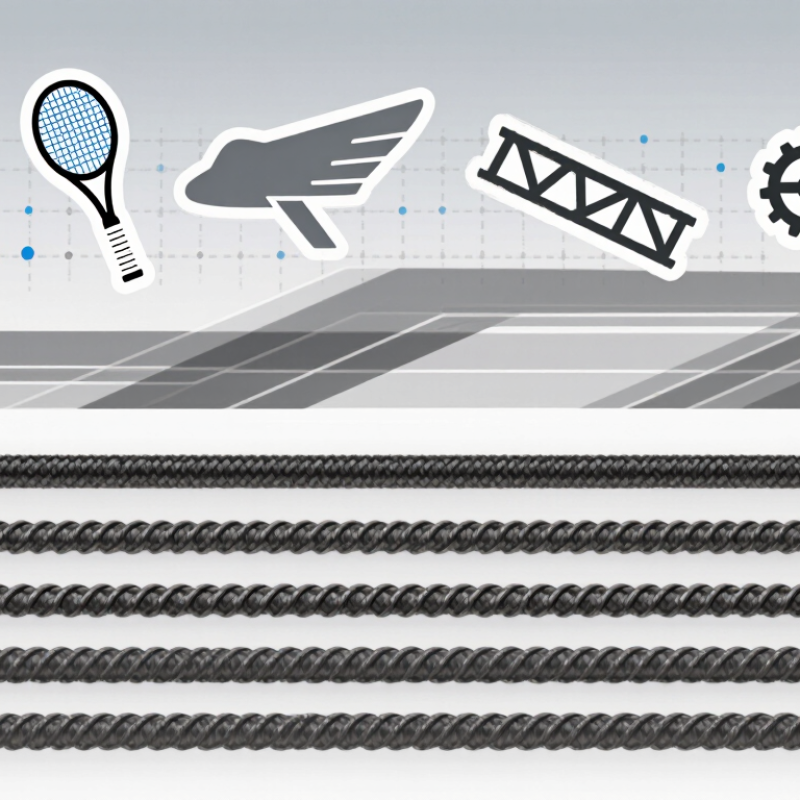
Pultruded carbon fiber rods are continuous, fiber-reinforced profiles made by pulling carbon filaments through a resin bath and heated die. The process aligns fibers along the rod’s length, creating high tensile strength, low weight, and consistent dimensions. Unlike molded parts, pultruded rods usually have a simple, uniform cross-section. They are not unbreakable.
Industry reports support their expanding relevance. Grand View Research valued the global carbon fiber market at about USD 4.7 billion in 2023 and projects continued growth through 2030. MarketsandMarkets also identifies aerospace, wind energy, automotive, and sporting goods as major carbon fiber application sectors. These figures concern carbon fiber broadly, not rods alone, but they show the demand behind lightweight reinforcement.
In practice, engineers use pultruded rods in robotic arms, drone frames, antenna supports, bridge strengthening, and concrete reinforcement systems. A 6-millimeter rod can replace heavier metal reinforcement where corrosion resistance matters. Rods also work well as stiffeners in telescoping tools and portable structures. However, performance depends on fiber volume, resin type, diameter tolerance, and surface treatment. Poor cutting can create splinters. Misaligned loading can cause premature failure. Designers should verify tensile data, bending limits, temperature resistance, and batch traceability before selecting a supplier. This step is often skipped, and that is a costly weakness.

When evaluating pultruded carbon fiber rod suppliers in 2026, start with measurable performance, not catalog language. MarketsandMarkets’ Carbon Fiber Market report projects growth from about USD 4.4 billion in 2024 to USD 6.8 billion by 2029. Rising demand makes supplier screening more important.
Ask for tensile strength, tensile modulus, flexural strength, density, fiber volume fraction, and diameter tolerance. Request test reports using recognized methods, such as ASTM D638 for tensile testing and ASTM D3171 for fiber-content analysis. A reliable supplier should identify the carbon fiber grade, resin system, curing method, and production batch. Traceability matters. So does consistency.
Inspect sample rods physically. Measure the diameter at several points with a micrometer. Look for resin-rich edges, waviness, cracks, pinholes, or uneven gloss. Confirm whether the published load rating reflects dry, wet, elevated-temperature, or fatigue conditions. The CompositesWorld 2024 State of the Industry report highlights continuing pressure for lighter, high-performance composite structures, but supplier data can still be incomplete. I would treat unsupported claims cautiously. Even a polished certificate may omit test humidity, specimen geometry, or failure location.
Evaluate production capacity, minimum order quantity, packaging, replacement policy, and technical response time. ISO 9001 certification supports process control, but it does not prove rod performance by itself. Request retained samples and independent verification for critical applications. A small pilot order often reveals more than a long presentation. Reliability is demonstrated over repeated batches, not promised once.
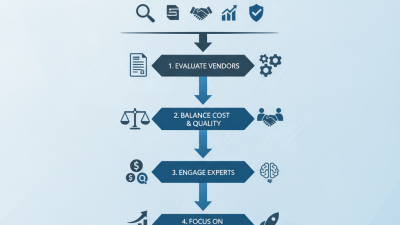
This chart presents a suggested evaluation framework for pultruded carbon fiber rod suppliers. Product quality and technical consistency receive the highest weighting because tensile performance, dimensional accuracy, and fiber volume fraction directly affect structural reliability. Commercial and service factors are also included to support a balanced supplier assessment.
The 10 Best Pultruded Carbon Fiber Rod Suppliers in 2026 should be judged by process control, not catalog size.
Carbon fiber demand continues rising in aerospace, robotics, sporting goods, and civil engineering. Grand View Research valued the global carbon fiber market at approximately USD 4.3 billion in 2023 and forecasts strong growth through 2030. That expansion increases pressure on suppliers to deliver consistent rod diameter, resin content, and tensile performance.
A practical supplier review should examine fiber alignment, curing temperature, surface finish, and batch traceability. Technical data sheets must show tensile strength, modulus, density, and dimensional tolerance.
A rod that looks flawless may still split during drilling or develop uneven flex under repeated loading. Independent testing matters. ASTM-based methods can verify tensile properties, while sample batches reveal production variation better than marketing claims.
The strongest candidates in 2026 offer engineering support, custom lengths, and stable minimum-order policies. MarketsandMarkets projects the broader carbon fiber market to approach USD 7.8 billion by 2028, with demand supported by lightweight structural applications.
That number reflects opportunity, not guaranteed quality. Buyers should request inspection records, resin specifications, and aging data before approval. Pricing also deserves caution. The cheapest rod may hide poorer alignment or inconsistent curing.
I would not rank suppliers using published specifications alone. Real-world trials remain necessary, especially for thin rods exposed to vibration, moisture, and sudden impact. Performance can change.
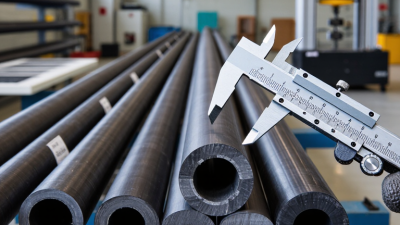
When comparing pultruded carbon fiber rod suppliers in 2026, product quality should be verified beyond a polished datasheet. Check fiber alignment, resin consistency, diameter tolerance, surface finish, and reported tensile properties. Ask for batch-level test records, not only general catalog values. A caliper check on sample rods can reveal uneven sizing. Small flaws matter.
Customization separates capable suppliers from simple resellers. Confirm available diameters, cut lengths, surface treatments, resin systems, and tooling options. Discuss your load requirements, temperature range, and installation method before requesting a quotation. A reliable supplier should provide drawings, sample pieces, and realistic prototype timelines. Very low minimum orders may sound attractive, but they can hide limited process control.
Technical support also deserves careful comparison. Evaluate how quickly engineers answer technical questions and whether they explain assumptions clearly. Useful support includes tolerance recommendations, load guidance, joint design suggestions, packaging details, and traceability documents. Ask how defects are handled and whether corrective reports are available. A responsive salesperson is not always a technical expert. That distinction is easy to miss.
Some comparisons remain imperfect. Published strength values may not match performance after drilling, bending, or prolonged heat exposure. I would request application-specific testing instead of trusting one impressive number. Supplier evaluation should include communication quality, documentation accuracy, and sample consistency. The cheapest offer can become expensive when redesigns, delays, or rejected parts appear later.
When comparing the 10 best pultruded carbon fiber rod suppliers for 2026, avoid ranking by price alone. Your project may need a specific diameter, resin system, surface finish, or modulus. Ask for technical datasheets and recent test reports. Check tensile strength, straightness, ovality, and fiber volume. Small tolerances matter. An aerospace fixture and a greenhouse brace rarely need the same rod. Define those requirements before requesting quotations.
A capable supplier should explain how fibers, resin, curing temperature, and pulling speed affect performance. Request samples from the intended production line, not only laboratory pieces. Measure a one-meter section with calipers and inspect its surface under strong, even light. Look for cracks, resin-rich patches, exposed fibers, or bowing. Confirm batch traceability, inspection frequency, packaging, and storage guidance. Ask how rejected material is controlled. These details reveal process discipline.
Delivery reliability deserves equal attention. Review minimum order quantities, tooling charges, capacity, and realistic lead times. Clarify whether custom cutting or drilling changes the warranty. Technical support should include installation limits and joining advice. Do not accept vague promises. I have seen projects lose weeks after selecting a supplier with excellent samples but weak production control. That mistake is easy to repeat. Leave room for verification.
| Rank | Anonymized Supplier Profile | Primary Supply Region | Typical Rod Diameter Range | Typical Tensile Strength | Typical Tensile Modulus | Fiber Volume Fraction | Surface Finish Options | Customization Capability | Typical Production Lead Time | Best Project Fit | Selection Score |
|---|---|---|---|---|---|---|---|---|---|---|---|
| 1 | Supplier Profile A | North America | 1–25 mm | 1,700–2,400 MPa | 125–165 GPa | 60–68% | Smooth, sanded, threaded, painted | Cut-to-length, drilling, chamfering, custom tooling | 3–6 weeks | Industrial structures and automation | 9.3/10 |
| 2 | Supplier Profile B | Western Europe | 0.8–20 mm | 1,600–2,300 MPa | 120–160 GPa | 58–67% | Pultruded, polished, abrasion-resistant | Tight diameter tolerance, custom lengths, end fittings | 4–8 weeks | Robotics, guides, and precision components | 9.1/10 |
| 3 | Supplier Profile C | East Asia | 0.5–30 mm | 1,500–2,200 MPa | 115–155 GPa | 58–66% | Standard smooth, matte, coated | High-volume production, bulk packaging, private tooling | 2–5 weeks | Large-volume OEM and cost-sensitive programs | 8.9/10 |
| 4 | Supplier Profile D | Northern Europe | 2–18 mm | 1,800–2,500 MPa | 130–170 GPa | 62–70% | Low-friction, polished, UV-resistant | Material certificates, dimensional inspection, custom profiles | 5–9 weeks | Marine, outdoor, and corrosion-sensitive applications | 8.8/10 |
| 5 | Supplier Profile E | Central Europe | 1–16 mm | 1,650–2,350 MPa | 120–165 GPa | 60–68% | Smooth, sanded, bonded-end preparation | Small batches, prototype support, engineering consultation | 3–7 weeks | Prototypes, laboratory equipment, and custom mechanisms | 8.6/10 |
| 6 | Supplier Profile F | South Asia | 1–25 mm | 1,450–2,100 MPa | 110–150 GPa | 55–65% | Standard smooth, grooved, coated | Standard sizes, cut-to-length, export packaging | 4–8 weeks | Construction reinforcement and general engineering | 8.3/10 |
| 7 | Supplier Profile G | Southeast Asia | 0.8–22 mm | 1,500–2,150 MPa | 115–155 GPa | 57–66% | Smooth, matte, anti-slip coating | Medium-volume orders, custom cutting, protective wrapping | 3–7 weeks | Sporting goods, agriculture, and lightweight frames | 8.1/10 |
| 8 | Supplier Profile H | Southern Europe | 1–20 mm | 1,550–2,250 MPa | 115–160 GPa | 58–67% | Smooth, sanded, weather-resistant | Short-run production, custom lengths, basic machining | 4–8 weeks | Renewable-energy equipment and outdoor assemblies | 8.0/10 |
| 9 | Supplier Profile I | Oceania | 2–15 mm | 1,600–2,200 MPa | 120–155 GPa | 58–65% | Smooth, polished, UV-stabilized coating | Low-volume orders, custom packaging, inspection reports | 5–10 weeks | Remote projects, field equipment, and lightweight supports | 7.8/10 |
| 10 | Supplier Profile J | Latin America | 1–18 mm | 1,450–2,050 MPa | 110–150 GPa | 55–64% | Standard smooth, sanded, resin-coated | Standard diameters, cut-to-length, regional logistics support | 5–10 weeks | General industrial, agricultural, and infrastructure use | 7.6/10 |