Leave Your Message

7 Tips for Sourcing Pultruded Carbon Fiber Bar

Pultruded Carbon Fiber Bar is moving from specialist applications into demanding structural markets. Buyers now need more than a low price and attractive tensile-strength numbers. They must examine fiber grade, resin chemistry, fiber volume, dimensional tolerance, surface finish, and batch traceability.

MarketsandMarkets identifies aerospace, automotive, and wind energy as major carbon-fiber demand sectors. The International Energy Agency’s Renewables 2024 report also shows continuing wind-power expansion, where lightweight reinforcement can reduce installation and maintenance burdens. These trends create opportunity, but they also expose weak sourcing decisions. A bar that looks identical on a warehouse shelf may behave differently under fatigue, moisture, heat, or repeated bending.

Composite expert Stephen W. Tsai is widely associated with the statement, “A composite is not a material; it is a structure.” That principle matters here. Pultruded Carbon Fiber Bar performance depends on the complete system, not carbon fiber alone. The profile, matrix, curing process, and loading direction all matter.

This guide presents seven practical sourcing tips. It focuses on measurable evidence, not impressive brochures. Ask suppliers for certificates, test methods, lot records, and samples cut from production material. Check whether published strength values represent dry, conditioned, or laboratory specimens. Small details matter.

Some choices remain imperfect. Suppliers may report different test standards, while buyers may lack full application data. That uncertainty should be documented, not hidden. A careful sourcing process compares equivalent evidence and challenges assumptions before approving volume orders. Reliability begins with questions.
7 Tips for Sourcing Pultruded Carbon Fiber Bar

Define Performance Requirements and Bar Specifications

Before sourcing a pultruded carbon fiber bar, define the load, environment, and service life. A bar for concrete reinforcement needs different properties from one used in a lightweight frame. Record tensile strength, elastic modulus, bar diameter, allowable strain, and required length. ACI 440.1R-15 reports carbon-FRP reinforcement with tensile strengths commonly ranging from about 1,000 to 2,800 MPa, while modulus values vary widely. Do not select by strength alone.

Specify the test method and acceptance limits in the purchase document. ASTM D7205/D7205M provides a recognized method for tensile testing fiber-reinforced polymer bars. Ask for measured tensile strength, modulus, fiber volume fraction, resin type, surface profile, and batch traceability. A 12 mm bar may look precise, yet its actual diameter and rib geometry can affect anchorage and installation. Request samples before approving production.

Environmental requirements deserve equal attention. State exposure to moisture, alkaline concrete, salt spray, chemicals, ultraviolet light, and temperature cycling. Suppliers should provide retention data after conditioning, not only dry coupon results. Reports from the International Federation for Structural Concrete emphasize durability and design reduction factors for FRP reinforcement. I have seen specifications fail because “corrosion resistant” replaced measurable evidence. That wording is too weak. Define the design temperature, target service life, inspection records, and packaging condition. Leave room for review; test data can reveal that an attractive modulus does not deliver reliable field performance.
7 Tips for Sourcing Pultruded Carbon Fiber Bar: Define Performance Requirements and Bar Specifications

Use tensile strength and elastic modulus as early screening criteria when specifying pultruded carbon fiber bar. The chart shows representative engineering values for common structural material categories; actual performance depends on fiber type, fiber volume fraction, resin system, diameter, surface finish, and test method.

Representative screening values: pultruded CFRP bar—1,000 MPa tensile strength and 100 GPa modulus; GFRP bar—600 MPa and 40 GPa; structural steel—550 MPa and 200 GPa. Confirm final specifications with supplier test certificates and the applicable ASTM or ISO test method.

Verify Carbon Fiber Grade, Resin System, and Pultrusion Quality

7 Tips for Sourcing Pultruded Carbon Fiber Bar

Tip: Verify the carbon fiber grade before comparing prices. Ask for the fiber type, tensile strength, modulus, tow size, and fiber volume fraction. A bar with higher modulus is not automatically better for every structure. Match the grade to stiffness, load, and fatigue requirements. Request a current test report, not only a catalog value.

Tip: Examine the resin system carefully. Epoxy, vinyl ester, and other systems handle heat, moisture, and chemicals differently. Check the glass transition temperature and recommended service range. Ask how the resin was cured. Poor curing can leave a bar brittle or dimensionally unstable. This detail is easy to overlook.

Tip: Inspect pultrusion quality through samples and records. Measure diameter, straightness, surface finish, and length tolerance. Look for dry spots, cracks, resin-rich edges, or visible fiber waviness. These defects may reveal weak process control. Ask for void content, cure data, and batch traceability. Small variations matter.

Tip: Test before placing a large order. An independent laboratory can verify tensile properties, flexural strength, and dimensional accuracy. Compare results with the supplier’s documentation. I have seen specifications that sounded precise but lacked test conditions. That should prompt questions, not trust. Keep one retained sample from each approved batch. A simple inspection log also helps identify recurring problems.

Evaluate Suppliers’ Certifications, Production Capacity, and Experience

When sourcing pultruded carbon fiber bar, inspect certifications before discussing price. Ask for current ISO 9001 records, material certificates, and third-party test reports. Confirm that documents match the actual production site. A certificate from an office location proves little. Request batch traceability, resin details, fiber volume, and test methods. Then compare tensile strength, modulus, surface finish, and dimensional tolerances with your drawings. Small differences can affect assembly.

Production capacity deserves a practical check. Ask how many pultrusion lines are available, which sizes they can run, and how tooling is controlled. Review typical lead times, minimum order quantities, and backup plans for equipment maintenance. A factory tour, even by video, can reveal curing control, cutting accuracy, storage conditions, and packaging discipline. Experience matters too. Request examples of similar bars, inspection records, and references from technically comparable projects. Do not accept vague claims about “many years” without evidence. I once treated a polished sample as proof of quality, and that was a poor assumption. Samples may come from a carefully adjusted trial run. Ask for production samples from different batches. Check whether the supplier explains failures openly and supports corrective action. Reliable communication is part of technical competence. The best evaluation combines documents, measured samples, capacity evidence, and honest questions.

7 Tips for Sourcing Pultruded Carbon Fiber Bar - Evaluate Suppliers’ Certifications, Production Capacity, and Experience

Tip Evaluation Dimension What to Verify Practical Benchmark or Evidence Procurement Risk Reduced
1 Quality Management Certification Confirm that the supplier operates a documented quality management system and that the certificate is valid, correctly scoped, and issued by an accredited certification body. ISO 9001:2015
Check the certificate number, validity period, manufacturing scope, audit status, and manufacturing site address.
Inconsistent process control, incomplete records, and difficulty tracing nonconforming material.
2 Material and Environmental Compliance Request resin and carbon-fiber specifications, safety data sheets, restricted-substance declarations, and documentation for the destination market. Verify conformity with applicable requirements such as REACH and RoHS when required. Confirm fiber grade, resin system, curing method, and lot identification. Regulatory delays, unsuitable resin chemistry, and unexpected restrictions on end-use or shipment.
3 Production Capacity and Lead Time Evaluate the number of pultrusion lines, operating shifts, tooling availability, monthly output, standard lead time, and surge capacity during peak demand. Require capacity figures in linear meters per month by profile size, not only a general annual sales figure. Ask for a written production schedule and a realistic sample-to-production timeline. Delivery interruptions, excessive expediting costs, and inability to support volume increases.
4 Pultrusion Process Experience Review documented experience with carbon-fiber bars having comparable diameter, fiber architecture, resin system, surface finish, tolerances, and cut-length requirements. Request anonymized project records, process-flow documentation, tooling drawings, first-article reports, and examples of long-term production stability. Voids, fiber waviness, resin-rich areas, dimensional drift, poor surface quality, and premature mechanical failure.
5 Testing and Traceability Confirm that each production lot can be linked to raw-material batches, process records, inspection results, and shipment documentation. Review certificates of analysis and test methods for tensile strength, tensile modulus, diameter, straightness, density, fiber volume fraction, and visual defects. Testing should follow an agreed standard or customer specification. Inability to identify affected lots or determine whether a failure originates from materials, processing, or handling.
6 Engineering and Customization Capability Assess capability for custom diameters, tolerances, lengths, chamfers, drilled features, surface treatments, packaging, and tooling modifications. Require a controlled drawing review, tolerance table, prototype approval process, design-for-pultrusion feedback, and documented engineering-change procedure. Repeated tooling changes, poor fit in assemblies, prototype-to-production variation, and avoidable development costs.
7 Commercial Reliability and Continuity Review quotation validity, minimum order quantity, payment terms, packaging standards, inspection rights, warranty terms, corrective-action response, and business-continuity planning. Obtain a written quality agreement covering acceptance criteria, sample retention, change notification, nonconformance handling, replacement obligations, and emergency communication procedures. Unclear responsibility for defects, uncontrolled process changes, supply disruption, and disputes over acceptance criteria.

Compare Pricing, Lead Times, Customization, and Minimum Orders

Sourcing pultruded carbon fiber bar requires more than comparing the unit price. MarketsandMarkets’ 2024 report values the global carbon fiber market at about USD 4.7 billion in 2024. It projects roughly USD 7.4 billion by 2029. That growth can tighten capacity and affect quotations. Request prices at three volumes, such as 100, 1,000, and 10,000 pieces. Check whether tooling, cutting, packaging, and freight are included.

Lead times need separate questions. Ask for raw-material availability, tooling time, production time, inspection, and transit. A supplier may quote four weeks, while actual delivery takes eight. Customization also changes the calculation. Confirm diameter tolerance, straightness, fiber volume, resin system, surface finish, hole locations, and cut length. A small drawing change can restart tooling. It happens more often than buyers expect.

Minimum order quantities deserve careful review. Ask whether the MOQ applies per profile, color, length, or resin batch. Pultrusion setup costs often make short runs expensive, but a flexible supplier may offer a pilot batch. The U.S. Department of Energy’s carbon-fiber technology reports emphasize material efficiency and process consistency as major cost factors. Keep test samples from each batch. Compare measured weight and stiffness, not only certificates. One imperfect assumption remains: the lowest quote may still be the most expensive choice after rejects, delays, and rework.

Inspect Samples and Confirm Quality Before Placing the Final Order

7 Tips for Sourcing Pultruded Carbon Fiber Bar

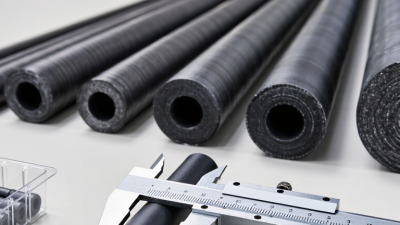
Inspect the sample before trusting the supplier’s specification sheet.

1

Tip 1: Check straightness on a flat table.

2

Tip 2: Measure diameter at several points with a calibrated micrometer.

3

Tip 3: Look for dry fibers, pinholes, resin-rich areas, and surface cracks. A glossy surface can still hide poor consolidation. I once accepted a clean-looking sample too quickly. That mistake made later machining less predictable.

Tip 4: Request the fiber grade, resin system, fiber volume fraction, and curing details.

Tip 5: Ask for recent tensile and flexural test results, not generic values. ASTM D3039 supports tensile testing, while ASTM D790 is commonly used for flexural testing. Test direction matters.

Tip 6: Compare the supplier’s data with an independent laboratory result when the order is critical.

According to Grand View Research’s 2024 carbon fiber market report, the global market reached about USD 3.7 billion in 2023. Rapid growth can increase supplier variation, especially between standard and customized profiles.

7

Tip 7: Confirm batch traceability, packaging condition, tolerances, and replacement terms before final approval.

Request three samples from different production batches. Weigh each sample and record dimensions, color, odor, and visible defects. Keep one sealed as a reference sample. A second inspection is worth the delay. Review the inspection report with the person who will cut, drill, or assemble the bar. Their practical feedback may reveal problems that laboratory numbers miss.