What is Carbon Fiber Mesh Fabric and Its Uses in Industry?
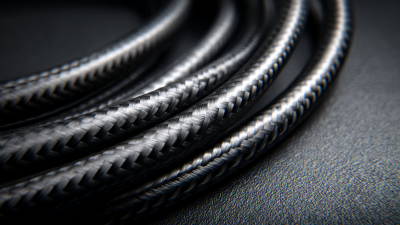
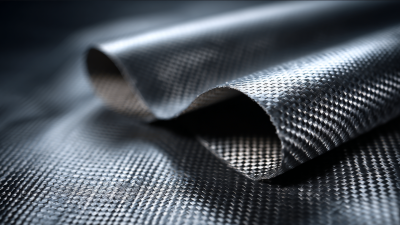
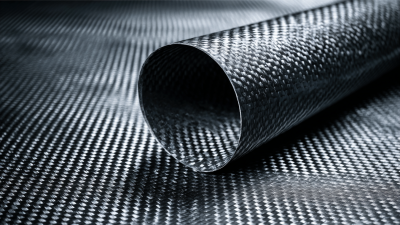
Carbon Fiber Mesh Fabric is an innovative material that has gained traction in various industries. Its lightweight and high-strength properties make it ideal for multiple applications. This fabric is composed of interwoven carbon fibers, creating a mesh that offers durability and flexibility. The unique structure of Carbon Fiber Mesh Fabric enhances its performance in demanding environments.
Industries such as aerospace, automotive, and construction widely use this fabric due to its superior mechanical properties. It can withstand harsh conditions while maintaining structural integrity. Additionally, it plays a significant role in reducing the weight of components, contributing to overall efficiency in manufacturing processes.
Despite its benefits, the production of Carbon Fiber Mesh Fabric can be resource-intensive, raising concerns about sustainability. As industries strive for greener practices, the environmental impact of materials is under scrutiny. It's essential to consider these factors, ensuring that the advantages of Carbon Fiber Mesh Fabric do not overshadow necessary reflections on its ecological footprint.
What is Carbon Fiber Mesh Fabric?
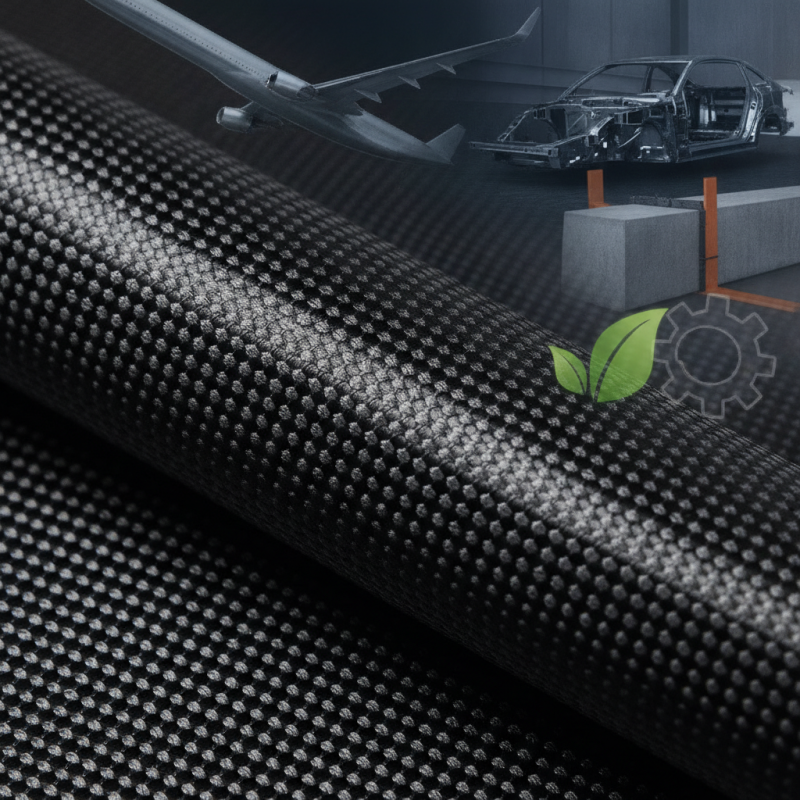
Carbon fiber mesh fabric consists of intertwined carbon fibers that create a lightweight yet strong material. This unique structure provides exceptional tensile strength and durability, making it a popular choice in various industries. Unlike traditional textiles, carbon fiber mesh does not absorb moisture, which enhances its longevity and performance in harsh environments.
In the aerospace sector, this fabric is used to reinforce structures, improving the integrity of components. Its strength-to-weight ratio is remarkable, allowing engineers to design lighter aircraft without sacrificing safety. Additionally, the automotive industry leverages carbon fiber mesh for components that require both resilience and flexibility. These applications significantly reduce vehicle weight, leading to improved fuel efficiency.
However, working with carbon fiber mesh presents challenges. The production process can be complex, often requiring specialized skills and equipment. It also involves high costs, which may limit its use in some projects. Engineers must carefully consider these factors when choosing carbon fiber mesh for their applications. Balancing performance with budgetary constraints can be challenging but necessary for successful implementation.
Composition and Properties of Carbon Fiber Mesh
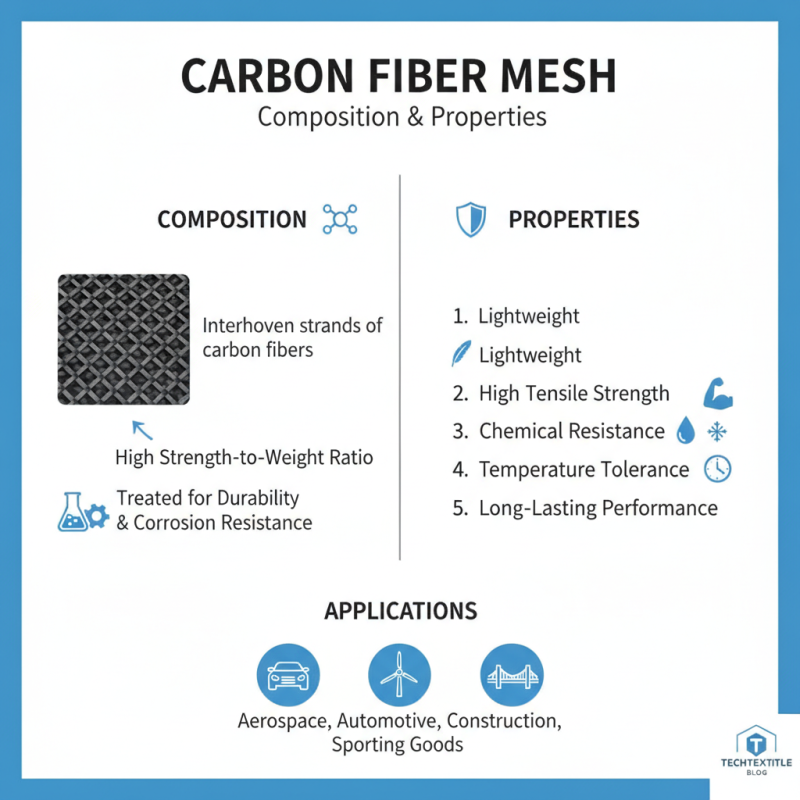
Carbon fiber mesh fabric is known for its unique composition and exceptional properties. It is made from interwoven strands of carbon fibers, which are known for their high strength-to-weight ratio. This material's lightweight nature makes it a popular choice in various industrial applications. The fibers are often treated to enhance their durability and resistance to corrosion, ensuring long-lasting performance in demanding environments.
One notable property of carbon fiber mesh is its excellent tensile strength. This allows it to withstand significant stress without deformation. The fabric is also highly flexible, which makes it adaptable to different surfaces and shapes. Additionally, carbon fiber mesh has low thermal expansion, meaning it maintains dimensional stability under varying temperatures. However, one must consider its relatively high cost and the complexity of its production process. These factors can limit its use in some industries. Despite these challenges, carbon fiber mesh remains a reliable material, particularly in aerospace, automotive, and construction sectors, where performance requirements are stringent.
Manufacturing Process of Carbon Fiber Mesh Fabric
The manufacturing process of carbon fiber mesh fabric involves a series of intricate steps. It begins with the preparation of precursor materials, primarily polyacrylonitrile (PAN). This material undergoes stabilization to form the required polymer structure. Following stabilization, it is carbonized in high-temperature furnaces. This step is critical as it determines the fiber's properties, including strength and thermal stability.
After carbonization, the fibers are treated to ensure optimal weaving. They are then woven into a mesh form, which may include various patterns to enhance performance characteristics. A report from Research and Markets indicates that the global carbon fiber market reached approximately $3.12 billion in 2021 and is projected to expand at a compound annual growth rate (CAGR) of 10.1% between 2022 and 2030. Industry applications range from aerospace to automotive, underscoring the material's versatility.
The production of carbon fiber mesh fabric does, however, pose challenges. Despite its lightweight and high-strength properties, the manufacturing process is energy-intensive and costly. This can limit its use in certain applications. Additionally, the environmental impact of carbon fiber production is under scrutiny. Continuous improvements are required to make its production more sustainable.
Uses of Carbon Fiber Mesh Fabric in Various Industries
Applications of Carbon Fiber Mesh in Various Industries
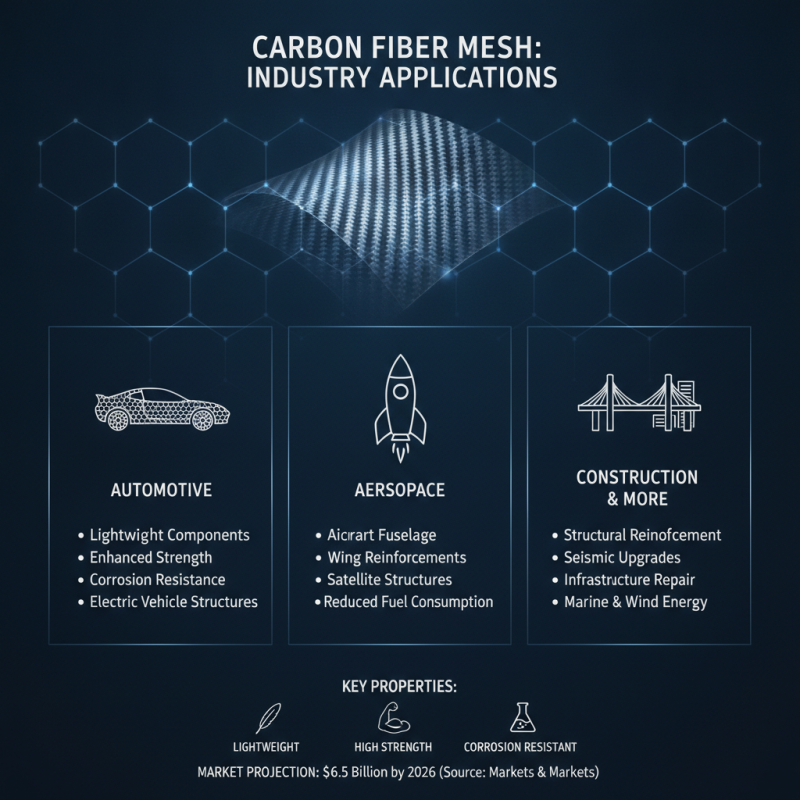
Carbon fiber mesh fabric has become a vital material across various industries due to its remarkable properties. Its lightweight nature, combined with high tensile strength and resistance to corrosion, makes it an excellent choice for automotive and aerospace applications. For instance, according to a report by Markets and Markets, the carbon fiber market is projected to reach $6.5 billion by 2026, indicating a growing demand in these sectors.
In construction, carbon fiber mesh fabric is used for reinforcing structures. It enhances the strength of concrete and extends the lifespan of bridges and buildings. A study published in the Journal of Composites emphasizes that carbon fiber reinforcements can reduce maintenance costs by up to 30%. In the sports equipment industry, its application includes high-performance bicycles and tennis rackets, providing better performance and durability.
Despite its advantages, there are challenges to address. The production of carbon fiber is energy-intensive, raising environmental concerns. Additionally, the cost of carbon fiber composite materials can limit its adoption in certain industries. As the market evolves, finding sustainable production methods will be crucial for its future.
Advantages of Using Carbon Fiber Mesh Fabric in Production
Carbon fiber mesh fabric is becoming essential in various industries. Its lightweight nature stands out. This fabric is widely used in aerospace, automotive, and construction sectors. It offers high strength and durability.
One major advantage of using carbon fiber mesh fabric is its resistance to corrosion. This makes it ideal for structures exposed to harsh environments. Additionally, it provides excellent thermal stability. It can withstand high temperatures without losing its integrity. This factor is crucial for safely using materials in demanding applications.
However, some challenges exist. The cost of production can be high. Companies need to evaluate if the benefits justify the investment. Durability is impressive, yet the production process requires expertise. Manufacturers must take careful steps to ensure quality. Balancing performance with cost remains a critical task in the industry.