How to Choose the Best Pultruded Carbon Fiber Bar for Your Needs?
Choosing the right Pultruded Carbon Fiber Bar can be crucial for various applications. Experts like Dr. Emily Chen have emphasized this importance, stating, "Selecting the right material is paramount for performance and durability." A Pultruded Carbon Fiber Bar, known for its strength and lightweight properties, is often used in construction, automotive, and aerospace industries.
When evaluating your needs, consider specifics such as size, load capacity, and environmental resistance. Not every bar is suitable for every situation. For instance, an outdoor application might require UV resistance, while a structural application demands high tensile strength. It's easy to overlook these details, but they can significantly affect outcomes.
Understanding the technical specifications is vital. Yet, many users find the technical jargon overwhelming. Be aware of your priorities and ensure the bar you choose aligns with them. A thoughtful choice can lead to lasting benefits, while an impulsive one may result in failure. Reflect on your requirements and make an informed decision about Pultruded Carbon Fiber Bars.

Understanding Pultruded Carbon Fiber Bars and Their Applications
Pultruded carbon fiber bars have gained traction in various industries due to their unique properties. These bars are lightweight, strong, and resistant to corrosion. Their applications range from aerospace components to civil engineering structures. A study shows that carbon fiber composites are five times stronger than steel, yet only a fraction of the weight. This makes them ideal for high-performance applications, but they might not be suitable for every project.
When selecting a pultruded carbon fiber bar, consider its specific applications. Factors such as tensile strength, thermal resistance, and environmental exposure are crucial. The ideal choice balances performance with cost. The price can vary significantly, affecting your project's budget. A thorough cost-benefit analysis can help identify the most suitable options.
Tip: Always check the specifications of the carbon fiber bar before purchasing. Some bars may have variances in manufacturing processes. These can impact their performance. Ensuring compatibility with your application is vital.
Tip: Don’t overlook the need for proper handling. Even though carbon fiber is strong, it can be brittle. Careless handling can lead to damage. Take your time when selecting and using these materials. This helps avoid costly mistakes.
Key Factors to Consider When Choosing Carbon Fiber Bars
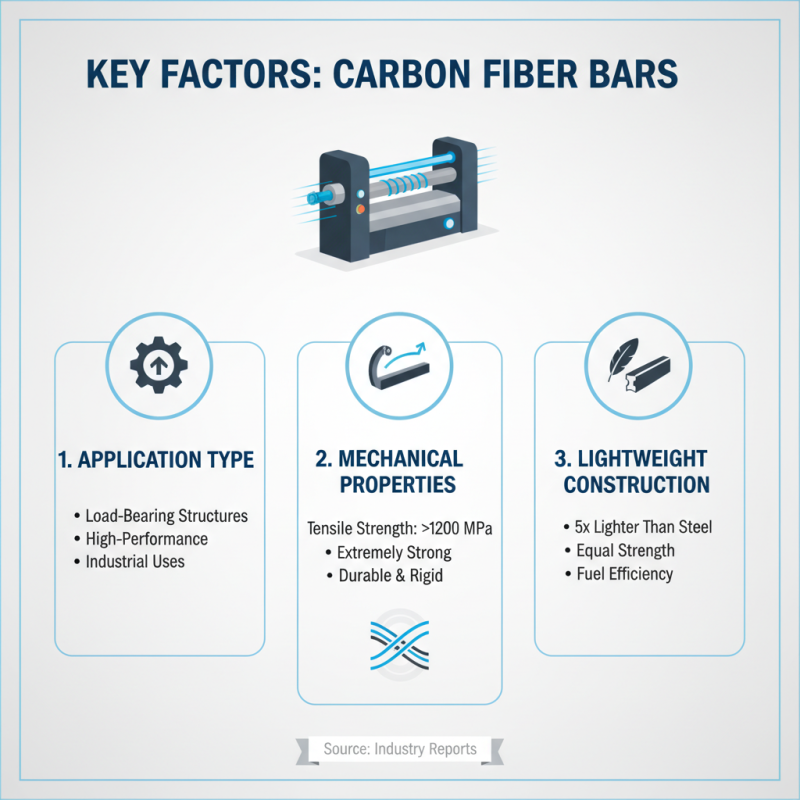
When selecting pultruded carbon fiber bars, specific factors are essential. The type of application plays a crucial role. For example, mechanical properties such as tensile strength can vary significantly. According to industry reports, high-performance carbon fiber bars can achieve tensile strengths over 1,200 MPa, making them ideal for load-bearing structures. Lightweight construction is another advantage. Carbon fiber is about five times lighter than steel yet equally strong.
The environment where the bars will be used must also be considered. Corrosion resistance is a vital property. Carbon fiber performs well in harsh conditions, but its longevity may depend on protective coatings. Moreover, cost often becomes a deciding factor. High-quality carbon fiber bars may be more expensive but can result in long-term savings through durability and reduced maintenance.
Finally, understanding the manufacturing process is important. Variation in production methods can affect overall quality. Some manufacturers may not adhere to strict quality control. This raises concerns about consistency. Always ask for certifications or test data before making a purchase. Even though carbon fiber bars have many advantages, potential drawbacks exist. Being informed allows for a more mindful choice.
Comparing Different Types of Pultruded Carbon Fiber Bars
When selecting a pultruded carbon fiber bar, it's essential to consider the various types available. Each type serves different purposes and has distinct properties. Some bars are designed for high tensile strength, while others focus on lightweight characteristics. These details can significantly impact your final choice.
Another aspect to consider is the dimensions of the bars. Length, width, and thickness all play a role in their application. Standard sizes may not meet your needs, requiring you to think outside the box. Custom options may exist, but they often take more time and can lead to additional costs. Balance your specific requirements against your budget.
Finally, consider the environmental factors affecting your application. Exposure to moisture, temperature fluctuations, or UV light can influence performance. Sometimes, manufacturers offer specialized coatings or treatments to improve durability. However, these enhancements often come with trade-offs. It’s worth reflecting on whether such features align with your vision.
Evaluating the Strength and Weight Properties of Carbon Fiber Bars
When selecting pultruded carbon fiber bars, evaluating strength and weight properties is essential. Carbon fiber is known for its high strength-to-weight ratio. This makes it a popular choice for various applications. Consider the weight of the bar you need. Heavier bars may provide more strength, but they can be cumbersome. Lighter options offer flexibility, yet might not hold up under certain stresses.
The tensile strength of a carbon fiber bar indicates how much force it can withstand before breaking. Higher tensile strength means better performance in demanding environments. Pay attention to the modulus of elasticity, too. It defines how much the bar will bend under load. A bar with a low modulus may flex too much, causing potential issues.
Experiment with different thicknesses and cross sections. You might find that what seems ideal doesn’t perform well in practice. There’s always a balance to strike between strength and weight. Ask yourself: what will the bar be used for? Not every bar will fulfill every need. Take the time to reflect on your specific requirements. Finding the right fit requires patience and thought.
Comparison of Carbon Fiber Bars by Weight and Strength
Cost vs. Performance: Finding the Right Balance for Your Project
When choosing a pultruded carbon fiber bar, cost vs. performance is critical. Carbon fiber offers superior strength-to-weight ratios. Research reveals that this material has a tensile strength of over 600 ksi, making it ideal for high-performance applications. Yet, with great performance comes higher costs. Average prices for carbon fiber bars range between $30 to $50 per pound. This pricing can quickly impact project budgets.
Understanding project requirements is essential. Some applications may not need the highest grade of carbon fiber. For example, structural components in non-critical environments might perform well with lower-spec materials. By selecting a slightly less expensive option, projects can allocate funds for other needs. Companies often face a dilemma between investing in top-tier products and staying within budget.
It's crucial to analyze the long-term implications of these choices. While lower-cost options may seem appealing, they can lead to failures that are far more expensive. Recent studies indicate that projects using lower-grade materials experienced failure rates of up to 20%. It’s vital to weigh immediate savings against potential future costs. Reducing costs shouldn't compromise safety or functionality.
How to Choose the Best Pultruded Carbon Fiber Bar for Your Needs? - Cost vs. Performance: Finding the Right Balance for Your Project
| Type |
Cost ($/lb) |
Tensile Strength (MPa) |
Flexural Modulus (GPa) |
Weight (g/m) |
Applications |
| Standard Carbon Fiber |
15 |
3500 |
150 |
200 |
Aerospace components |
| High-Performance Carbon Fiber |
25 |
5000 |
200 |
180 |
Automotive racing |
| Marine Grade Carbon Fiber |
30 |
3500 |
170 |
220 |
Boat components |
| Industrial Grade Carbon Fiber |
10 |
3000 |
140 |
250 |
Construction materials |