Leave Your Message

How to Choose Carbon Fiber Composites in 2026

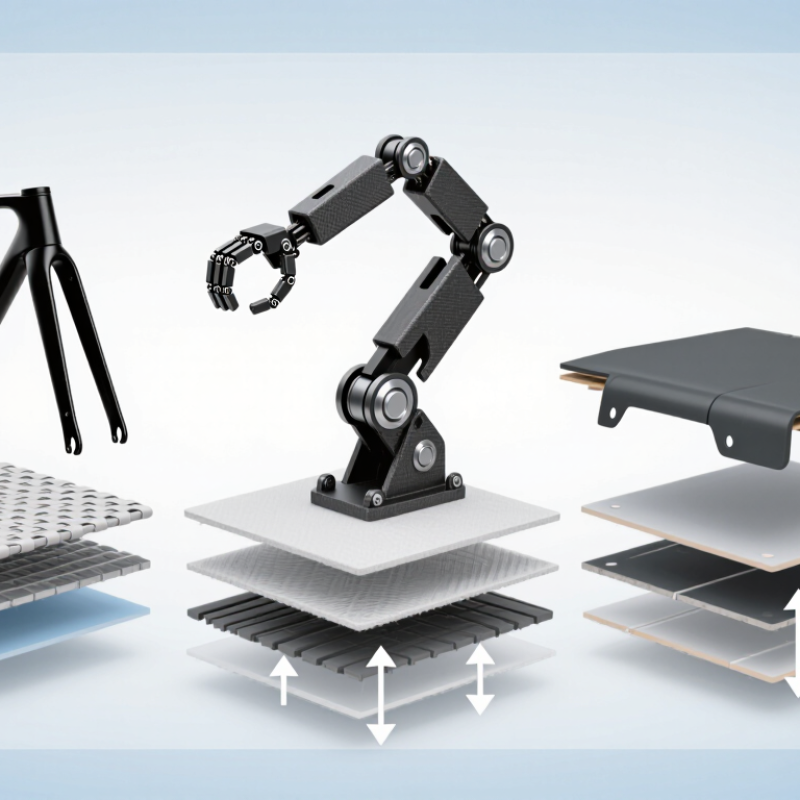
Choosing Carbon Fiber Composites in 2026 starts with the job the part must perform, not a headline strength value. A bicycle frame, robotic arm, and aircraft interior panel face different loads, temperatures, impacts, and production constraints. The same material choice will not suit them all. Details matter.

Compare fiber grade, weave or laminate architecture, resin system, and manufacturing process together. A stiff carbon-fiber laminate may be attractive on paper, yet its performance depends on fiber direction, part geometry, and how consistently it is made. Consider moisture, heat, impact damage, repair needs, and the inspection methods available after production. Ask suppliers for traceable specifications and relevant test data, then check whether those results match your actual part and environment.

Practical evaluation beats assumption. Build representative coupons or prototypes, examine edges and drilled holes, and test the component under realistic loads. A glossy surface is not proof of a sound structure. Neither is a datasheet, by itself. Cost also reaches beyond raw material: tooling, labor, scrap, finishing, and maintenance can change the comparison. Recycled content or lower-impact processing may matter, but verify the evidence and trade-offs rather than relying on broad claims. There is no perfect checklist, and early estimates can miss real production variation. That is worth admitting. This guide explains how to weigh performance, manufacturability, durability, documentation, and total cost when selecting Carbon Fiber Composites for a specific application.
How to Choose Carbon Fiber Composites in 2026

Define the Application Requirements and Operating Conditions

Define the application before comparing carbon fiber composites. Map the loads the part will actually face: tension, bending, compression, vibration, or repeated impacts. A thin panel under steady tension needs different reinforcement from a bracket that flexes thousands of times. Note the load direction, expected service life, and acceptable deflection. Small details matter.

Record the full operating environment, not just the peak temperature. Include daily temperature swings, moisture, ultraviolet exposure, fluids, abrasion, and possible impact damage. A resin that performs well in a warm workshop may soften in a hot enclosure. Check how the part will be joined, too. Drilled holes and sharp corners can create stress concentrations, while bonded joints need clean, controlled surfaces. Testing should reflect these real conditions where possible.

Translate those requirements into a practical specification for fiber orientation, laminate thickness, resin system, and manufacturing method. Unidirectional plies can carry loads efficiently along one axis, but they offer less support across it. Woven fabric may suit multi-directional loading, though its crimp can affect stiffness. Consider inspection and repair access alongside weight and strength. A first estimate is often wrong; revise it when test results expose weak assumptions. Leave room for uncertainty, especially when field conditions vary.
Compare Carbon Fiber Grades, Resin Systems, and Composite Forms

Choosing carbon fiber starts with the load path, not the catalog label. Standard-modulus fiber suits many structural parts; intermediate- and high-modulus grades offer greater stiffness, but can cost more and tolerate less strain. Higher modulus does not automatically mean higher strength. Match the grade to measured loads, impact risk, and required deflection. The IEA’s Renewables 2023 report recorded about 510 GW of new renewable capacity in 2023, nearly 50% above 2022. That growth signals expanding infrastructure needs, not a reason to specify carbon fiber everywhere. Not always.

Resin and form can change performance as much as fiber grade. Epoxy is common for strong, lightweight laminates, while thermoplastics can offer faster processing and remolding potential; confirm temperature limits and joining methods for the actual application. Unidirectional tape directs stiffness along one axis. Woven cloth handles multiple directions more evenly, though crimp can reduce directional efficiency. Prepreg offers controlled resin content but needs managed storage and curing. The choice is rarely perfect. For apples-to-apples comparisons, check test conditions and laminate details: ASTM D3039 covers tensile testing of polymer-matrix composites, but a fiber datasheet alone cannot predict a finished part. Ask suppliers for laminate-level strength, stiffness, and impact data, then validate the design with representative testing.

Match Material Properties to Performance and Durability Needs

Choosing carbon fiber composites in 2026 starts with the load, environment, and expected service life—not the highest strength figure on a datasheet. A thin panel in a dry equipment enclosure faces different demands from a bracket exposed to vibration, moisture, and repeated impacts. Specify the job. Then compare fiber direction, resin system, laminate thickness, and joining method. A strong unidirectional ply can be weak across its fibers.

Weight savings matter, but stiffness, fatigue resistance, and damage tolerance may matter more. For a long, slender arm, bending stiffness could guide selection; for a guarded housing, impact behavior and repair access deserve attention. Heat and chemicals also change resin performance. Check operating temperatures and cleaning agents against supplier data, then request test results that reflect the actual layup and process. Test the finished part, too. Coupon data alone can mislead.

Durability depends on design details as much as raw material. Sharp corners, drilled holes, and poorly sealed edges can invite stress concentrations or moisture ingress. Use generous radii where practical, protect exposed edges, and inspect representative parts after vibration or thermal cycling. Manufacturing variation is real. It may be tempting to choose the lightest laminate, but a small margin can disappear when tolerances, field handling, or repairs are considered. Revisit assumptions with maintenance teams; they often notice awkward failures first.

How to Choose Carbon Fiber Composites in 2026 — Match Material Properties to Performance and Durability Needs

Compare common carbon-fiber composite options by representative properties and practical trade-offs. Start with the load direction, operating environment, manufacturing process, and required service life—not stiffness alone.

Composite option Representative laminate density Typical in-plane tensile modulus Typical in-plane tensile strength Temperature considerations Durability and trade-offs Good fit when…
Standard-modulus carbon / epoxy, unidirectional laminate Approximately 1.50–1.60 g/cm³ Approximately 130–160 GPa, along the fiber direction Approximately 1.5–2.5 GPa, along the fiber direction Often suitable for moderate-temperature service; the epoxy matrix and its glass-transition temperature set the practical limit. Strong and lightweight along the fibers. Transverse, compression, impact, and edge damage performance depend strongly on lay-up and design. You need a balanced, widely applicable option for structures with loads that can be aligned to the fibers.
Intermediate-modulus carbon / epoxy, unidirectional laminate Approximately 1.50–1.60 g/cm³ Approximately 170–230 GPa, along the fiber direction Approximately 2.0–3.5 GPa, along the fiber direction Temperature capability is governed mainly by the selected epoxy system, cure, and design conditions. Provides higher axial stiffness than standard-modulus material; higher stiffness does not automatically mean better impact tolerance or fatigue life. Deflection or vibration limits are important and the extra stiffness justifies material and processing costs.
High-modulus carbon / epoxy, unidirectional laminate Approximately 1.50–1.65 g/cm³ Approximately 250–350 GPa, along the fiber direction Approximately 1.5–3.0 GPa, along the fiber direction Limited by the matrix and manufacturing process; confirm hot-wet properties and service temperature for the actual laminate. Very high axial stiffness, but often less strain to failure and more sensitivity to impact or local stress concentrations than lower-modulus alternatives. Low deflection and dimensional stability matter more than maximum strain capability or impact robustness.
Woven carbon fabric / epoxy laminate Approximately 1.50–1.65 g/cm³ Typically about 50–120 GPa in-plane, depending on fabric style and fiber content Typically about 0.5–1.5 GPa in-plane, depending on fabric style and lay-up Set by the epoxy formulation and cure; verify the laminate’s temperature and moisture limits. Fibers in two directions can simplify handling and provide useful in-plane load coverage. Weave crimp can reduce stiffness and strength compared with straight unidirectional fibers. Loads come from multiple directions, draping is important, or a fabric finish is preferred.
Carbon / PEEK thermoplastic laminate Approximately 1.50–1.65 g/cm³ Approximately 120–200 GPa in-plane, depending on fiber architecture and fiber fraction Approximately 0.8–2.0 GPa in-plane, depending on architecture and processing PEEK has high heat capability for a thermoplastic; continuous-use limits depend on load, environment, and laminate design. Can offer good chemical resistance, toughness, and weldability. High processing temperatures and equipment requirements can increase manufacturing complexity. Repeated loading, chemical exposure, or joining by thermoplastic welding is important.
Carbon / BMI (bismaleimide) laminate Approximately 1.50–1.65 g/cm³ Approximately 120–200 GPa in-plane, depending on fiber architecture Approximately 0.8–2.0 GPa in-plane, depending on fiber architecture and cure Often selected for higher-temperature service than conventional epoxy; verify the specific system’s qualified operating limits. Useful heat resistance, but cure control, moisture exposure, toughness, and repair procedures require attention. Elevated-temperature performance is required and the manufacturing process can support the specified cure cycle.
Carbon-fiber sheet molding compound (SMC) or short-fiber compound Approximately 1.45–1.65 g/cm³, formulation dependent Highly variable; typically much lower and less direction-specific than continuous-fiber laminates Highly variable; depends on fiber length, orientation, resin, and molding conditions Limited by the resin system and molded-part design; use measured data for the selected compound. Supports complex shapes and high-volume molding. Short or discontinuous fibers generally provide lower structural efficiency than continuous fibers. Complex geometry and repeatable production are priorities, and loads do not require continuous fibers across the whole part.

Selection note: Values are broad, representative ranges for comparison—not design allowables or guaranteed product specifications. Actual properties vary with fiber grade, resin, fiber volume fraction, lay-up, cure, void content, specimen direction, and test method. For final design, use qualified laminate data and verify compression, interlaminar strength, impact damage, fatigue, moisture, and temperature performance. Carbon fiber is electrically conductive; account for galvanic corrosion when it contacts metals.

Assess Manufacturing Methods, Standards, and Sustainability

How to Choose Carbon Fiber Composites in 2026

Assess Manufacturing Methods, Standards, and Sustainability

Start with the process, not the catalog description. Prepreg offers controlled fiber placement and consistent resin content, but needs careful storage and curing. Resin-transfer molding can reduce surface defects, though tooling and flow design matter. For chopped-fiber molding, inspect actual strength data; “carbon fiber” alone says little about performance. Ask for fiber orientation, resin type, void content, and production yield. Small details count.

Standards make comparisons more useful. ASTM D3039 measures tensile properties of polymer-matrix composites, while ASTM D7264 evaluates flexural behavior. Request test reports that state specimen direction, conditioning, and failure mode. A result without those details is hard to interpret. It happens.

Sustainability needs equally careful scrutiny. The IEA reported that aviation produced about 950 million tonnes of CO2 in 2023, roughly 2.5% of global energy-related emissions. Lightweight composites may help reduce operating fuel use in some applications, but that benefit depends on design and service life. Ask suppliers for product-specific life-cycle assessments, recycled-content figures, and end-of-life routes. ISO 14040 provides a framework for life-cycle assessment; it does not make weak assumptions disappear. Recycled fibers may suit secondary structures, yet their length and surface condition can limit use. I would not treat “recyclable” as proof of circularity. The data are still uneven.

How to Choose Carbon Fiber Composites in 2026

Representative material densities show the lightweight potential of carbon-fiber composites compared with common metals.

How to read this chart: A typical carbon/epoxy laminate is about 1.6 g/cm³; aluminum is about 2.70 g/cm³, and steel about 7.85 g/cm³. Composite density varies with fiber, resin, and layup, so confirm the value for the specific material.

Density is only one selection factor. Compare manufacturing routes such as autoclave, out-of-autoclave, and pultrusion for the part’s geometry and production volume. Verify mechanical properties using applicable test methods, such as ISO 527-4 or ASTM D3039, and evaluate environmental impacts across the life cycle using ISO 14040/14044 principles. A low density alone does not establish lower life-cycle impact.

Values are representative reference figures, not specifications for a particular grade. Sources: typical carbon/epoxy laminate material data; standard reference densities for aluminum and steel.

Verify Supplier Quality, Total Cost, and Testing Results

When choosing carbon fiber composites in 2026, request evidence from the production lot, not only a polished sample. Check fiber grade, resin system, fiber volume fraction, cure records, and traceability. Ask for test methods and specimen conditioning alongside the numbers. Tensile and compression results can shift with layup, temperature, moisture, and test setup. Numbers matter. Samples vary.

Supplier quality must connect to your part’s actual service conditions. Request data from repeat production runs, plus documented controls for incoming materials and curing. For structural laminates, ASTM D3039 tensile and D6641 compression tests can help compare results, but neither replaces part-level validation. The U.S. Department of Energy reports that a 10% reduction in vehicle weight can improve fuel economy by about 6–8%; use that as context, not a guaranteed outcome. The International Energy Agency’s Global EV Outlook 2024 records roughly 14 million electric-car sales in 2023, about 18% of global car sales. That growth makes lightweighting relevant, yet does not prove a composite pays back. Compare total cost per qualified part: material, scrap, tooling, inspection, repair, and cycle time. A low quote can become expensive when defects slow production. I would still question any supplier estimate that excludes process variation.