How to Choose Carbon Fiber Fabric in 2026?
Choosing Carbon Fiber Fabric in 2026 requires more than comparing tensile strength or online prices. The right fabric must match the part, resin system, forming method, loading direction, and production volume. A racing drone arm needs different reinforcement from a marine panel or a pressure-sensitive aerospace component.
Dr. Stephen W. Tsai, a respected composites researcher, expressed the central principle clearly: “Composites are not materials; composites are structures.” That idea should guide every purchase. A 3K plain-weave fabric may provide balanced handling and a clean surface. A unidirectional fabric may deliver greater strength along one axis. Twill fabric can drape around curved molds more easily, but it may move during wet layup. Small differences matter.
Look closely.
This guide examines fiber grade, weave style, areal weight, tow size, resin compatibility, and certification evidence. It also considers practical details, such as how fabric behaves around tight corners, whether the roll shows damaged edges, and how consistently the supplier controls its coating. These issues are easy to overlook when a specification sheet looks impressive.
Some choices remain imperfect. The lightest fabric is not always the most efficient. The strongest option may create unnecessary cost, difficult handling, or excess resin. Even experienced engineers can misjudge a design when laboratory data replaces real production trials. Therefore, sample testing, documented traceability, and a small prototype should remain part of the decision. In 2026, reliable Carbon Fiber Fabric selection means balancing performance with manufacturability, evidence, and the conditions the finished component will actually face.
Classify Carbon Fiber Tow: 1K–50K Filaments and PAN or Pitch Precursors
Choosing carbon fiber fabric in 2026 starts with tow classification. Tow means the number of continuous filaments in one bundle. A 1K tow contains about 1,000 filaments, while 50K contains roughly 50,000. Smaller tows create smoother surfaces and better drape around tight corners. Larger tows reduce handling time and weaving cost. They may also leave resin-rich areas if compaction is poor.
The practical range is broad. A 1K or 3K fabric suits visible panels, curved shells, and detailed prototypes. A 6K or 12K tow offers a useful balance between surface quality and production speed. For thick structural laminates, 24K to 50K tow can improve deposition efficiency. Bigger is not automatically stronger. Fiber alignment, resin content, void control, and curing pressure often matter more than tow size.
Precursor choice changes performance. PAN-based carbon fiber generally provides strong tensile performance and broad availability. Pitch-based fiber can deliver higher modulus and thermal conductivity, but it often sacrifices strain tolerance. MarketsandMarkets estimated the global carbon fiber market at about USD 4.3 billion in 2023, with growth toward approximately USD 6.3 billion by 2028. Grand View Research also identifies aerospace, wind energy, and automotive production as major demand areas. These reports indicate scale, not a universal material choice. A mistake remains common: selecting a tow by price alone. Test the actual woven fabric, because identical tow labels can behave differently after spreading, weaving, and resin infusion.
Select Fabric Architecture: Woven, UD, Biaxial, and ±45° Orientations
How to Choose Carbon Fiber Fabric in 2026?
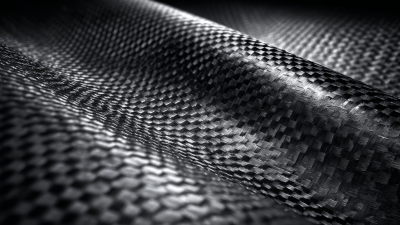
Choosing carbon fiber fabric starts with load direction, not appearance. Woven fabric offers balanced handling and stable drape. Plain weave resists distortion, but it wets out less easily around tight corners. Twill weave conforms better, though its surface can shift during consolidation. Secure it with light tack or careful debulking.
Unidirectional fabric
Unidirectional fabric places most fibers along one axis. Use it for beams, spars, and panels with predictable primary loads. It needs cross-plies because transverse strength remains limited.
Biaxial fabric
Biaxial fabric carries fibers at two fixed angles, commonly 0°/90° or ±45°. It can reduce cutting time and improve repeatability. However, its stitched structure may print through thin skins. Check stitching and resin flow before production.
A ±45° orientation handles shear, torsion, and diagonal loads effectively.
I often place it between 0° and 90° plies when twisting is a concern. Do not choose it by habit. Read the laminate load case. A neat layup can still be structurally wrong.
Small coupon tests reveal gaps, wrinkles, and dry spots before a full panel is built. Record areal weight, fiber angle, drape, and cure behavior during each trial. Supplier data matters, but workshop results matter too. My first selection is not always right. Review it after inspection.
Match Areal Weight: 90–600 g/m² for Thickness and Resin Requirements
Choosing carbon fiber fabric in 2026 starts with areal weight, not appearance. Industry surveys from Carbon Composites e.V. continue to show strong demand for lightweight carbon structures across transportation, energy, and industrial equipment. Fabric weight directly affects ply thickness, drape, handling, and resin consumption.
A 90 g/m² fabric is thin and conforms well around tight corners. At roughly 55% fiber volume, one dry ply may contribute about 0.09 mm of fiber thickness. A 200 g/m² ply provides approximately 0.20 mm, while 600 g/m² approaches 0.60 mm. Actual cured thickness changes with compaction, weave style, and void content. These are working estimates, not promises.
Resin planning must follow the fiber mass. For a 200 g/m² cloth, a hand layup may require roughly 180–240 g of resin per square meter, depending on the target fiber volume and operator control. Prepreg systems often use lower, controlled resin ratios. The 2024 JEC Observer industry analysis highlights process efficiency and material utilization as major composite manufacturing priorities. In practice, 90 g/m² layers can reduce bridging, but require more cutting and handling. A 600 g/m² layer saves labor, yet may trap resin-rich areas around sharp edges. I have seen calculations look perfect while the finished laminate still becomes too thick. Measure cured panels, not only spreadsheets.
How to Choose Carbon Fiber Fabric in 2026? - Match Areal Weight: 90–600 g/m² for Thickness and Resin Requirements
Practical selection guide based on areal weight, laminate thickness, fiber volume fraction, and resin demand
Areal Weight
(g/m²) |
Typical Fabric Format |
Approx. Dry-Fabric Thickness
(mm) |
Estimated Cured Laminate Thickness
at 55% Fiber Volume |
Net Resin Needed per m²
at 55% Fiber Volume (g) |
Recommended Use |
Selection Notes |
| 90 |
Plain weave or light twill |
0.05 |
0.09–0.10 mm |
45–50 |
Surface skins, cosmetic overlays, small repairs |
Excellent drape and surface conformity; usually requires several plies for structural stiffness. |
| 160 |
Plain weave or 2×2 twill |
0.09 |
0.16–0.17 mm |
80–90 |
Automotive panels, fairings, covers, trim parts |
A balanced choice for moderate drape, surface quality, and ply-count efficiency. |
| 200 |
2×2 twill or plain weave |
0.11 |
0.20–0.22 mm |
100–110 |
General-purpose composite panels and brackets |
Common intermediate weight; suitable when both appearance and strength are important. |
| 240 |
2×2 twill or biaxial fabric |
0.13 |
0.24–0.26 mm |
120–135 |
Light structural skins, bicycle parts, equipment panels |
Provides more coverage per ply while retaining useful conformability around moderate curves. |
| 300 |
Twill, plain weave, or biaxial |
0.17 |
0.30–0.33 mm |
150–170 |
Structural shells, sporting goods, marine and industrial parts |
Good compromise between build speed, mechanical performance, and handling. |
| 400 |
Biaxial, multiaxial, or heavy twill |
0.22 |
0.40–0.44 mm |
200–225 |
Load-bearing panels, beams, reinforcements, tooling skins |
Reduces the number of plies, but requires careful nesting and consolidation on tight radii. |
| 600 |
Biaxial, multiaxial, or heavy woven fabric |
0.34 |
0.60–0.66 mm |
300–335 |
Thick laminates, primary reinforcements, large structural components |
High productivity for broad, relatively open surfaces; less suitable for sharp contours and complex draping. |
Technical Basis and Usage Notes
- Thickness estimates use a typical carbon-fiber density of approximately 1.75–1.80 g/cm³. Actual thickness varies with weave architecture, tow size, compaction, stitching, and forming pressure.
- Cured laminate thickness is estimated at approximately 55% fiber volume fraction, a common design target for well-consolidated wet lay-up or vacuum-infused laminates.
- Net resin values represent resin retained in the laminate and are approximately 0.50–0.56 times the dry-fiber areal weight under the stated assumptions. Add process allowance separately for transfer lines, peel ply, excess resin, and production losses.
- For epoxy systems with a resin density near 1.10–1.20 g/cm³, the resin volume should be checked against the selected fiber volume fraction and the manufacturer’s mixing ratio.
- Fabric areal weight alone does not determine part strength. Fiber orientation, laminate stacking sequence, resin system, void content, curing conditions, and quality control are equally important.
Compare Mechanical Grades: 3–7 GPa Strength and 230–600 GPa Modulus
Carbon fiber fabric selection in 2026 should begin with mechanical grades, not color, weave appearance, or marketing language. A useful comparison spans roughly 3–7 GPa tensile strength and 230–600 GPa tensile modulus. Strength describes load before failure. Modulus describes stiffness during loading. These numbers are not interchangeable. High-strength fiber tolerates greater tension, while high-modulus fiber limits deflection more effectively.
Published values usually describe individual fibers, not finished laminates. Resin content, fiber alignment, crimp, voids, and curing temperature can reduce real performance. A balanced woven fabric may handle complex shapes better, but its crimp can lower stiffness along the loading direction. Unidirectional fabric often delivers higher directional efficiency, yet it needs careful handling and additional layers for transverse loads. Check the test standard, gauge length, fiber volume, and failure mode before comparing data sheets.
In practical design reviews, I would match the grade to the actual failure risk. A 3–4 GPa strength grade may suit impact-prone panels where toughness and cost matter. A 5–7 GPa grade can support highly loaded structural parts, provided the laminate design is sound. For precision frames, 400–600 GPa modulus grades may reduce movement, but they can be less forgiving during bending or drilling. The highest figure is not always the best choice. I still question any result without laminate-level testing, because a clean laboratory number can hide weak joints, poor compaction, or damage from ordinary handling.
Verify Quality Standards: ASTM D3039, ISO 14125, and ≤1% Void Content
How to Choose Carbon Fiber Fabric in 2026?
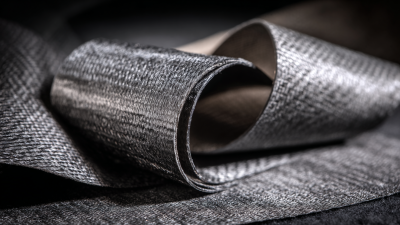
Carbon fiber fabric should be judged through laminate performance, not appearance alone. A 2024 industry market report estimated global carbon fiber demand at more than 120,000 metric tons annually. That scale increases the risk of inconsistent tow spreading, sizing, and resin compatibility. Inspect the roll under angled light. Uneven gaps, fuzzy edges, or crushed fibers deserve documented review.
Request laminate test data based on ASTM D3039 for tensile strength and modulus. This standard helps compare coupons made with controlled fiber orientation, resin content, and curing conditions. Ask for ISO 14125 results too, because flexural testing can reveal weak interlaminar support. Keep specimen thickness and span-to-depth ratio consistent. Otherwise, the numbers may look precise but mislead. A passing coupon is not proof of every roll.
Void content matters more than many buyers expect. Specify ≤1% void content, then verify it through microscopy, density measurement, or an agreed combustion method. ASTM D2734 can support void-content evaluation, but the test method must match the resin system. A 2023 composite-manufacturing survey linked lower void levels with improved fatigue consistency, though results varied by process. My own checklist can be too optimistic here. I now request raw test sheets, cure records, sample locations, and retest rules before approving fabric.
How to Choose Carbon Fiber Fabric in 2026?
Typical nominal areal weights commonly used for carbon fiber fabric selection
Select fabric areal weight according to laminate thickness, drape, and required stiffness. Verify tensile properties using ASTM D3039, flexural properties using ISO 14125, and specify a measured void content of ≤1% for high-quality laminates. ASTM D3039 and ISO 14125 define test methods; actual acceptance values should be agreed for the specific laminate design.