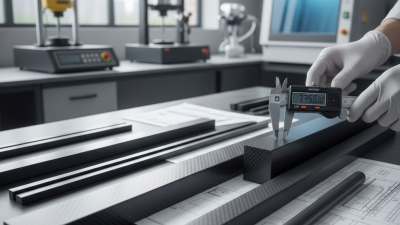
The 2026 market for Forged Carbon Sheet is becoming more specialized, not simply larger. Global buyers now examine fiber architecture, resin consistency, surface finish, and traceability before comparing prices. That shift matters.
MarketsandMarkets estimates that the global carbon fiber market could grow from approximately USD 4.7 billion in 2024 to USD 8.7 billion by 2030. Grand View Research also forecasts strong double-digit growth through the decade. These reports cover carbon fiber broadly, not forged sheets alone. That distinction is important. Public data remains limited for this specific product category.
Forged Carbon Sheet suppliers serve demanding applications, including automotive trim, sporting equipment, aerospace interiors, and premium industrial parts. A reliable supplier should provide laminate specifications, thickness tolerance, density data, curing records, and batch-level inspection evidence. The sheet should feel consistent under light, with clean edges and minimal resin-rich areas. Small visual flaws may reveal larger process weaknesses. Sometimes, they do not. Buyers still need testing.
Dr. Lawrence T. Drzal, a recognized composites researcher, has emphasized that “the process is part of the material.” This principle guides our supplier evaluation. Production experience, engineering support, export capability, and honest documentation matter as much as impressive carbon patterns. The following guide reviews leading 2026 suppliers for global buyers, while recognizing that rankings can change with capacity, certification, and verified customer performance.
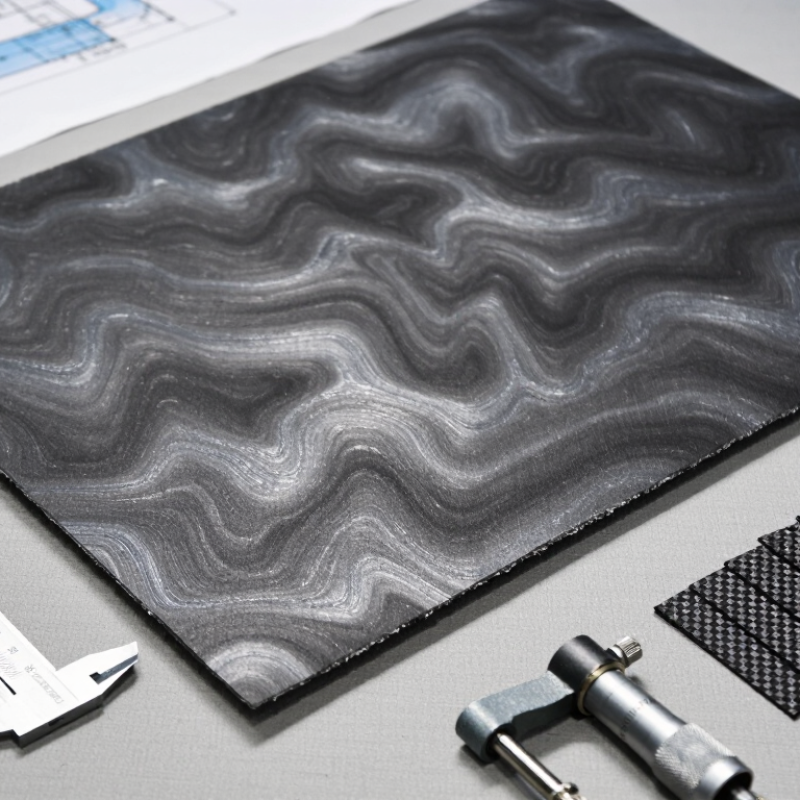
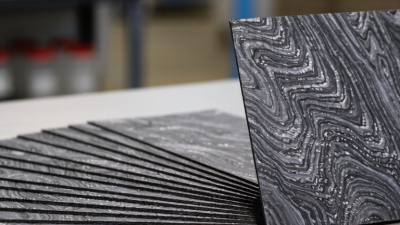
Forged carbon sheets are lightweight composite panels made from chopped carbon fibers and polymer resin. Despite the name, they are not forged like steel. Manufacturers place fiber flakes into a heated mold, add resin, and apply controlled pressure. Heat cures the resin while pressure consolidates the structure. Trimming and surface finishing follow. The random fiber pattern creates a distinctive marbled appearance and fairly balanced in-plane strength. However, fiber distribution can vary between sheets.
The International Energy Agency reported more than 17 million electric-car sales worldwide in 2024. This growth increases demand for lighter structural materials. A U.S. Department of Energy lightweight-materials report notes that carbon-fiber composites can reduce component weight by up to 60% compared with steel. The figure depends on design and loading. It should not be treated as a universal promise. Production quality also matters. Voids, resin-rich areas, uneven thickness, and weak edges may appear without careful process control. I would never judge a sheet by its glossy surface alone.
Tips: Ask suppliers for fiber type, resin system, thickness tolerance, curing temperature, tensile data, void content, and lot traceability. Request samples cut from different areas. Forged carbon is not automatically superior. Its performance depends on fiber volume, mold pressure, and final machining. A good supplier should explain these variables clearly, even when the answer is inconvenient.
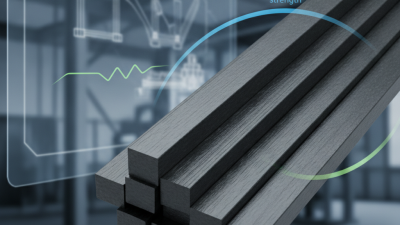
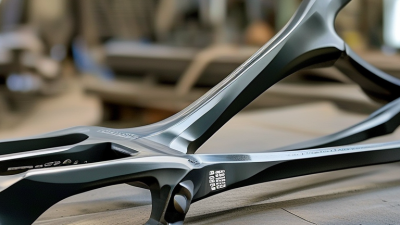
Forged carbon sheet combines carbon fiber reinforcement with a compact resin structure formed under pressure. This process can deliver high stiffness with lower weight than many metal sheets. Weight savings matter in robotics, aerospace fixtures, motorsport components, and portable equipment. The material also offers good fatigue resistance when fiber direction matches the applied load. It is not equally strong in every direction.
Key properties require careful measurement. Buyers should review tensile strength, compressive strength, interlaminar performance, density, and fiber orientation. Thermal expansion is often low along the reinforcement direction, which supports dimensional stability near heat sources. Surface hardness can resist light abrasion, but edges may chip during careless machining. Moisture and temperature cycling can still affect the resin matrix. Small details matter.
Reliable suppliers should provide batch records, dimensional reports, curing data, and independent test results. I have learned that a polished sample proves very little without traceability. A sheet may look flawless yet contain voids beneath the surface. That risk deserves attention. Ask for ultrasonic inspection when structural performance is critical. Check tolerances after machining, not only before it. Some specifications remain unclear across suppliers, so buyers should question vague claims and compare results under the same test conditions. Forged carbon sheet is powerful, but design assumptions must remain realistic.
The chart presents representative engineering values for carbon-fiber-reinforced epoxy sheets produced with different fiber architectures. Actual values vary with fiber volume fraction, resin system, laminate thickness, curing process, and test direction.
When evaluating forged carbon sheet suppliers for global purchasing, inspect more than surface appearance. Ask how the supplier controls fiber distribution, resin content, curing temperature, and sheet thickness. These factors affect strength, machining behavior, and visible flow marks. Request a current technical data sheet and a sample from the same production process. A polished sample can hide inconsistent internal quality.
Reliable suppliers should provide lot identification, inspection records, and traceable raw-material information. Check tensile strength, flexural strength, density, void content, and dimensional tolerance. Independent laboratory reports are more useful than general marketing claims. Confirm whether testing follows recognized international methods. Also review packaging, moisture protection, lead times, and export documentation. A supplier with clear answers usually has stronger process control. Still, documentation is not proof by itself.
Tips: Compare at least three suppliers using the same specification sheet. Measure sample thickness at several points, not just the center. Examine cut edges for voids or delamination. Ask for a small pilot order before committing to large volumes. Price deserves attention, but unusually low pricing may signal weaker inspection or unstable material sources. My own evaluation mistake would be trusting a flawless surface too quickly. Forged carbon sheets can look excellent while hiding variations that appear during machining. Protect against that risk with repeat testing, written acceptance criteria, and direct communication with the production team.
Forged carbon sheet sourcing begins with the supplier region. East Asia often offers broad processing capacity, competitive tooling costs, and flexible production volumes. European suppliers may provide strong documentation, process control, and experience with demanding industrial specifications. North American sources can support shorter regional delivery routes and closer engineering communication. India is also attracting attention for cost-sensitive production and expanding composite capabilities.
Regional advantages can be misleading. A lower quoted price may exclude tooling, testing, packaging, or export handling. Buyers should compare complete landed costs, not factory prices alone. Ask for resin-system data, fiber orientation records, sheet thickness tolerances, surface finish details, and batch traceability. A serious supplier should explain how defects are detected and corrected.
Factory audits offer useful evidence. Review calibration records, curing controls, inspection equipment, and worker training. Request sample panels before approving regular production. Independent testing can verify strength, void content, dimensional stability, and thermal performance. Forged carbon terminology is not always used consistently, so define the forming process in the purchase specification. My early sourcing assumption was simple: the nearest supplier would be safest. That proved incomplete. Communication speed helped, but inconsistent technical language created delays. Reliable sourcing needs technical clarity, documented quality, and realistic lead-time planning.
2026 Best Forged Carbon Sheet Suppliers for Global Buyers
Quality starts with measurable evidence, not polished catalog images. Buyers should request thickness tolerance, fiber content, resin system, density, and mechanical test results. For forged carbon sheets, inspect surface uniformity, visible voids, edge quality, and fiber distribution. Ultrasonic inspection can reveal internal defects that a clean surface hides. Ask for batch numbers and retained samples. These details support traceability during production.
Pricing depends on sheet size, carbon grade, resin type, machining requirements, and order volume. A low quote may exclude tooling, protective packaging, testing, or delivery costs. Compare complete landed costs instead. Request a formal quotation with currency, lead time, payment terms, and replacement procedures. Prices can change with raw material markets. That risk deserves written clarification.
Supplier selection should combine technical capability with consistent communication. Review quality certifications, inspection equipment, export experience, and realistic production capacity. Ask for samples from current batches, not only older reference pieces. Confirm whether the supplier can maintain tolerances across repeat orders. A helpful contact is valuable, but documented controls matter more. No inspection plan is perfect. Smaller defects may still escape detection, especially under rushed schedules. Buyers should define acceptance criteria before placing a purchase order and record every deviation for later review.
Supplier evaluation framework for forged carbon fiber sheets and short-carbon-fiber thermoset composite panels. Pricing is indicative and varies by resin system, dimensions, tooling, testing, order quantity, and shipping terms.
| Evaluation Dimension | Buyer Benchmark | Recommended Acceptance Criteria | Typical Verification Method | Indicative Market Range | Buyer Selection Guidance |
|---|---|---|---|---|---|
| Material Definition | Forged carbon composite sheet | Short carbon fibers dispersed in a thermoset resin matrix, commonly epoxy-based, with a documented fiber and resin formulation. | Technical data sheet, resin declaration, fiber-content test, and sample cross-section review. | Specification-dependent | Confirm that the product is a true forged or compression-molded short-fiber composite rather than a decorative carbon-fiber laminate. |
| Available Thickness | 0.5–10 mm for general sheet applications | Thickness tolerance should normally be agreed in the purchase specification; a common commercial target is approximately ±0.10–0.30 mm depending on thickness and process. | Micrometer measurement at multiple points across each panel. | Custom quotation | Use tighter tolerances for CNC-machined parts, inserts, electrical insulation, and precision assemblies. |
| Standard Sheet Size | Small panels through large-format custom blanks | Typical supplied formats may range from approximately 300 × 300 mm to 1,200 × 2,400 mm, subject to mold and press capacity. | Dimensional inspection against approved drawing or purchase order. | Size-dependent | Ask whether the quoted dimensions are finished sizes, oversize blanks, or usable dimensions after trimming. |
| Fiber Content | High enough to provide stiffness and dimensional stability | Require a declared fiber mass fraction and an agreed tolerance. The exact value depends on the compound and target mechanical properties. | Loss-on-ignition or matrix digestion testing in accordance with an agreed laboratory method. | Batch-specific | Compare suppliers only when fiber content, fiber type, resin type, and test direction are equivalent. |
| Tensile Performance | Application-specific rather than isotropic laminate performance | Values must be stated with specimen orientation, conditioning, fiber content, and test method. ASTM D3039 or ISO 527-4 may be used where applicable. | Laboratory tensile testing using documented specimen preparation and conditioning. | Test-data required | Do not use a generic tensile value without checking whether the test represents the actual molded sheet and geometry. |
| Flexural Performance | Critical for brackets, housings, panels, and structural covers | Require flexural strength and modulus data with the test standard and span-to-thickness ratio clearly stated. ASTM D790 or ISO 178 are commonly referenced. | Three-point flexural testing on production-representative specimens. | Test-data required | Use both flexural strength and flexural modulus when comparing stiffness-sensitive designs. |
| Void and Surface Quality | Uniform surface with no cracks, delamination, blisters, or visible resin-rich defects | Define acceptable limits for voids, pits, scratches, edge chipping, warpage, and cosmetic variation before production. | Visual inspection, flatness measurement, microscopy, or ultrasonic inspection for critical parts. | Inspection-based | Separate cosmetic-grade requirements from structural-grade requirements to avoid unnecessary cost. |
| Flatness and Warpage | Controlled geometry after molding and cooling | Set a flatness limit based on panel size and thickness; a practical drawing requirement may be specified in mm per panel or mm per meter. | Granite surface plate, feeler gauge, coordinate measurement, or optical flatness measurement. | Drawing-dependent | Review warpage after machining and environmental conditioning if the sheet will be used in precision assemblies. |
| Temperature Capability | Determined by the resin system and post-cure condition | Require glass-transition temperature, heat-deflection temperature where relevant, and recommended continuous-use temperature. | DSC or DMA for glass transition; HDT testing where specified. | Resin-dependent | Do not substitute short-term peak temperature for continuous operating temperature in product qualification. |
| Electrical Properties | Conductive or dissipative behavior is common | Carbon fiber composites are generally electrically conductive compared with glass-fiber composites; specify surface resistance or volume resistivity when required. | Surface-resistance and volume-resistivity testing using an agreed standard and conditioning procedure. | Application-dependent | Verify grounding, insulation, and electromagnetic compatibility requirements before selecting the sheet. |
| Dimensional Stability | Low moisture sensitivity compared with many polymer-only materials | Require conditioning data, moisture uptake information, and dimensional-change limits for outdoor or humid environments. | Humidity conditioning followed by dimensional and mechanical re-testing. | Environment-dependent | For aerospace, marine, and outdoor applications, include thermal cycling and humidity exposure in validation. |
| Machinability | CNC cutting, drilling, milling, or waterjet processing | Supplier should provide recommended cutting parameters, dust-control guidance, tool-material recommendations, and edge-finish limits. | Trial machining followed by edge inspection and dimensional measurement. | Process-dependent | Plan for carbide or diamond tooling and suitable extraction because carbon-fiber dust can be abrasive and electrically conductive. |
| Traceability | Lot-level material identification | Each shipment should identify production date, batch or lot number, resin system, nominal thickness, and inspection status. | Certificate of conformity, batch record, and retained sample review. | Required for repeat orders | Prioritize traceability for safety-critical, regulated, or multi-site manufacturing programs. |
| Quality Management | Documented and repeatable production controls | Prefer an audited quality system such as ISO 9001; sector-specific certification may be required for aerospace, automotive, or medical applications. | Certificate review, process audit, corrective-action records, and first-article inspection. | Audit-dependent | Certification supports process control but does not replace product-specific testing and incoming inspection. |
| Indicative Pricing: Prototype | Small quantity, custom dimensions, limited tooling | Pricing commonly includes setup, cutting, testing, packaging, and engineering support. | Compare like-for-like quotations using identical thickness, size, finish, tests, and Incoterms. | Approximately USD 120–300+ per kg | Expect a higher unit cost for one-off panels, custom molds, tight tolerances, and independent laboratory testing. |
| Indicative Pricing: Small Production | Repeated orders from tens to a few hundred kilograms | Lower setup cost per unit with agreed production tooling and standardized sheet formats. | Request a price-break schedule and confirmation of minimum order quantity. | Approximately USD 70–180 per kg | Check whether the price includes trimming, inspection, packaging, export documentation, and freight. |
| Indicative Pricing: Larger Production | Stable design, repeatable tooling, and larger annual volume | Best pricing is usually available when dimensions, resin system, finish, and inspection plan remain stable. | Evaluate annual-volume quotation, yield assumptions, tooling amortization, and capacity reservation. | Approximately USD 45–120 per kg | Use total landed cost rather than ex-works price when comparing international supply options. |
| Lead Time | Prototype and production schedules should be quoted separately | Confirm raw-material availability, tooling lead time, first-article approval, production time, and shipping time. | Written project schedule with milestone dates and change-control terms. | Typically 2–12 weeks | Short lead times may require material reservation or a standard sheet size; verify this before issuing a purchase order. |
| Packaging and Export Readiness | Protection against scratching, moisture, impact, and panel movement | Use separators, edge protection, rigid crates or reinforced cartons, moisture protection where required, and clear lot labels. | Packaging approval, drop-risk review, and delivery-condition inspection. | Logistics-dependent | Specify packaging dimensions and gross weight early to obtain accurate freight and customs estimates. |
| Best Buyer Fit | Applications needing high specific stiffness, low weight, and complex machined geometry | Suitable candidates may include performance housings, robotics, motorsport components, tooling plates, and lightweight industrial structures. | Design review, prototype testing, and application-specific qualification. | Use-case-dependent | Select the supplier with the strongest evidence for your exact resin, thickness, geometry, volume, and validation requirements—not simply the lowest quoted price. |

Pricing note: The stated ranges are planning-level estimates for forged carbon composite sheet and should not be treated as firm offers. Final prices depend on raw materials, panel dimensions, thickness, fiber content, surface finish, tooling, testing, order quantity, packaging, delivery terms, duties, and freight.