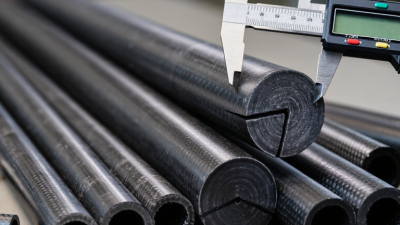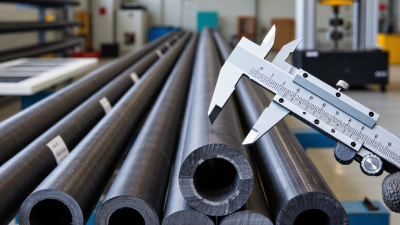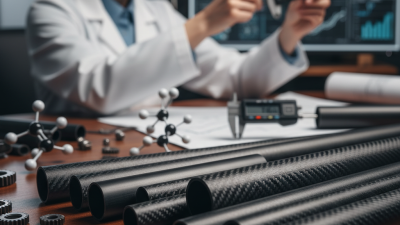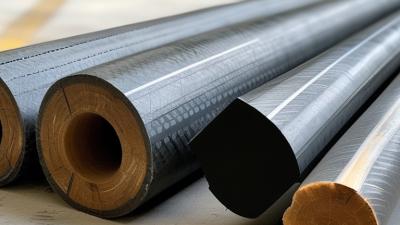
A Pultruded Carbon Fiber Bar is a continuous composite profile made by drawing fiber reinforcement through resin and a heated die. The process aligns fibers along the bar, producing high stiffness and strength in its lengthwise direction. It is not equally strong in every direction. That matters.
Designers use these bars in lightweight frames, robotic arms, measurement equipment, and structural supports. A small-diameter bar can replace a heavier metal rod where low mass and limited flex are important. Carbon fiber also resists many forms of corrosion, but contact with certain metals can create galvanic-corrosion risks. Check the product data sheet, load direction, and connection details before specifying one.
The wider market is growing, though figures should not be mistaken for bar-specific demand. MarketsandMarkets estimated the global carbon fiber market at USD 4.9 billion in 2023 and forecast USD 7.3 billion by 2028. That context helps explain growing interest in carbon-fiber components, but it does not prove every application benefits from them. As materials scientist Michael F. Ashby put it, “Materials are the stuff of design.” For a pultruded bar, that means weighing stiffness, weight, cost, and failure behavior together. A bar may feel rigid in the hand yet still need careful support against sideways loads. The detail is easy to overlook. A sound selection starts with the actual forces, environment, and tolerances—not the material label alone.
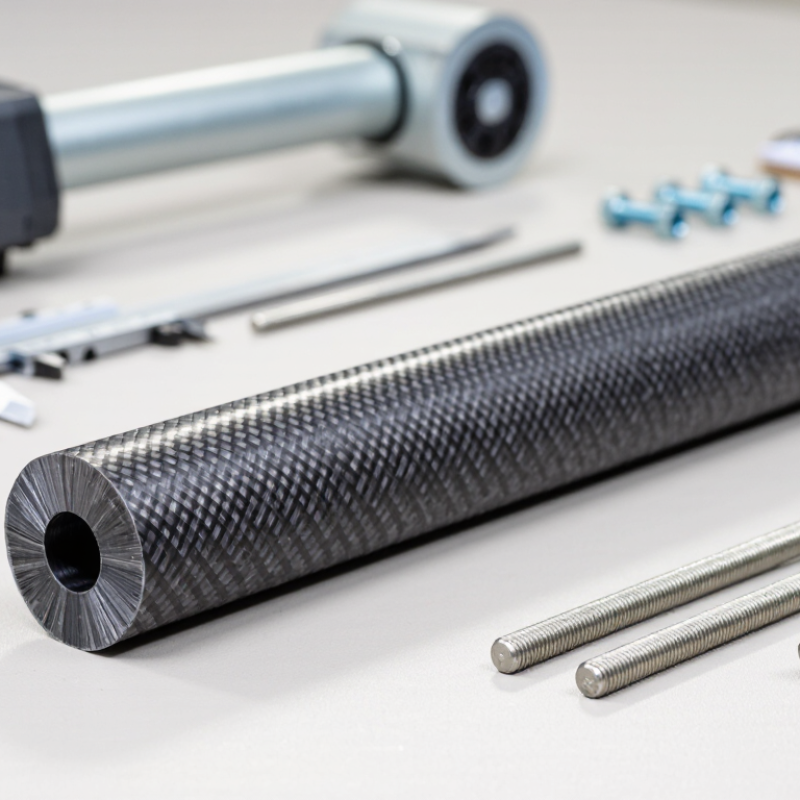
A pultruded carbon fiber bar is a straight composite profile made by drawing continuous carbon fibers through resin and a heated shaping die. The process produces a consistent cross-section, such as a round rod or rectangular strip. The fibers run mainly along the bar’s length, giving it high stiffness and strength in that direction while keeping its weight low. The resin binds and protects the fibers. It is not just a solid piece of carbon.
That directional structure helps explain where these bars are used. They can reinforce lightweight frames, support measuring equipment, or act as stiffeners in structures where steel would add too much weight. They also resist corrosion in many damp or chemically challenging settings. Useful, but not universal. A bar may handle pulling loads well and still be vulnerable to crushing, sharp impacts, or forces across its fibers. Designers need to check the load direction, dimensions, resin type, and connection method for the actual job. Cutting or drilling can expose fibers, so edges may need careful finishing. The word “strong” can be misleading on its own; the right bar depends on how it will be loaded.
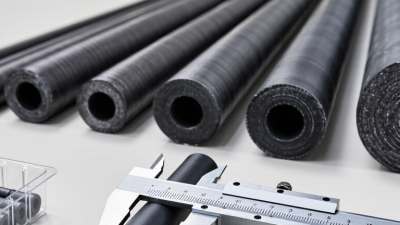
A pultruded carbon fiber bar begins with continuous strands, arranged lengthwise for strength along its axis. The fibers pass through a resin bath or an injection system, where liquid resin coats and binds them. It sounds simple. The fiber bundle then travels through guides into a heated die shaped like the bar’s final profile. Heat cures the resin while the die controls dimensions and compacts the material.
A pulling system draws the profile through the die at a steady speed. Unlike extrusion, the material is pulled, not pushed. Once cured, the continuous bar exits the die and is cut to specified lengths. Manufacturers may add a surface veil or adjust the fiber arrangement for particular finish or performance needs. These choices affect cost and properties, so they should match the intended load and environment.
Inspection usually checks dimensions, straightness, surface condition, and signs of voids or incomplete curing. Small process changes can matter. A temperature shift or uneven fiber feed may affect consistency, even when the bar looks fine. That is worth remembering when selecting bars for lightweight frames, supports, or other parts that rely on predictable stiffness. Pultrusion produces a consistent cross-section, but the bar is strongest along its length; designers must account for that directional behavior.
A pultruded carbon-fiber bar combines low mass with strong stiffness along its length. The ASM Handbook, Volume 21: Composites, lists typical carbon-fiber composite densities around 1.5–1.6 g/cm³, far below steel’s roughly 7.8 g/cm³. That difference matters in long supports, robotic arms, and equipment that moves repeatedly. Less mass can mean lower handling effort and reduced inertia. The bar’s continuous fibers also help it resist bending along its axis. Direction matters, though: a rod can be much less capable under sideways loads or around drilled holes.
Carbon composites resist many forms of corrosion, making them useful near moisture or in environments where metal may need frequent protection. They also expand little with temperature compared with many metals, which can help keep a lightweight frame aligned. The U.S. Department of Energy’s Vehicle Technologies Office reports that a 10% reduction in vehicle weight can improve fuel economy by about 6–8%; that figure is system-level, not a promise for any single bar. A rod is not magic. Resin type, fiber angle, end fittings, and impact damage all affect performance. For a real design, check test data for the actual section and loading direction, rather than relying on a generic strength claim.
Pultruded carbon fiber bars are used where long, straight members need high stiffness and low weight. Their fibers run mainly along the bar, so they resist bending and tension best in that direction. This makes them useful in robotic arms, lightweight frames, camera supports, and moving machine parts. Less mass can mean quicker movement and lower energy demand. Every gram matters.
In construction and infrastructure, bars may serve as reinforcement in concrete or as components in structures exposed to moisture and corrosive environments. Unlike steel, carbon fiber does not rust, but the surrounding material and connection details still matter. Engineers must check loads, temperature, UV exposure, and how forces enter the bar. A strong bar can still fail at a poorly designed joint.
They also appear in sporting equipment, measurement tools, and custom fixtures, especially when a stiff, slim profile is useful. Cutting and drilling need care because carbon-fiber dust can irritate skin and lungs; suitable extraction and protective equipment are important. Pultruded bars are not ideal for every load. Their limited strength across the fibers can be easy to overlook, and a small notch may change performance. A practical design should be tested under realistic conditions, not judged by stiffness alone.
Why use pultruded carbon fiber bars? Their low weight and high strength-to-weight ratio make them useful for lightweight structural reinforcement, bridge components, industrial structures, and other applications where reducing mass matters. The chart compares typical material densities as the relative mass of equal-volume bars, with steel set to 100. Actual values vary by product and composition.
What Is a Pultruded Carbon Fiber Bar Used For?
A pultruded carbon fiber bar can serve as a lightweight support in frames, sensor mounts, and equipment guides. Its continuous fibers run mainly along the bar, giving it high stiffness and strength in that direction. This makes it useful when a part must resist bending without adding much weight. Small details matter.
Selection should start with the loads and support points. A bar spanning a long gap may deflect even when it does not break. Check its diameter, length, and expected load, then compare stiffness and strength data from reliable technical sheets. I would not choose by strength alone. That assumption is easy to make, and not always safe.
Consider the working environment, too. Heat, moisture, ultraviolet exposure, and contact with chemicals can affect the resin and service life. Fiber direction also means the bar may be less resistant to crushing or splitting across its length. Check tolerances and how the bar will be drilled, clamped, or bonded; tight clamps can damage its surface. Test the assembly under realistic conditions. A small prototype can reveal vibration or fit problems that a specification sheet will not show.
| Application | Typical use | Why a pultruded carbon fiber bar may be suitable | Key selection factors | Important limitations or checks |
|---|---|---|---|---|
| Concrete reinforcement | Longitudinal reinforcement in concrete members exposed to moisture, deicing salts, or marine conditions. | Carbon fiber reinforcement is non-rusting and can provide high tensile capacity with relatively low mass. | Required tensile strength and stiffness; bar diameter; surface profile and bond behavior; development length; concrete cover; design code requirements. | Carbon bars are not a direct, one-for-one substitute for steel. Their lower transverse strength, bond characteristics, and lack of yielding behavior must be accounted for in design. |
| Structural ties and bracing | Tension members, stay-in-place ties, and lightweight bracing in buildings, bridges, and industrial structures. | Continuous fibers oriented along the bar provide efficient axial tensile performance and low weight. | Axial load; required elongation; effective length; end anchorage; fatigue loading; environmental exposure; safety factors. | Pultruded bars are anisotropic: properties along the bar can differ substantially from properties across it. Check connection design and avoid unqualified bending or transverse loading. |
| Strengthening and retrofit systems | Anchors, dowels, and load-transfer elements used with externally bonded or mechanically attached strengthening systems. | Low mass can simplify handling, while corrosion resistance may be useful in damp or chemically exposed locations. | Compatibility with the host material and adhesive; embedment depth; bond strength; bar surface treatment; installation tolerances; inspection access. | Adhesive, substrate, and anchorage performance can govern the system. Verify the complete assembly rather than relying on bar tensile properties alone. |
| Industrial equipment and machine components | Rods, shafts, guides, and support members where low mass and axial stiffness are priorities. | The high stiffness-to-weight ratio can reduce moving mass or support loads in appropriately designed components. | Axial and bending loads; vibration and fatigue; deflection limits; dimensional tolerances; machining requirements; operating temperature. | Check torsional and transverse-load capacity separately. Cutting or drilling can damage fibers and should follow suitable fabrication procedures. |
| Robotics and lightweight frames | Structural rods and links in lightweight frames, automation equipment, and mobile platforms. | Low density can help reduce overall system mass while maintaining useful stiffness along the fiber direction. | Load direction; span and deflection; impact risk; joint design; vibration; bar straightness; required diameter and length. | Carbon fiber composites can be brittle compared with metals and may show limited warning before failure. Protect against impact and design joints carefully. |
| Sporting and recreational equipment | Structural elements in poles, frames, and other products requiring a light, stiff rod. | Fiber alignment and layup can be selected to meet specific stiffness and weight targets. | Flexural stiffness; impact resistance; fatigue life; surface finish; resin system; diameter; user-safety requirements. | A pultruded rod is strongest along its length; products subject to bending, impact, or complex loading need application-specific testing. |
| Electrical and communications structures | Support members, stays, or antenna-related structural components where low weight or corrosion resistance is useful. | Carbon fiber composite bars can provide structural support in environments where corrosion resistance matters. | Electrical conductivity requirements; lightning and grounding strategy; electromagnetic compatibility; UV exposure; temperature; connection details. | Carbon fiber is electrically conductive. Do not assume it provides electrical insulation; evaluate electrical hazards and isolation requirements for the complete installation. |
| All applications | Final material and bar specification before design approval or procurement. | Selection can be matched to the load direction, environment, service life, and required dimensions. | Fiber and resin system; longitudinal tensile and elastic properties; diameter tolerance; surface finish; temperature range; chemical exposure; fire and UV requirements; quality documentation. | Use properties measured for the specified product and test method. Strength, stiffness, and durability vary with fiber content, resin, manufacturing quality, geometry, and service conditions. |
Selection principle: Pultruded carbon fiber bars are best suited to loads aligned with their continuous fibers. Confirm design allowables, anchorage, environmental resistance, and applicable standards for the specific project.