China Top 10 Pultruded Carbon Fiber Rod Manufacturers?
China’s pultrusion industry has become an important source of advanced composite materials. This guide examines China’s top 10 Pultruded Carbon Fiber Rod manufacturers. It focuses on practical supplier differences, not promotional claims.
The review considers production experience, carbon fiber grades, resin systems, dimensional accuracy, and surface quality. It also examines factory capabilities, testing procedures, customization options, and export support. A reliable manufacturer should provide clear technical data, batch traceability, and samples for evaluation. Rod diameter, tensile strength, modulus, temperature resistance, and moisture performance can directly affect project results. Small variations matter.
These manufacturers serve applications such as robotics, sporting equipment, antenna structures, drones, and lightweight industrial frames. Their production lines may appear similar, yet their process control can differ greatly. Some companies demonstrate strong engineering support but offer limited standard sizes. Others provide broad catalogs but less detailed documentation. That difference deserves attention.
The selection should not be treated as an absolute ranking. Supplier performance may change with equipment upgrades, staffing, and material availability. This is worth remembering. Independent verification remains important before placing a large order. Buyers should request current certificates, inspection reports, samples, and realistic delivery schedules. They should also confirm whether quoted performance applies to the finished rod or only the raw fiber. That detail is easy to overlook.
By comparing measurable capabilities and communication quality, this guide helps engineers and purchasing teams create a more dependable shortlist. The strongest choice is not always the largest factory. It is the manufacturer that consistently matches verified performance with the application’s actual requirements.
What Are Pultruded Carbon Fiber Rods?
Pultruded carbon fiber rods are continuous composite profiles made by pulling carbon fibers through a resin bath and a heated forming die. The fibers usually run along the rod’s length, creating strong axial stiffness with low weight. A typical carbon fiber composite density is about 1.5–1.7 g/cm³, compared with approximately 7.85 g/cm³ for steel. This difference matters in antenna supports, robotic arms, sporting equipment, and structural bracing.
The Pultrusion Market report by MarketsandMarkets has projected steady industry growth, with the market expected to approach USD 4.5 billion by 2028. Grand View Research also estimated the global carbon fiber market at about USD 3.86 billion in 2023. These figures show expanding demand, but they do not guarantee equal rod quality. Resin chemistry, fiber volume, diameter tolerance, and curing control can change performance substantially.
Look closely at test data.
Tensile strength, flexural modulus, moisture absorption, and thermal limits should be verified under recognized methods, such as ASTM testing where applicable. A rod with a glossy surface is not automatically reliable. The label can mislead. In practical sourcing, request batch reports, fiber-content data, and dimensional inspection records. Carbon fiber rods resist corrosion well, yet they can fail through impact damage, poor drilling, or concentrated clamping pressure. The design process is not perfect; engineers still need safety factors and application-specific testing.
How Are Pultruded Carbon Fiber Rods Manufactured?
Pultruded carbon fiber rods begin with continuous carbon tows, usually supplied on creels. The fibers pass through guides that control tension and alignment. A resin bath or injection chamber then wets the bundle. According to MarketsandMarkets’ Carbon Fiber Market report (2024), demand is supported by lightweight structures and growing composite use. That demand makes process control increasingly important.
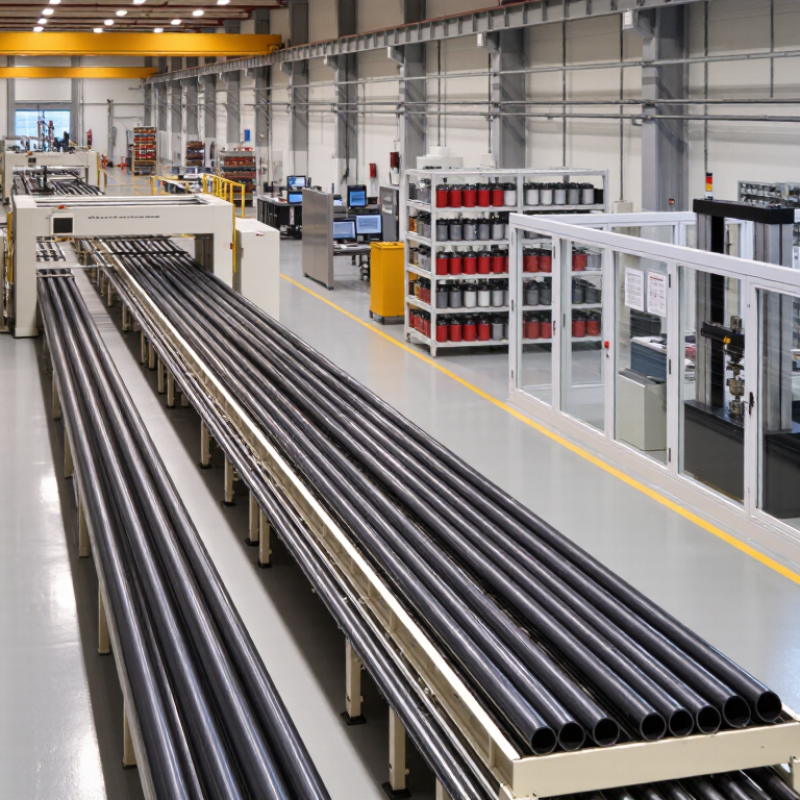
The saturated fibers enter a heated steel die. The die shapes the rod and cures the resin continuously. Pulling equipment maintains constant speed and tension. Typical production lines monitor die temperature, resin viscosity, pulling force, and diameter. ASTM D3039 tensile testing can evaluate the cured composite’s strength, while dimensional checks reveal ovality and surface defects. The International Energy Agency reported that carbon fiber production remains energy-intensive, so efficient curing can reduce manufacturing pressure.
A small defect can weaken the entire rod. Voids, dry fiber areas, or misaligned tows may remain hidden beneath a smooth surface. Manufacturers often cut samples from each production batch for testing, although sampling cannot expose every local flaw. That limitation deserves attention. Reliable producers should document fiber volume, resin system, tensile results, and batch traceability. In my experience, consistent tension matters as much as the resin formula. Perfect alignment is difficult to maintain, especially during long production runs.
What Criteria Define a Leading Manufacturer?
A leading pultruded carbon fiber rod manufacturer proves performance through repeatable production, not attractive claims. Inspect the facility, process records, and test reports before trusting a supplier. Fiber alignment should remain consistent along the rod’s length. Resin content must stay within a controlled range. Small variations can affect stiffness, weight, and bonding.
Ask for tensile strength, flexural modulus, diameter tolerance, and environmental resistance data. Reliable manufacturers test samples from different production batches. They should explain test methods clearly, including conditioning temperature and loading speed. Independent laboratory verification adds credibility. It also reduces the risk of selective reporting. A useful factory visit may reveal calibrated machines, clean storage areas, and labeled material lots. Traceability matters when a shipment contains thousands of rods.
Engineering support separates a capable producer from a simple catalog seller.
The team should help select rod diameter, surface treatment, and resin type for the intended load. Clear drawings and practical installation advice show experience. Delivery records matter too. Stable lead times, protective packaging, and responsive complaint handling support long-term reliability.
No manufacturer is perfect. A serious one admits limitations. Maybe its smallest diameter has a longer lead time, or a custom coating needs extra testing. That honesty is valuable. Check quality certificates, but do not treat certificates as the whole decision. Compare actual samples, documentation, communication, and after-sales response. The strongest choice combines measurable performance with transparent cooperation.
China’s Top 10 Pultruded Carbon Fiber Rod Manufacturers
China’s top 10 pultruded carbon fiber rod manufacturers should be judged by measurable production strength, not attractive catalog language. A reliable review examines fiber volume, resin consistency, diameter tolerance, and tensile performance. Factory evidence matters. Technical teams should inspect sample rods, production records, and batch certificates before accepting any ranking.
The strongest manufacturers usually control pultrusion speed, curing temperature, and fiber alignment with precision. A 3 mm rod should maintain a stable diameter across its full length. Surface defects, uneven resin, and small bends can create serious installation problems. Good suppliers also provide UV resistance data, fatigue testing, and clear moisture-control procedures. These details show practical engineering knowledge.
Yet, ranking the top ten is not perfectly simple. Public information may be incomplete, and laboratory results can differ from field performance. That weakness deserves attention. Buyers should request third-party testing and compare several production batches. Lead time, packaging, export experience, and technical response also influence reliability. A manufacturer that explains limitations honestly may deserve more trust than one promising impossible performance. Clear traceability remains essential.
How to Select the Right Chinese Manufacturer for Your Needs
Selecting the right Chinese pultruded carbon fiber rod manufacturer requires more than comparing prices. The MarketsandMarkets Carbon Fiber Market report projects growth from about USD 4.7 billion in 2023 to USD 6.6 billion by 2028. This expansion attracts new suppliers, but capacity does not always mean consistency. Ask for resin specifications, fiber type, fiber volume fraction, diameter tolerance, and batch traceability. A reliable factory should provide recent tensile and flexural test reports, preferably referencing ISO 527 and ISO 14125 methods.
Inspect the production details closely. Check whether carbon fiber is stored in controlled conditions, whether pulling speed is monitored, and whether curing temperature records are available. Request samples from at least three production batches. Measure a 500-millimeter rod with calibrated tools. Look for surface waviness, resin-rich areas, cracks, and uneven ends. Small defects can become serious under repeated loading. The CompositesWorld annual industry coverage repeatedly identifies process control and material consistency as major concerns in composite manufacturing.
A factory audit should include equipment age, laboratory capability, worker training, and corrective-action records. Confirm packaging, moisture protection, lead time, and export documentation before signing. Do not rely only on polished certificates. I have seen technically impressive samples fail to represent normal production. That risk deserves attention. A clear inspection plan, agreed acceptance limits, and independent testing can expose weaknesses early, especially when rods must perform outdoors, under vibration, or near corrosive chemicals.
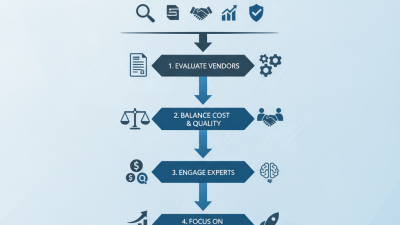
China Top 10 Pultruded Carbon Fiber Rod Manufacturers? How to Select the Right Chinese Manufacturer for Your Needs
Reference comparison of common pultruded carbon fiber rod sizes. Tensile capacity is calculated at a representative tensile strength of 1,200 MPa, while mass is calculated using a carbon fiber composite density of 1.6 g/cm³. Actual manufacturer specifications should be verified through technical datasheets and samples.
When selecting a Chinese manufacturer, compare tensile strength, dimensional tolerance, resin content, surface finish, cut quality, testing documentation, production capacity, and export experience—not only the rod diameter or quoted price.