Leave Your Message

10 Best Carbon Fiber Laminate Sheet Suppliers for Global Buyers

Choosing a reliable Carbon Fiber Laminate Sheet supplier can influence product safety, production speed, and long-term costs. Global buyers often compare suppliers by price alone. That approach can create expensive problems later. Material consistency matters more.

This guide examines ten established suppliers serving international markets. It focuses on practical buying evidence, not polished catalog language. Each supplier is considered through product range, laminate thickness, fiber orientation, resin quality, and manufacturing capability. Attention is also given to sample policies, technical documentation, packaging, and export experience. A dependable supplier should explain test methods clearly. Certificates should be verifiable. Specifications should match delivered panels.

Small details reveal a supplier’s professionalism. For example, a well-packed sheet should arrive without chipped corners, surface marks, or moisture damage. Clear labeling should identify grade, dimensions, batch information, and recommended storage conditions. Buyers should also ask how the material performs under heat, vibration, and repeated loading. These questions matter in aerospace components, robotics, sporting equipment, marine structures, and industrial tooling.

No supplier fits every application. That is the difficult part. A low-cost sheet may be suitable for visual prototypes but unsuitable for structural parts. A premium panel may exceed a project’s real needs. This selection is therefore a practical starting point, not a final purchasing decision. Product samples and independent testing remain valuable. Specifications can look perfect on paper. Real performance may still differ. Careful communication, documented quality control, and realistic delivery commitments help global buyers reduce uncertainty before placing larger orders.
10 Best Carbon Fiber Laminate Sheet Suppliers for Global Buyers

Carbon Fiber Laminate Sheets: Materials, Structures, and Key Properties

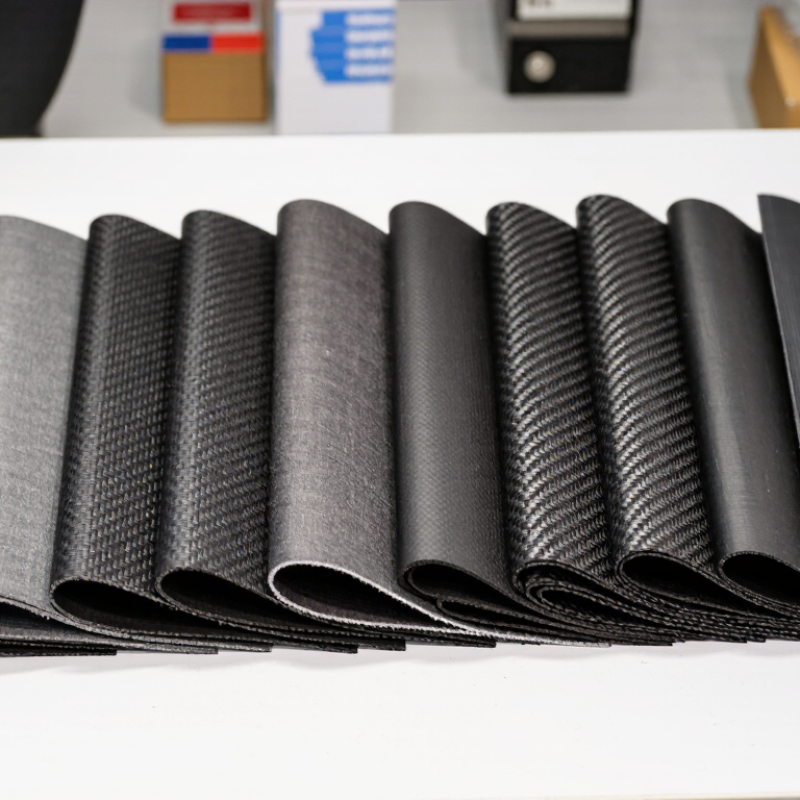
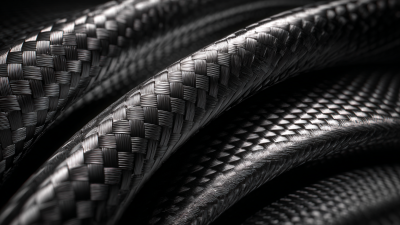
Carbon fiber laminate sheets combine high-strength carbon fibers with a polymer matrix, usually epoxy. The fibers carry most tensile loads, while the matrix maintains alignment and transfers stress between layers. Unidirectional laminates offer excellent strength along one axis. Woven fabrics provide more balanced handling and load distribution. Quasi-isotropic stacks use several fiber angles, often 0, 45, and 90 degrees.

Layer direction matters greatly. A sheet may look uniform, yet perform poorly under an unexpected load. Fiber volume, resin content, and void levels influence stiffness, strength, and durability. Lower void content usually improves fatigue performance, but manufacturing control is essential. Thickness tolerance also matters when sheets must fit machined assemblies. Small variations can affect fastener alignment.

Key properties include tensile modulus, tensile strength, interlaminar shear strength, density, and thermal expansion. Carbon fiber is stiff and light, but it can fail suddenly without visible stretching. It also conducts electricity, which may create galvanic corrosion when joined directly to aluminum. Use an insulating layer where required. Temperature resistance depends on the resin system, not only the fiber.
Moisture and repeated heating can reduce performance over time. A datasheet is not enough. Global buyers should request test methods, cure records, batch traceability, and inspection data. I have seen attractive surface finishes hide uneven edges or resin-rich areas. Visual checks help, but ultrasonic inspection and sample testing provide stronger evidence. Suppliers should also explain storage conditions, cutting tolerances, and packaging protection. Clear answers often reveal more than impressive specifications.

How to Evaluate Global Carbon Fiber Sheet Suppliers

How to Evaluate Global Carbon Fiber Sheet Suppliers

Evaluating carbon fiber laminate sheet suppliers requires more than comparing prices. Request technical datasheets showing fiber type, resin system, laminate thickness, density, and fiber orientation. A reliable supplier should explain whether sheets are pultruded, molded, or produced by prepreg compression. Manufacturing details matter.

Ask for recent test reports covering tensile strength, flexural strength, impact resistance, and thickness tolerance. Check whether an independent laboratory issued the reports. Review the supplier’s quality system, inspection records, and material traceability. Each sheet should connect to a production batch. Small details prevent expensive surprises.

Order samples before approving a large shipment. Measure flatness with a straightedge and inspect edges for voids, delamination, or uneven cutting. Test the sample under your actual temperature and load conditions. A supplier may provide excellent data, yet the sheet can perform differently in your assembly. This is often overlooked.

Confirm packaging for moisture, abrasion, and long-distance transport. Clarify minimum order quantities, production capacity, lead times, replacement procedures, and export documentation. Ask for customer references from similar industries, not only general testimonials. A polished website proves little. Communication quality also matters. Slow technical replies may signal weak support after payment.

Price deserves scrutiny. Very low offers can hide inconsistent fiber content, poor curing, or incomplete testing. Still, premium pricing does not guarantee perfection. Recheck assumptions, especially when comparing different laminate grades. That extra review can expose a costly mismatch before production begins.

Profiles of Ten Leading Carbon Fiber Laminate Sheet Suppliers

Global buyers need more than a glossy catalog when selecting carbon fiber laminate sheet suppliers. They need traceable materials, stable thickness, and practical export experience. Ten leading supplier profiles reveal different strengths. An aerospace-focused supplier offers strict batch records and controlled tolerances. A motorsport specialist provides lightweight panels for rapid fabrication. An industrial supplier emphasizes impact resistance and long service life. A marine supplier develops sheets for moisture-prone environments. A custom fabricator supports unusual dimensions and drilled patterns. A prepreg supplier offers consistent fiber alignment and resin content. A CNC-oriented supplier delivers machining-friendly panels with clean edges. A prototyping supplier accepts smaller orders and faster revisions. A regional stockist reduces delivery delays through local inventory. A sustainability-focused supplier reports recycled content and production data. Quality varies, even among experienced companies.

Tips: Request a recent datasheet, sample panel, test method, and certificate of analysis. Check thickness at several points, not just one corner. Confirm fiber direction, resin system, surface finish, packaging, and export documents before payment. Ask whether the quoted tolerance applies after machining. Small details matter.

My purchasing experience suggests that the cheapest sheet rarely remains cheapest after cutting waste, customs delays, or rejected parts. I would also question impressive strength figures without test conditions. A supplier may be technically capable yet unsuitable for your delivery schedule. Compare real samples, communication speed, and corrective-action procedures. Some judgments remain uncertain until the first production batch arrives.

Comparing Quality, Customization, Pricing, and Delivery Options

10 Best Carbon Fiber Laminate Sheet Suppliers for Global Buyers

Comparing ten carbon fiber laminate sheet suppliers requires more than checking catalog photos. Quality begins with fiber grade, resin consistency, laminate orientation, and controlled thickness. Ask for recent test reports, not generic certificates. Useful data includes tensile strength, flexural strength, void content, flatness, and temperature resistance. A sheet may look flawless yet warp during machining.

Customization separates practical suppliers from simple resellers. Reliable manufacturers can adjust thickness, surface finish, fiber direction, panel size, and drilled patterns. Small prototype orders reveal their real capabilities. I prefer suppliers that provide samples, clear drawings, and inspection records before production. My early comparisons focused too heavily on unit price. That was a mistake.

Pricing should include tooling, packaging, duties, freight, and minimum order quantities. A low quotation can become expensive after oversized-crate charges. Delivery options also deserve close attention. Check production lead time, sample availability, export packaging, tracking, and agreed shipping terms. For urgent projects, air freight may protect the schedule, but sea freight usually reduces cost. Suppliers with stable production planning can offer better dates, though delays still happen. Build a small buffer. Four weeks is not always four weeks. Reliable communication matters when specifications change, especially across time zones. Ask who approves substitutions and how damaged sheets are handled. A written inspection process improves confidence before payment.

10 Best Carbon Fiber Laminate Sheet Suppliers for Global Buyers - Comparing Quality, Customization, Pricing, and Delivery Options

The following comparison uses anonymized supplier profiles so that no company or brand data is displayed. Prices and lead times are indicative international-market ranges for standard industrial carbon fiber laminate sheets; final quotations depend on dimensions, thickness, fiber orientation, tolerances, testing, tooling, packaging, destination, and order volume.

Rank Anonymized Supplier Profile Primary Production Region Typical Laminate Construction Common Thickness Range Quality and Testing Capability Customization Options Indicative Price Range Typical MOQ Estimated Production Lead Time Global Delivery Options Best Fit for Buyers
1 Profile A: High-performance aerospace-oriented composite fabricator North America Unidirectional and woven carbon fiber pre-preg laminates 0.5–6 mm Batch traceability, fiber-volume checks, dimensional inspection, ultrasonic inspection available by quotation Custom ply schedules, fiber orientation, surface finish, drilled or machined panels US$180–450 per m² for standard panels 1–5 sheets 4–8 weeks Air freight, ocean freight, export crating, documentation support Structural prototypes, aerospace research, demanding engineering programs
2 Profile B: European precision laminate manufacturer Western Europe Balanced plain-weave and twill carbon fiber epoxy laminates 0.3–10 mm ISO-style process control, thickness and flatness inspection, material certificates available Custom dimensions, gloss or matte surfaces, edge finishing, CNC cutting €140–360 per m² for standard panels 1–10 sheets 3–7 weeks Road freight within Europe, air freight, international courier service Robotics, motorsport, laboratory equipment, precision assemblies
3 Profile C: Large-volume Asian composite sheet producer East Asia Woven and quasi-isotropic carbon fiber epoxy sheets 0.5–20 mm Routine resin-ratio control, thickness measurement, visual inspection, third-party testing on request Large-format sheets, custom layups, color-tinted resin, cut-to-size service US$65–190 per m² for standard panels 10–50 sheets 2–6 weeks Ocean freight, consolidated air cargo, courier samples, export packing Commercial production, equipment housings, industrial panels, cost-sensitive projects
4 Profile D: Short-run custom prototyping specialist United Kingdom and Ireland Pre-preg and wet-lay carbon fiber laminates 0.5–8 mm Dimensional reports, cure records, visual inspection, test coupons available for development orders Low-volume layups, rapid prototypes, bonded inserts, custom contour forming £170–420 per m² for standard panels 1 sheet or 1 prototype batch 2–5 weeks Express courier, air freight, protective foam packaging Product development, prototypes, research and low-volume engineering
5 Profile E: Industrial pultrusion and flat-panel supplier Central Europe Unidirectional carbon fiber reinforced epoxy and pultruded laminates 1–12 mm Mechanical property data, profile dimensional checks, resin-content verification Continuous lengths, cut-to-length panels, custom width, edge trimming €90–260 per m² equivalent 5–25 pieces 4–9 weeks Truck freight, pallet shipping, export packaging for long sections Lightweight reinforcement, beams, automation systems, structural frames
6 Profile F: High-temperature composite panel supplier Japan and South Korea Carbon fiber laminates using high-temperature epoxy or thermoplastic matrices 0.4–8 mm Thermal aging data, dimensional stability checks, batch certificates, specialized testing by request High-temperature resin systems, conductive layers, special fiber orientations, tight tolerances US$220–600 per m² for specialty grades 5–20 sheets 6–12 weeks Air freight for samples, ocean freight for production, controlled packaging available Thermal management, electronics, industrial tooling, high-temperature applications
7 Profile G: Standard commercial sheet converter South Asia Plain-weave and twill carbon fiber epoxy sheets 0.5–6 mm Visual inspection, thickness checks, basic batch documentation, independent testing available Standard sizes, cut-to-size panels, hole drilling, matte or gloss cosmetic finish US$55–160 per m² for standard panels 10–30 sheets 3–7 weeks Ocean freight, air cargo, courier samples, palletized export shipment General industrial use, covers, brackets, consumer products, educational projects
8 Profile H: North American marine and sporting-goods specialist North America Woven carbon fiber and hybrid carbon-glass laminate sheets 0.8–12 mm Moisture-resistance evaluation, visual quality control, thickness and flatness inspection Hybrid fabrics, UV-resistant clear coatings, curved panels, trimmed blanks US$120–300 per m² for standard panels 2–10 sheets 3–8 weeks Domestic ground freight, air freight, export cartons, marine-grade packing Marine components, sporting equipment, recreational vehicles, outdoor products
9 Profile I: Rapid-cutting and machining service center Australia and New Zealand Purchased carbon fiber laminate sheets processed to finished dimensions 0.5–10 mm Coordinate measurement, edge inspection, dimensional reports, incoming-material certificates Waterjet or CNC cutting, countersinks, drilled holes, engraving, kitted assemblies A$180–520 per m² including common machining 1 finished part or panel set 1–4 weeks after material availability Domestic courier, international air freight, custom protective packaging Urgent replacement parts, maintenance, prototypes, small custom assemblies
10 Profile J: Distributor with multi-region sourcing Middle East and Southeast Asia Standard woven, unidirectional, and quasi-isotropic epoxy laminates 0.5–15 mm Supplier certificates, incoming inspection, dimensional verification, third-party testing by request Mixed-source purchasing, multiple thicknesses, cut-to-size service, consolidated orders US$80–240 per m² for standard grades 5–20 sheets 2–6 weeks depending on stock Stock shipment, ocean freight, air freight, regional distribution, consolidated cargo Global buyers seeking flexible sourcing, mixed orders, and regional availability

International Buying Considerations for Carbon Fiber Laminate Sheets

International buying starts with specification discipline, not a supplier’s attractive catalogue. MarketsandMarkets estimates the carbon fiber market could grow from about USD 4.7 billion in 2023 to USD 8.2 billion by 2028. That growth increases supplier choice, but also creates uneven documentation. Request laminate thickness tolerance, fiber orientation, resin system, fiber volume fraction, glass transition temperature, and void content. A clean datasheet is useful. It is not proof of production consistency.

Ask for batch-level certificates and test methods, such as ASTM D3039 for tensile strength and ASTM D790 for flexural performance. For aerospace-related applications, an AS9100-certified quality system may support stronger traceability, while ISO 9001 remains a useful baseline. Confirm whether testing covers the actual laminate thickness and curing condition. Results from a thinner panel may not represent your product. This detail is often missed.

International logistics require equal care. Check HS classification, import duties, chemical restrictions, and destination-market requirements before payment. Resin systems may require specific safety documents, including an SDS, even when the carbon fabric itself is uncomplicated. Specify Incoterms, moisture-barrier packaging, corner protection, pallet dimensions, and acceptable flatness. Ask for photographs before dispatch. A 2023 Grand View Research report places the global carbon fiber market on a strong growth path, but growth does not guarantee stable lead times. I would also order a small validation batch first. It costs more initially, yet one shipment can reveal warping, inconsistent cure, or packaging damage.