- Home
- Products
- About Us
- News
- Blog
- Video
- Contact
Leave Your Message
Choosing Carbon Fiber Mesh Fabric in 2026 requires more than comparing prices or surface appearance. The right material must match the repair method, load direction, resin system, and environmental conditions. A contractor repairing a cracked concrete beam needs different mesh from a manufacturer reinforcing a lightweight panel. The difference may appear small. It can affect the entire result.
This guide examines practical selection factors, including fiber orientation, mesh size, areal weight, tensile performance, flexibility, and compatibility with epoxy or other approved matrices. It also considers supplier documentation, batch consistency, storage conditions, and traceability. Reliable technical data matters. A glossy product page is not enough. Ask for test methods, certificates, and application guidance from qualified manufacturers. Field experience also deserves attention. Fabric that handles smoothly on a flat surface may wrinkle around corners or absorb resin unevenly. That detail is easy to miss.
Performance comes first.
In 2026, buyers should also review recycled content claims, production transparency, and quality-control practices. These factors support responsible purchasing, but sustainability language can remain vague. Verify the evidence. A lower-cost roll may create higher labor costs through cutting waste, poor drape, or repeated repairs. Still, no single specification guarantees success. Project design, surface preparation, installation skill, and curing conditions remain critical. This introduction provides a careful framework for comparing options, while acknowledging an uncomfortable truth: material choices sometimes rely on incomplete information. Good decisions require measured testing, expert review, and willingness to reconsider initial assumptions.
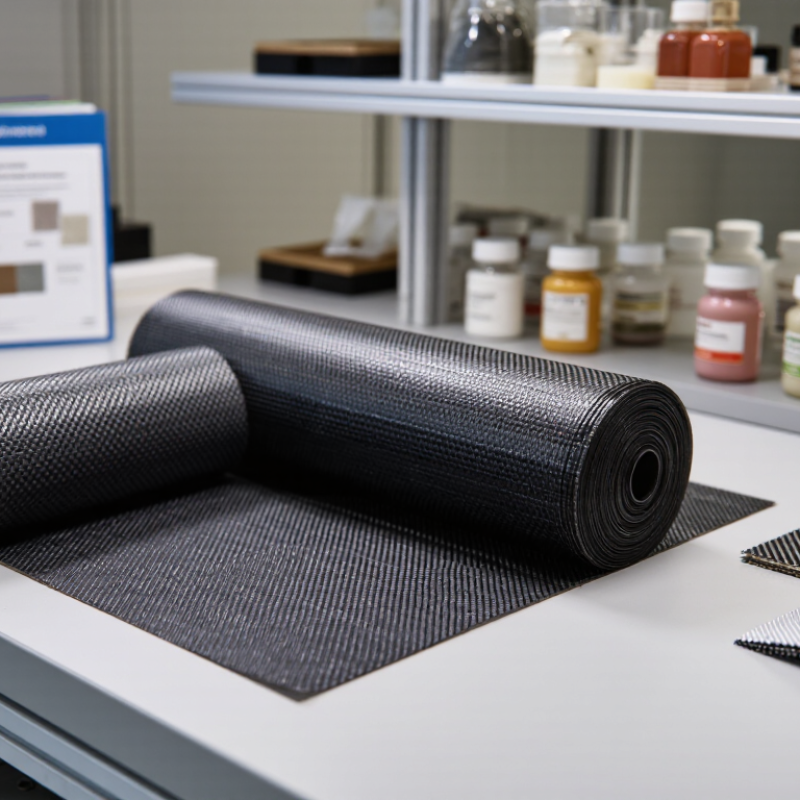
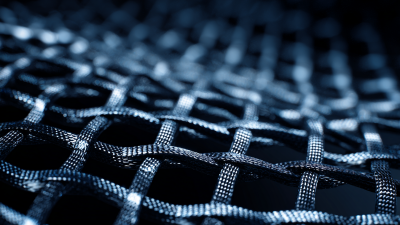
Carbon fiber mesh fabric is a lightweight grid made from high-strength carbon filaments. The fibers usually run in two directions. This structure helps distribute tensile forces across concrete, masonry, or other repair surfaces. Unlike steel, carbon fiber does not rust when properly embedded in a compatible resin or cementitious matrix.
The fabric itself carries tension, while the surrounding matrix transfers loads into the substrate. When a wall or beam begins to crack, the mesh bridges the damaged area and limits further opening. A close grid can control smaller cracks. A wider grid may suit larger strengthening zones. Orientation also matters. Fibers should follow the expected stress direction, not simply the easiest installation path.
On site, surface preparation often decides performance. Dust, loose concrete, moisture, and sharp edges can weaken the bond. Clean, dry contact is essential. I have seen strong mesh perform poorly because the substrate was ignored. That mistake is easy to repeat. Designers should check tensile strength, fiber weight, resin compatibility, and installation temperature. Product data should come from traceable testing, not a sales claim alone.
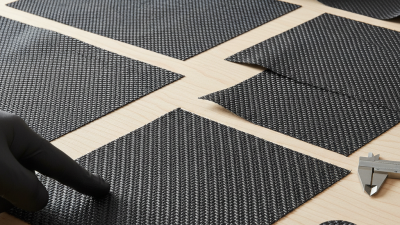
Carbon fiber mesh is thin, but it is not fragile during every handling stage. Kinks and cuts can interrupt load transfer. Workers should measure overlaps carefully and avoid folding the fabric sharply. The system may reduce visible cracking, yet it cannot repair a poorly designed structure by itself. A qualified engineer still needs to assess loads, fire exposure, moisture, and long-term bond behavior.
A practical comparison of structure, performance, compatibility, and selection criteria
| Selection Factor | What It Is | Typical Reference Data | How It Works in Practice | Recommended Check |
|---|---|---|---|---|
| Basic construction | An open-grid textile made from carbon-fiber yarns arranged in one or two directions. | Common structures include unidirectional grids and balanced 0°/90° meshes. | The yarns carry tensile loads while the openings allow resin, mortar, or other matrix materials to pass through. | Match the mesh architecture to the direction of the expected loads. |
| Fiber orientation | The direction in which the primary carbon yarns run. | Unidirectional fabric concentrates reinforcement in one axis; biaxial mesh provides reinforcement in two perpendicular axes. | Carbon fibers are strongest and stiffest along their length, so orientation controls structural efficiency. | Use unidirectional mesh for one-way tension and biaxial mesh for multi-directional stresses. |
| Mesh opening | The clear spacing between adjacent yarns or grid intersections. | Openings may range from a few millimetres to several centimetres, depending on the reinforcement system. | Larger openings improve matrix penetration and reduce weight; smaller openings distribute loads more frequently. | Confirm that the opening size is compatible with aggregate size, coating thickness, and installation tools. |
| Areal weight | The mass of mesh per unit area, excluding or including coating according to the supplier’s test method. | Lightweight-to-medium carbon mesh is often approximately 50–300 g/m²; heavier grids can exceed this range. | Higher areal weight generally indicates more carbon per area and potentially higher load capacity, but not automatically better performance. | Compare tensile force per unit width rather than areal weight alone. |
| Tensile capacity | The maximum tensile force the mesh can carry in a specified direction and width. | Technical data may be reported in kN/m, N/mm, or as yarn tensile strength in MPa. | Carbon mesh is primarily a tension reinforcement; it does not replace compression reinforcement or a load-bearing matrix. | Use certified tensile data for the finished mesh, including the test direction and gauge width. |
| Stiffness and modulus | Resistance to elastic deformation under load. | Commercial carbon fibers commonly have tensile moduli of roughly 230–600 GPa at the fiber level; finished mesh values are lower and geometry-dependent. | High stiffness helps control crack width and deflection when the mesh is properly bonded to the matrix. | Prioritize finished-mesh modulus and strain data for structural calculations. |
| Matrix compatibility | The ability of the mesh coating and fiber sizing to bond with the surrounding material. | Common matrices include epoxy, vinyl ester, polyurethane, cementitious mortar, and selected thermoplastics. | The matrix transfers stress into the carbon yarns and protects the reinforcement from handling and environmental damage. | Choose mesh and matrix as a tested system, not as unrelated materials. |
| Corrosion resistance | Carbon fiber does not rust like steel and is generally resistant to many corrosive environments. | The carbon fiber itself is non-metallic, but coatings, fasteners, and the surrounding matrix may still be vulnerable. | It can be useful in damp, chloride-containing, or chemically exposed areas when the complete system is properly designed. | Review chemical-resistance data and prevent galvanic contact with dissimilar metals where necessary. |
| Temperature performance | The usable temperature range of the complete mesh-and-matrix system. | Carbon fiber tolerates high temperatures, but polymer coatings and resins may soften or degrade near their glass-transition or service limits. | The matrix usually determines practical heat resistance rather than the carbon filament alone. | Check continuous-use temperature, short-term temperature, fire rating, and post-exposure strength. |
| Electrical behavior | Carbon fiber is electrically conductive, unlike glass fiber. | Electrical resistance varies with fiber type, yarn density, orientation, contact quality, and matrix insulation. | The mesh may provide electromagnetic or static-dissipation functions, but it can also interfere with electrical isolation requirements. | Specify electrical resistance and grounding requirements before installation. |
| Handling and drapability | How easily the mesh can be cut, shaped, positioned, and applied to curved or irregular surfaces. | Open meshes are usually easier to wet out and conform than dense laminates; stiffness increases with yarn size and coating. | Good drapability reduces wrinkles, bridging, and voids that can weaken load transfer. | Request installation samples for corners, curves, overlaps, and penetrations. |
| Typical applications | A reinforcement layer for strengthening, crack control, lightweight panels, composite parts, and selected infrastructure repairs. | Applications include concrete and masonry strengthening, composite skins, architectural panels, and impact- or fatigue-resistant components. | The mesh distributes tensile stresses and helps bridge cracks or reinforce a load-bearing matrix. | Verify design codes, fire requirements, exposure conditions, and required qualification tests. |
| Best-value decision rule | The most suitable mesh is not necessarily the lightest, strongest, or lowest-cost option. | Evaluate tensile capacity, stiffness, bond, durability, installation time, waste, and lifecycle cost together. | System-level performance depends on the interaction between carbon yarns, coating, matrix, substrate, and workmanship. | Select the product with verified performance for the actual load, environment, and installation method. |