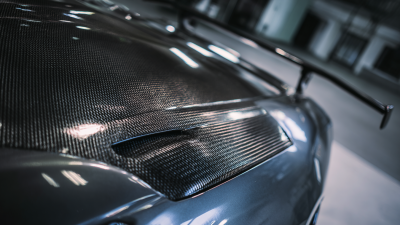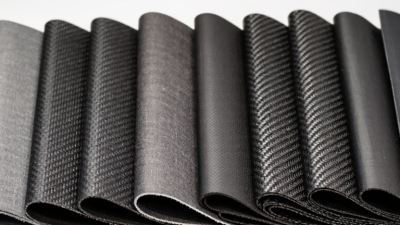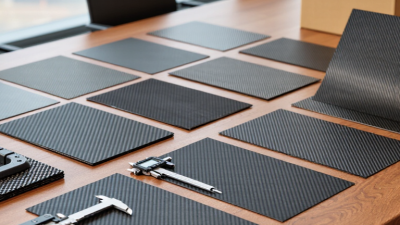
A Carbon Fiber Sheet can look deceptively simple: a thin, dark panel with a smooth surface and crisp edges. Yet its real value comes from the fibers inside, their direction, and the resin binding them together. These details help determine how the sheet handles bending, vibration, and repeated loads. In practical terms, carbon-fiber sheets appear in vehicle panels, sporting equipment, marine components, robotics, and lightweight enclosures. They are not automatically the right choice for every project.
The design matters. A sheet with fibers aligned in one direction may perform differently from a balanced laminate. Composite-materials expert Dr. Stephen W. Tsai’s work emphasizes the importance of fiber orientation and laminate design; a practical paraphrase is: “The layup matters as much as the fiber.” Buyers should check thickness, weave or unidirectional construction, resin type, surface finish, and stated mechanical properties. A glossy face alone proves little. It may hide a construction that does not suit the intended load.
Small details count. A drilled hole can create a stress concentration, while an unsupported edge may chip during handling. Cutting and bonding methods also affect the finished part. Carbon fiber is stiff and lightweight, but it can be costly, difficult to repair, and less forgiving than some alternatives. It is not magic. This guide explains common uses, material options, and selection factors, while noting where a sheet’s published data may not predict real-world performance. For safety-critical components, qualified engineering review is essential.
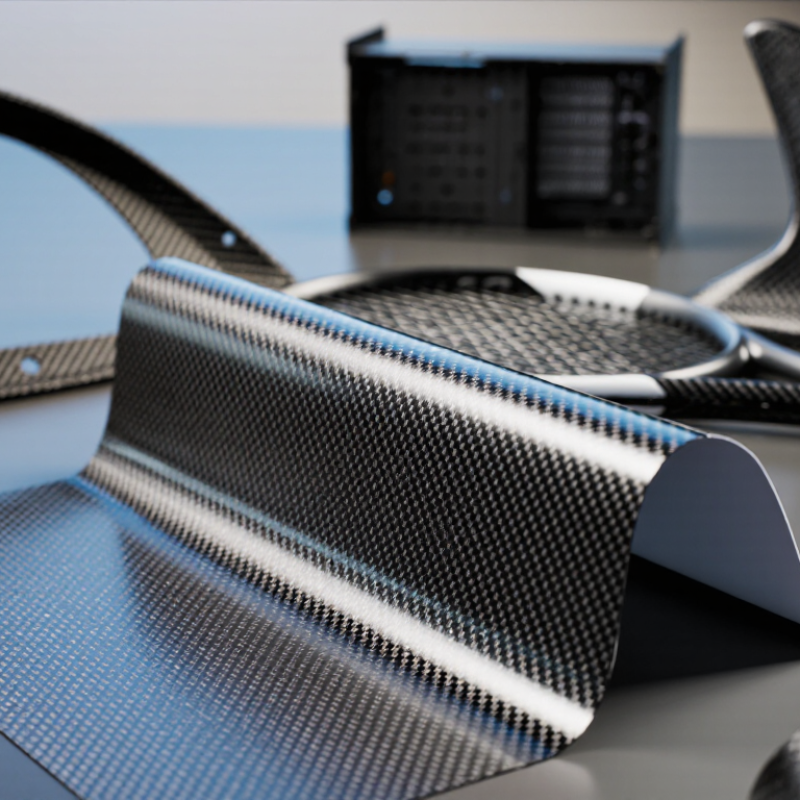
Carbon fiber sheets are flat composite laminates made by reinforcing resin with carbon fibers. Their performance depends on how those fibers are arranged. Woven sheets interlace fiber bundles in crossing directions, creating a visible grid. This layout can handle loads from more than one direction and often conforms more easily to gently curved surfaces. It suits equipment panels, covers, and parts that need a balanced mix of stiffness and shape flexibility. Direction matters.
Unidirectional laminates place most fibers parallel to one another. They provide high stiffness along that main direction, so engineers often position individual plies to match expected loads. A bracket might use fibers along its length, with extra plies crossing that direction to resist twisting. The details matter: ply orientation, resin, thickness, and bonding all affect the finished part. It is tempting to call woven sheets tough and unidirectional sheets strong, but that shortcut can mislead. Neither layout is automatically better.
A sheet’s cut edge may expose sharp fibers, and drilled holes can weaken a laminate if the design ignores local stresses. For practical selection, check the load direction, surface finish, and intended joining method. Small changes in layup can alter performance. The ideal arrangement is not always obvious.
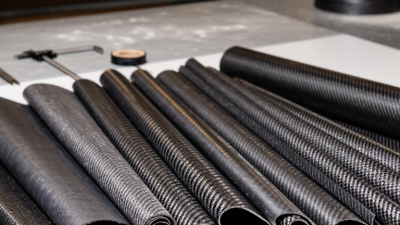
A carbon fiber sheet is used where low mass and useful stiffness matter, such as equipment panels, lightweight covers, and structural components. Typical carbon-fiber-reinforced polymer (CFRP) density is about 1.5–1.6 g/cm³, compared with 7.85 g/cm³ for steel. For the same volume, a CFRP part weighs roughly one-fifth as much. That difference can reduce the load carried by a frame or make a handheld assembly easier to manage.
Density is only a starting point. A 2-millimeter sheet does not automatically replace a steel plate of the same thickness: strength depends on fiber direction, resin, layup, and how the part is supported. Small details matter. A bolt hole near an edge, for example, can concentrate stress, while a poorly supported panel may flex despite its low weight. CFRP sheets are often cut and layered to suit the expected loads, but that takes careful design and fabrication. I would treat published density as a useful comparison, not proof that a specific sheet will perform better in every application.
In a modern wide-body aircraft, composite materials make up about half of the structural weight. That does not mean half the aircraft is made from flat carbon fiber sheets. Carbon-fiber-reinforced material is formed into shaped laminates and structural components, including sections of the fuselage, wings, and tail. The fibers carry loads, while the resin binds them into a stiff, lightweight structure. A flat sheet is more likely to serve as a panel or a starting material than as a complete aircraft part.
Weight matters. Reducing structural mass can help an aircraft carry its payload efficiently, but every component must also withstand repeated loading, temperature changes, and vibration. Engineers choose fiber directions to suit expected forces, then inspect finished structures for defects that may be difficult to see from the surface. Details matter.
The “about 50%” figure refers to composite materials by structural weight, not to carbon fiber alone or to half of every individual section. Some components still use metals and other materials where they suit the task. That distinction is easy to miss. Composite parts can also require careful repair methods, and damage may not always look serious from the outside. The materials offer clear advantages, but they do not make aircraft structures simple or maintenance-free.
What Is a Carbon Fiber Sheet Used For?
Automotive, Marine, and Sports Uses: Lightweight Panels and Components
Carbon fiber sheets are used where low weight and stiffness can improve a component’s performance. In cars, they may form trim panels, interior supports, aerodynamic covers, or selected body panels. A door insert can feel firm while adding less mass than a comparable metal part. Weight matters. Yet a sheet is not automatically a safe replacement for a structural component. Strength depends on fiber direction, resin, thickness, manufacturing quality, and how the part is attached. Engineers test the finished assembly, not just the raw material.
On boats, carbon fiber can be shaped into console panels, hatches, and lightweight structural parts. Marine exposure calls for careful sealing, because water, sunlight, and damaged edges can affect a laminate over time. When carbon fiber contacts certain metals, designers also consider corrosion risks at the joint. In sports equipment, sheets are used in items such as bicycle components, paddles, and protective panels, where low mass and controlled stiffness matter. Not always. A very stiff part may feel harsh or fail under an unexpected impact. Selecting a sheet means matching its layup and finish to the real load, environment, and repair needs; visual weave alone tells little about performance.
| Sector | Typical Sheet or Panel Application | Why Carbon Fiber Is Used | Common Construction | Practical Considerations |
|---|---|---|---|---|
| Automotive | Body panels, hoods, deck lids, and interior trim panels | Can reduce component mass while providing high stiffness when the laminate is designed for the required loads. | Solid laminate panels or molded panels made from woven or unidirectional fiber in a polymer resin. | Cost, repairability, surface finish, and impact behavior need to be considered. A carbon-fiber panel is not automatically safer or lighter than every metal or composite alternative. |
| Automotive | Underbody panels, aerodynamic covers, and selected structural reinforcements | Useful where a lightweight panel with directional stiffness is needed. | Laminate panels; some larger panels use a lightweight foam or honeycomb core between face sheets. | Designs must account for heat, vibration, impact from road debris, and secure attachment points. Structural parts require application-specific engineering. |
| Marine | Deck panels, cabin panels, bulkheads, and selected hull components | Offers a high stiffness-to-weight potential and does not rust like steel. | Solid laminate or a sandwich panel with carbon-fiber face sheets and a suitable core. | Resin, coatings, joints, and core materials must suit the marine environment. Electrical isolation may be needed where carbon fiber contacts metals susceptible to galvanic corrosion. |
| Marine | Mast, spar, or other lightweight panel and structural components | Fiber orientation can be tailored to carry loads along specific directions. | Engineered laminates using unidirectional and woven reinforcement, often formed into a particular shape. | Load paths, fatigue, moisture exposure, and inspection for damage are important. A flat sheet alone does not determine the performance of a finished component. |
| Sports equipment | Bicycle frame and component panels, such as covers or protective plates | Can combine low mass with stiffness tailored to the component’s intended loading. | Molded laminates with selected fiber directions; finished parts are often shaped rather than left as flat sheets. | Impact damage may be difficult to identify visually. Components should be used and inspected according to their design and care instructions. |
| Sports equipment | Rackets, hockey sticks, paddles, skis, and similar sporting goods | Helps designers tune stiffness, flex, and mass for a particular product and use. | Layered composite laminates, often combined with other fibers, resin systems, or lightweight cores. | Performance depends on the complete layup, shape, resin, and manufacturing quality—not simply on whether a product contains carbon fiber. |
| General selection | Custom lightweight covers, equipment panels, and enclosures | Provides a strong, stiff material option where weight and directional properties matter. | Flat laminate sheet, cut-to-shape panel, or sandwich construction, depending on stiffness and thickness requirements. | Choose the fiber orientation, resin, thickness, finish, and attachment method for the actual loads and environment. Cutting and sanding require suitable dust-control precautions. |
What Is a Carbon Fiber Sheet Used For?
A carbon fiber sheet is used where low weight and directional stiffness matter, from vehicle panels to sporting equipment and structural reinforcement. But “carbon fiber” alone does not predict performance. Fibers resist loads most effectively along their length; a sheet with fibers running one way may be stiff in that direction but less resistant across it. Cross-ply or multi-directional layups spread loads across more axes. In practice, the right choice depends on how the part will be loaded, not just how smooth its surface looks.
Resin and layup matter too. Resin binds the fibers, transfers stress, and affects heat and moisture resistance. More resin is not automatically better: too much can add weight without adding useful stiffness. The U.S. Department of Energy’s lightweight-materials assessments report that carbon-fiber composites can reduce component weight by up to 60% compared with steel, though actual savings depend on design and part geometry. That is a useful benchmark, not a promise for every sheet. A tidy datasheet can still mislead. Check fiber direction, ply count, resin system, thickness, and test conditions before choosing material. Even a small change in the loading direction can alter how a finished panel behaves.
Fiber direction, resin, and layup determine sheet performance. The chart shows the idealized fiber-direction contribution to stiffness as the load angle changes.
How to read it: Values use the cos⁴θ orientation factor, normalized to fibers aligned with the load (100%). This idealized model isolates fiber orientation; it is not a measured property of a particular sheet. Actual stiffness also depends on resin, fiber volume, and ply layup. Cross-ply and angled plies can improve off-axis performance, while resin binds the fibers and transfers load.